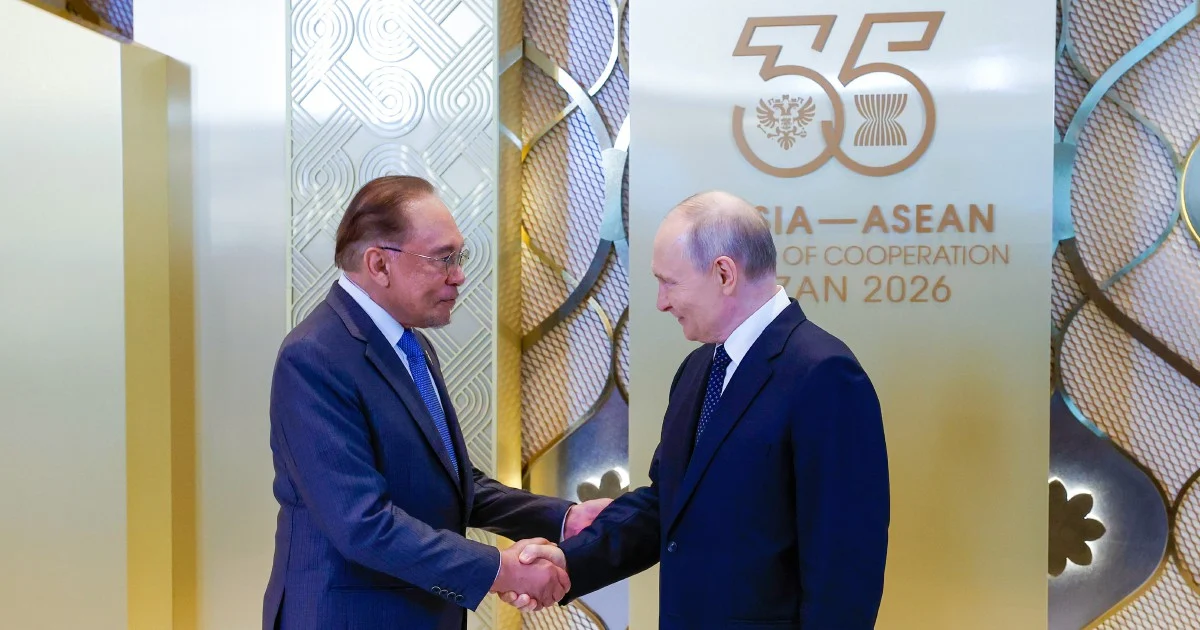
Prime Minister Datuk Seri Anwar Ibrahim engaged Russian President Vladimir Putin in a high-level discussion centred on deepening bilateral cooperation, with energy security and trade expansion emerging as the primary focal points of their engagement. The meeting, held in Kazan, represented a significant moment in Malaysia-Russia relations at a time when both nations are reassessing their strategic partnerships in response to broader geopolitical realignments affecting the Indo-Pacific and Eurasian regions.
Energy security has assumed heightened importance for Malaysia as the nation balances its long-term demand for fossil fuels with growing pressures to transition toward cleaner energy sources. Russia, as one of the world's largest energy producers and exporters, represents a potential partner for diversifying Malaysia's energy supply chains away from traditional Middle Eastern sources. The timing of this discussion reflects Malaysia's pragmatic approach to securing energy stability while maintaining strategic flexibility in a region where energy competition is intensifying.
Trade conducted in local currencies formed a distinct component of the talks, signalling both nations' interest in reducing dependence on traditional reserve currencies. For Malaysia, such arrangements could facilitate smoother commercial transactions with Russia while potentially offering advantages in managing currency fluctuations and reducing hedging costs for Malaysian businesses engaged in bilateral trade. This approach aligns with broader trends across Asia, where governments and corporations are exploring alternative settlement mechanisms to enhance financial autonomy.
The bilateral relationship between Malaysia and Russia has historically been characterised by measured engagement rather than deep strategic alignment. However, recent developments in the international system have created new opportunities for cooperation. Malaysia's non-aligned foreign policy tradition provides considerable scope for expanding ties with Russia without compromising its relationships with Western nations or other regional partners. This balancing act remains central to Malaysian diplomacy.
From Russia's perspective, strengthening ties with significant Southeast Asian economies like Malaysia serves multiple strategic purposes. The region remains economically dynamic and geopolitically consequential, offering both trade opportunities and potential diplomatic support in international forums. Russia's efforts to expand influence in Southeast Asia have intensified as it navigates Western sanctions and seeks to build alternative partnerships across the Global South.
Energy cooperation between the two nations could manifest in various forms, ranging from increased purchases of Russian hydrocarbons to joint investment in energy infrastructure and technology transfer arrangements. Malaysia's refining capabilities and its role as a regional energy hub could create mutually beneficial opportunities for Russian energy companies seeking to penetrate Asian markets. The development of such partnerships would require careful structuring to ensure commercial viability and alignment with Malaysia's broader energy transition goals.
The emphasis on trading in local currencies reflects a pragmatic commercial consideration alongside political symbolism. As the ringgit and the ruble both face pressures in international markets, bilateral arrangements involving direct currency exchange could reduce transaction costs for companies in both nations. This approach has gained traction elsewhere in Asia and represents a practical tool for deepening economic integration without requiring formal institutional frameworks.
For Malaysian policymakers, engagement with Russia presents both opportunities and challenges. The nation must carefully navigate its relationships with Western countries, particularly given Malaysia's reliance on Western technology, capital markets, and security partnerships. Simultaneously, Malaysia's commitment to maintaining strategic autonomy and its traditional emphasis on South-South cooperation create legitimate space for expanded engagement with Russia across non-security sectors. The balancing act requires sophisticated diplomacy and clear communication of national interests.
Regional implications of enhanced Malaysia-Russia cooperation deserve consideration. Closer bilateral ties could influence Southeast Asia's broader strategic orientation, potentially reinforcing trends toward multipolarity and reducing Western dominance in regional affairs. However, such developments are unlikely to fundamentally alter the region's geostrategic equilibrium, given the enduring importance of ties with China, India, and Western nations to Southeast Asian countries' prosperity and security.
The discussion of energy security also touches upon Malaysia's domestic policy challenges. The nation faces growing electricity demand driven by economic development and population growth, requiring sustained investment in generation capacity and transmission infrastructure. Russian technical expertise and equipment, potentially available through such bilateral engagements, could supplement Malaysia's current energy development efforts, provided competitive procurement processes ensure value for money and quality standards are maintained.
Looking forward, the substantive outcomes of this engagement will depend on the ability of both nations to identify specific, mutually beneficial projects that justify sustained political commitment. Energy cooperation, trade expansion, and financial innovation through local currency arrangements provide concrete areas for advancement. However, successful execution requires not only political will but also effective coordination between government agencies and commercial entities in both countries.
For Malaysia's business community, expanded engagement with Russia could open new market opportunities and diversify commercial relationships beyond traditional partners. However, companies must remain cognisant of the sanctions environment affecting Russian commerce and ensure compliance with relevant international regulations. The government's role in facilitating such engagement while maintaining international legal compliance will be crucial to realising the potential benefits of closer bilateral ties.