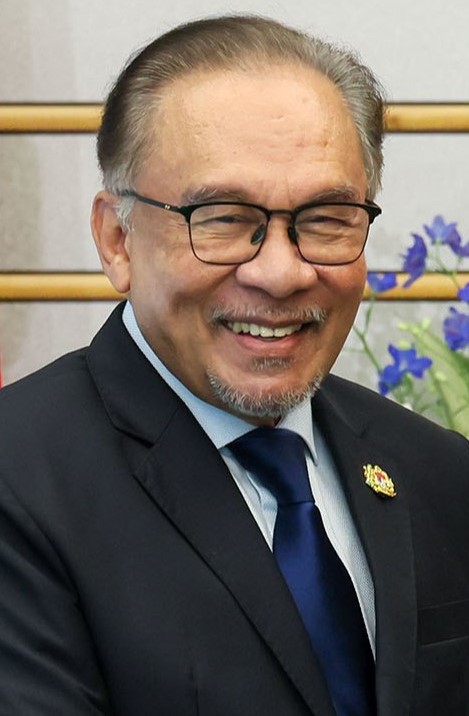
Prime Minister Anwar Ibrahim has sought an audience with Johor Regent Tunku Ismail Sultan Ibrahim in Kuala Lumpur to reinforce the collaborative relationship between the Johor state government and federal authorities. The meeting underscores the government's determination to preserve constructive working arrangements at a time when coordination between state and federal levels remains crucial for national development and political stability.
The encounter between Anwar and the Johor regent reflects an ongoing commitment to dialogue at the highest levels of governance. Maintaining open channels of communication between federal leadership and state rulers has become increasingly important in Malaysia's federal structure, particularly as both levels of government navigate competing policy priorities and resource allocation challenges. The Johor regent, as one of Malaysia's most influential royal figures and a significant political stakeholder in the country's most economically developed southern state, holds particular weight in these deliberations.
Johor's significance to the federal government extends beyond its economic contribution. The state has historically played a pivotal role in Malaysian politics, and its government's cooperation with federal initiatives remains essential for implementing nationwide programmes effectively. The successful coordination between state and federal administrations in Johor has implications for broader governance frameworks across the country, as other states often look to how Johor manages its relationship with the centre.
The timing of this engagement suggests a proactive approach to managing potential friction points between state and federal authorities. Disagreements over implementation of federal policies, resource sharing, or administrative boundaries have occasionally created tension between state governments and the prime minister's office. By securing the regent's assurance on maintaining positive relations, Anwar appears to be establishing a foundation for smoother cooperation on matters requiring joint coordination.
For Malaysian readers, such diplomatic exchanges represent more than ceremonial gestures. The health of state-federal relations directly affects public service delivery, infrastructure development, and the effectiveness of programmes spanning education, healthcare, and economic initiatives. When these relationships deteriorate, ordinary citizens often bear the consequences through delayed projects, bureaucratic friction, and reduced efficiency in government operations.
The agreement to preserve good relations also carries implications for Johor's developmental trajectory. As Malaysia's industrial and commercial hub in the south, Johor depends on federal investment, policy alignment, and infrastructure support. Conversely, the federal government benefits from a smoothly functioning Johor administration that implements national policies effectively and contributes substantially to national revenue and employment.
From a Southeast Asian perspective, Malaysia's commitment to maintaining institutional harmony demonstrates a maturity in federal governance that contrasts with instability observed in some neighbouring nations. A functioning federation where state and central authorities work cooperatively provides a stable environment for foreign investment and regional confidence. Johor's position as a gateway to Singapore and its role in various regional initiatives mean that the state's governance stability has cross-border significance.
The diplomatic engagement between Anwar and the Johor regent also reflects the constitutional role of Malaysia's monarchical institutions in ensuring governmental effectiveness. The regent's involvement signals the involvement of royal institutions in preserving institutional balance and ensuring that political actors remain committed to orderly, constitutional governance. This mediation function, while subtle, remains an important stabilising feature of Malaysia's political system.
Moving forward, the agreement provides a framework for addressing specific issues that may arise between state and federal governments. Whether concerning development approvals, revenue sharing, or implementation of federal legislation in Johor, both parties have now publicly committed to resolving matters through constructive channels rather than allowing disagreements to become public or escalate into confrontation.
The meeting also sends a broader message to Malaysia's political leadership about the importance of maintaining institutional relationships regardless of party affiliation or political differences. In an era when political polarisation has sometimes threatened to undermine institutional norms, this emphasis on preserving good relations demonstrates commitment to constitutional governance and the rule of law as governing principles above partisan interests.
For businesses operating in Johor and the wider region, such assurances of stable state-federal coordination reduce uncertainty and support confidence in the regulatory environment. When investors observe that government institutions at different levels communicate effectively and prioritise cooperation, it strengthens their willingness to commit capital and expand operations, ultimately benefiting employment and economic growth.