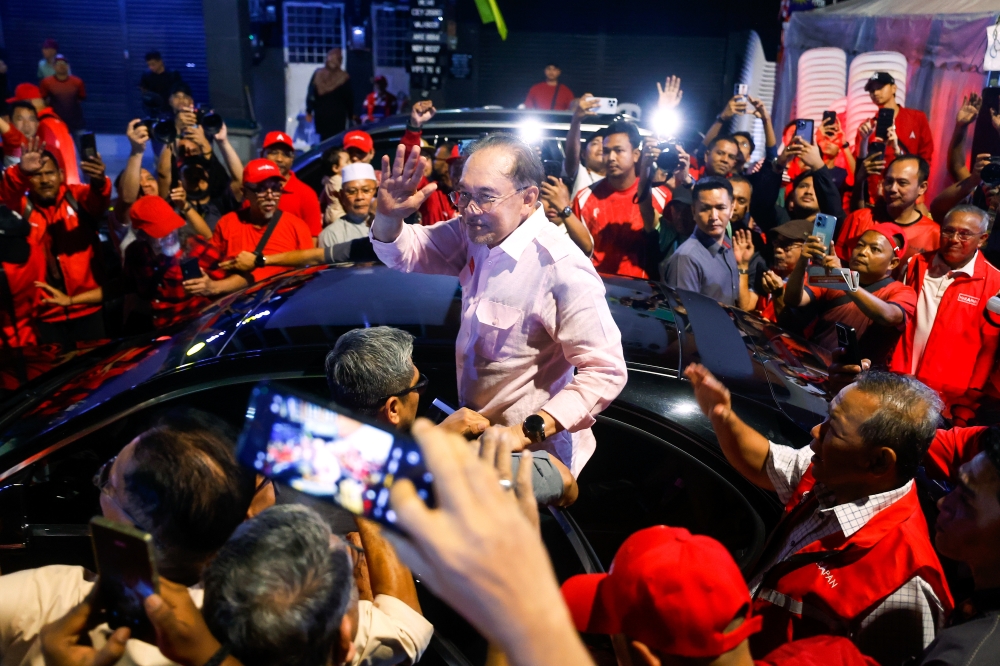
Prime Minister Datuk Seri Anwar Ibrahim has sought to reassure Malaysians about the durability of the federal unity government, emphasising that the multi-party coalition remains cohesive despite persistent speculation about potential fractures. During a visit to Seremban, Anwar projected confidence in both the political framework underpinning his administration and the nation's economic fundamentals, signalling to investors and citizens alike that Malaysia's governance structure has weathered recent pressures.
The unity government, which took office following the 2022 general election, brought together multiple political parties with historically divergent interests. This broad-based coalition—encompassing Pakatan Harapan, Barisan Nasional, and smaller parties—was formed to prevent political instability and provide a platform for economic recovery. However, maintaining consensus among partners with competing agendas has proven an ongoing management challenge, making Anwar's public reaffirmations of unity crucial for maintaining investor confidence and public morale.
Anwar's emphasis on economic stability carries particular weight given Malaysia's position as a regional financial hub and manufacturing centre. The nation's economic performance directly influences not only domestic consumer confidence but also foreign direct investment flows and the stability of the broader Southeast Asian economy. By projecting assurance about the government's ability to manage economic affairs, Anwar seeks to prevent the kind of capital flight or investment hesitation that might accompany perceptions of political instability.
The timing of such statements typically reflects the government's reading of political headwinds. Unity governments are inherently fragile entities, requiring constant negotiation and compromise among coalition partners. Public declarations of strength serve a dual purpose: they reassure stakeholders externally while simultaneously reinforcing internal party discipline by staking the government's credibility on sustained cohesion. For Anwar, such statements represent both genuine assessment and strategic political messaging.
Malaysia's economic trajectory has been a central component of Anwar's political narrative since assuming office. The administration inherited an economy impacted by pandemic-related disruptions, inflation pressures, and global supply chain complications. Successfully demonstrating economic resilience and growth becomes a key legitimating factor for the government's continuation, particularly important in a coalition where some parties might otherwise seek to challenge leadership or restructure political arrangements.
The unity government framework itself represents a significant departure from Malaysia's traditional two-coalition political structure. Rather than a single opposition holding all non-governmental seats, multiple parties maintain separate identities while cooperating on governance. This arrangement creates both opportunities for inclusive policymaking and challenges in maintaining party discipline and policy coherence. Statements affirming government strength attempt to frame this complexity as a source of stability rather than weakness.
Investor and international community perspectives on Malaysian political stability directly affect capital flows and credit ratings. Rating agencies and international financial institutions monitor signals of political cohesion closely, particularly in emerging markets where governance uncertainty can drive volatility. Anwar's reassurances about the government's stability form part of broader communication efforts directed at maintaining Malaysia's international credibility and financial standing.
The economic component of Anwar's message addresses concrete concerns facing Malaysians. Inflation, employment, wage growth, and quality of life remain primary concerns for voters regardless of political affiliation. By positioning the economy as fundamentally sound, the government frames its stewardship as competent even if political arrangements remain unconventional. This narrative becomes particularly important ahead of state elections or other political events where economic performance influences voter behaviour.
Sustaining the unity government requires ongoing management of coalition partners' divergent interests and political bases. Different parties within the coalition have distinct constituencies and policy priorities, occasionally creating tensions over resource allocation, ministerial appointments, or legislative priorities. Public statements about government strength serve to contain such tensions and prevent them from escalating into coalition-threatening conflicts that might dominate media narratives and public discussion.
The broader regional context also shapes the significance of Malaysia's political stability. Southeast Asia has experienced increasing geopolitical tensions, economic headwinds from global slowdown, and competition among major powers for influence. A politically stable Malaysia with a functioning government capable of implementing coherent policy responses becomes increasingly valuable both domestically and regionally. This context lends weight to Anwar's efforts to project continuity and institutional competence.
Looking forward, the sustainability of Malaysia's unity government depends on continued economic performance, management of coalition pressures, and the government's ability to deliver tangible benefits to voters. Anwar's statements in Seremban reflect confidence in these elements, though the inherent fragility of multi-party coalitions means that political vigilance and skilled management remain essential. How effectively the government translates economic growth into improved living standards for ordinary Malaysians will ultimately determine both the coalition's longevity and public support for the current political arrangement.

