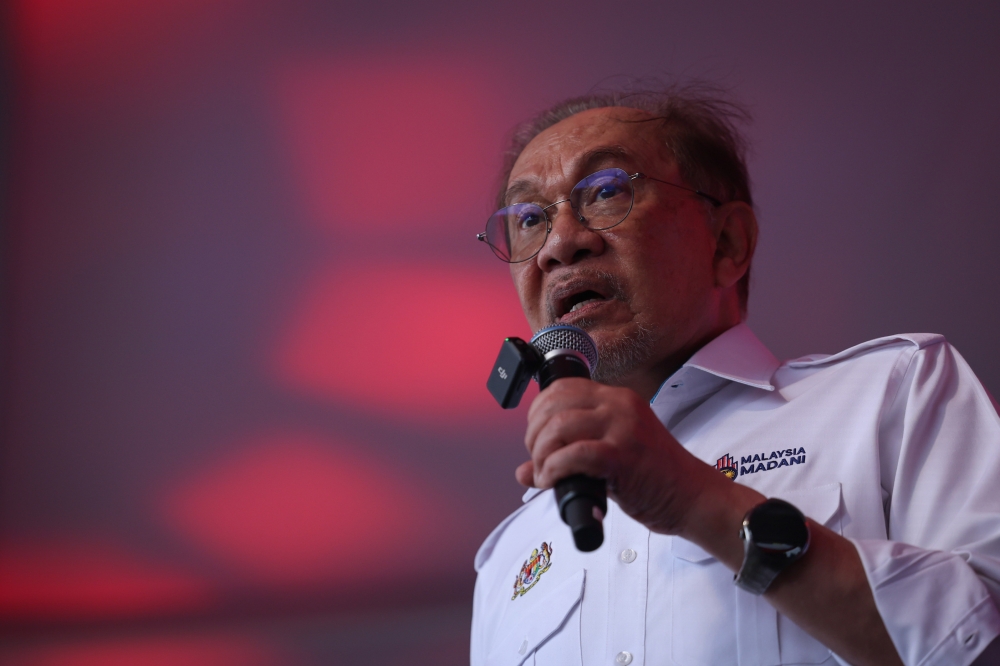
Prime Minister Datuk Seri Anwar Ibrahim has escalated tensions with the opposition Perikatan Nasional coalition, accusing it of deliberately sidestepping parliamentary accountability over the Tabung Haji financial crisis. The dismissal came after several opposition MPs staged a dramatic walkout during debates on the Royal Commission of Inquiry established to investigate the troubled pilgrimage fund, an institution that holds the life savings of hundreds of thousands of Malaysian Muslim depositors awaiting funds for their Hajj journey.
Anwar's rebuke underscores the deeply contested political terrain surrounding Tabung Haji, which has become a focal point of governance scrutiny following revelations about investment losses and administrative failures spanning years. The walkout represents more than a parliamentary tactic—it reflects the opposition's reluctance to engage substantively with findings from the royal commission that may implicate leaders from earlier administrations when Perikatan or its predecessor blocs held federal power. For ordinary Malaysians who have contributed their savings to the fund expecting reliable stewardship, the spectacle of legislators abandoning the chamber signals that political survival takes precedence over protecting vulnerable depositors.
The Tabung Haji scandal has particular resonance across Malaysia's Muslim-majority population, cutting across traditional class and ethnic lines. The fund manages approximately RM70 billion in deposits from over 9 million account holders, many of whom are middle and working-class Malaysians saving incrementally over years or decades for the obligatory Islamic pilgrimage. When financial irregularities emerged, it shattered public trust in institutions meant to provide secure stewardship over religious savings. The royal commission was tasked with determining what went wrong, identifying responsible parties, and recommending reforms to restore confidence in the system.
Perikatan's parliamentary exit during the RCI debate raises questions about its substantive response to the commission's work. Opposition parties typically have two strategic choices in such circumstances: defend their record robustly by challenging the commission's methodology or findings, or abstain from participation to signal protest against the proceedings themselves. The walkout suggests the latter approach—a refusal to dignify proceedings perceived as politically disadvantageous rather than an engagement with the merits of the investigation. This posture, while understandable from a partisan perspective, leaves millions of depositors without their elected opposition representatives articulating alternative remedies or defending past management decisions in the chamber.
Anwar's government has positioned itself as the reform-minded faction committed to restoring Tabung Haji to financial health and implementing governance safeguards. The prime minister's willingness to establish and publicise the royal commission itself reflects confidence that the findings support the coalition government's narrative of inherited mismanagement. By contrast, Perikatan's reluctance to engage directly with the RCI outcomes suggests discomfort with the trajectory of the investigation. This creates a governance vacuum where critical perspectives on the crisis go unheard in formal parliamentary debate, potentially weakening the quality of eventual remedial legislation.
The timing of this clash is significant given Malaysia's fractious coalition politics. Anwar's government maintains a slim parliamentary majority dependent on cross-party support, particularly from parties like Amanah and PKR. Using Tabung Haji as a mobilising issue against Perikatan allows the government to distinguish itself on a matter of direct concern to millions of voters. For ethnic Malay and Muslim constituencies especially, stewardship of Islamic institutions carries symbolic weight beyond mere financial management. A government perceived as protecting ordinary depositors against both past negligence and present political obstruction gains credibility on identity-based governance.
The opposition's dilemma is real but self-inflicted. Perikatan could have remained in the chamber to offer substantive critiques, propose alternative explanations, or articulate a vision for Tabung Haji's future that contrasts with government proposals. By leaving, opposition MPs forfeit the opportunity to shape public understanding of the crisis. Moreover, the walkout invites precisely the kind of criticism Anwar has now articulated—that Perikatan prioritises partisan advantage over defending depositors' interests. This narrative, once established in public discourse, becomes difficult to counter without appearing defensive.
For Malaysian depositors watching these parliamentary theatrics, frustration is inevitable. Many have waiting lists spanning years for Hajj slots, with their accumulated savings held in an institution now mired in scandal and political wrangling. Neither government nor opposition offers them immediate relief; both sides appear more concerned with apportioning blame and protecting reputations. The genuine question—how to strengthen Tabung Haji's operational framework, recover losses, and ensure transparent governance going forward—risks becoming secondary to parliamentary point-scoring.
The broader implications extend to institutional trust across Southeast Asia's Muslim-majority nations. Tabung Haji's travails have been watched closely in Indonesia, Brunei, and Singapore where religious financial institutions perform similar functions. The Malaysian case demonstrates how quickly mismanagement and inadequate oversight can erode confidence in dedicated institutions. More importantly, it illustrates that even subsequent political transitions may not guarantee accountability if parties view investigations as politically inconvenient. This lesson is particularly relevant for other regional governments grappling with legacy financial crises.
Moving forward, pressure will mount on both government and opposition to move beyond recriminations toward constructive engagement with the RCI's recommendations. Depositors have legitimate expectations that parliament will address governance failures systematically rather than weaponising the crisis against political opponents. Anwar has staked political capital on reform; Perikatan's return to parliament and substantive participation in subsequent debates will be essential to demonstrate that opposition politics can transcend partisan calculation when ordinary Malaysians' financial security is at stake.

