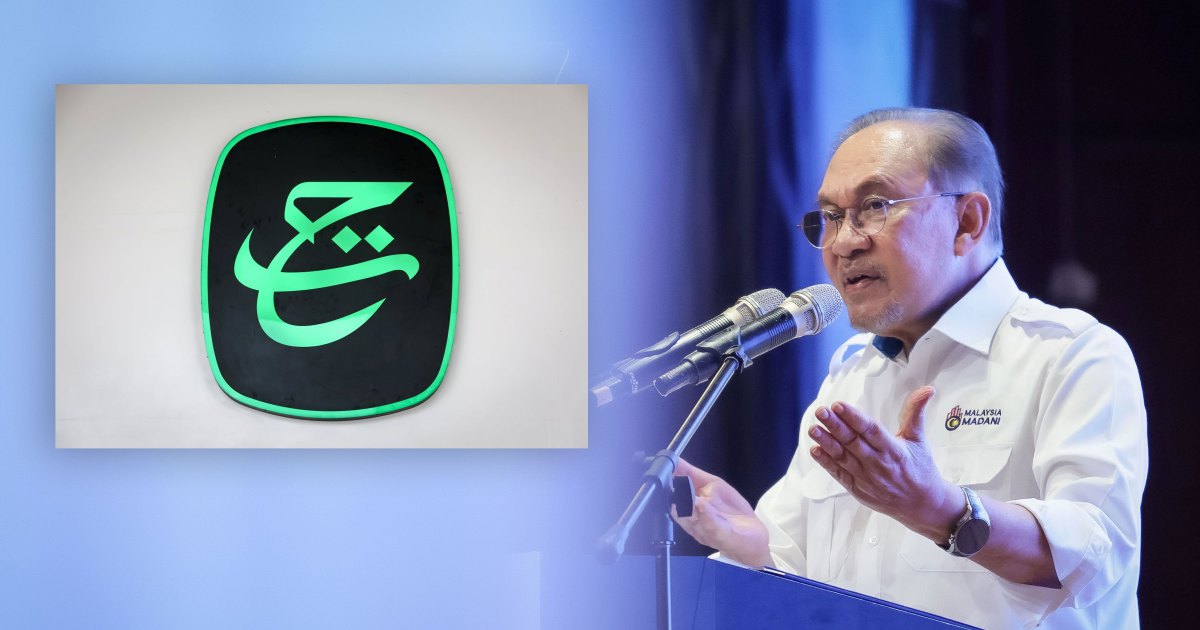
Prime Minister Anwar Ibrahim has adopted an uncompromising stance on the mounting financial losses and alleged misconduct affecting Lembaga Tabung Haji, stating that those culpable will not escape scrutiny or accountability. Speaking in Jelebu, Anwar made clear that anyone implicated in the hajj fund management body's difficulties will be investigated, with prosecution to follow if the evidence reaches the threshold required by law. The statement represents a hardening of the government's approach toward governance failures at one of Malaysia's most sensitive institutions, particularly given TH's custodianship of savings belonging to millions of Malaysian Muslims preparing for the pilgrimage to Mecca.
Lembaga Tabung Haji has become embroiled in a series of controversies centred on significant financial underperformance, investment losses, and allegations of misappropriation spanning several years. The fund's troubles have prompted public concern and parliamentary scrutiny, with questions raised about how an institution mandated to manage the aspirations of Muslim Malaysians could experience such deterioration in its financial position. The scale of losses and the involvement of multiple parties in decision-making across different administrative periods have complicated the investigation and accountability process, leading observers to wonder whether justice would genuinely be pursued or whether institutional and political sensitivities might constrain action.
Anwar's pronouncement appears designed to address those anxieties by signalling that political rank or bureaucratic status will not provide shelter from investigation. In Malaysia's governance context, such public statements from the head of government carry considerable weight, setting expectations about how institutions should treat wrongdoing and establishing the political parameters within which enforcement agencies operate. By explicitly rejecting any notion of protection for the responsible parties, Anwar is attempting to reestablish public confidence in Malaysia's commitment to addressing institutional corruption and mismanagement, areas where public trust has been eroded by years of high-profile scandals and delayed accountability.
The condition that prosecution will proceed only if evidence is sufficient reflects the reality that investigations must meet legal standards and that accusations alone cannot substitute for substantiated proof. This threshold—while legitimate—also introduces an element of uncertainty, given the complexity of financial investigations and the potential for evidence to be obscured, fragmented, or contested. The statement does not commit to specific timelines for investigation completion or prosecution, meaning that the process could be protracted, potentially extending beyond this electoral cycle or even the current government's tenure.
For Malaysian Muslims and TH contributors, the pledge carries particular significance because the fund represents not merely a financial investment but a religious and cultural obligation. Many Malaysians view their TH savings as a sacred trust, making the mismanagement allegations deeply personal and morally troubling beyond the purely economic dimensions. Restoring confidence in TH requires not only recovering losses where possible but also demonstrating that governance failures will be remedied and that future management will reflect proper stewardship of religiously significant assets.
The implications extend beyond TH itself to broader questions about institutional reform and preventative governance in Malaysia. If investigations confirm systematic problems—whether arising from inadequate oversight, conflicts of interest, or deliberate misconduct—the government will face pressure to implement structural changes that reduce the likelihood of recurrence. These could include enhanced board composition requirements, more robust internal audit mechanisms, greater transparency in investment decision-making, and clearer accountability frameworks. Without such reforms, even successful prosecutions might be perceived as treating symptoms rather than addressing underlying institutional weaknesses.
Regionally, Malaysia's handling of the TH situation will be observed as a test case for whether Southeast Asian governments can genuinely hold powerful figures accountable and reform major national institutions. The region has seen numerous instances where high-level corruption and mismanagement have gone unpunished or received only symbolic penalties, reinforcing public cynicism about governance. A credible investigation and prosecution process affecting TH could help break that pattern, though only if it is visibly independent, comprehensive, and free from political interference or selective application.
Anwar's statement also reflects shifting political dynamics in Malaysia, where governance and anti-corruption have become central electoral and policy concerns. Following years of scandal and institutional distrust, successive governments have sought to demonstrate commitment to accountability as a means of rebuilding public confidence. For Anwar's administration, delivering on promises of investigation and prosecution is essential to fulfilling the reform agenda that contributed to his return to office.
The timing and location of Anwar's remarks—made while in Jelebu, a significant constituency—suggest that the government recognises public concern about TH and views accountability as a matter of political importance. By publicly committing to prosecution based on evidence, Anwar is making a statement intended for both supporters and critics: that regardless of power or position, no one will be spared if wrongdoing is substantiated. Whether that commitment translates into decisive action will ultimately determine whether this moment represents genuine institutional reform or merely rhetorical positioning.

