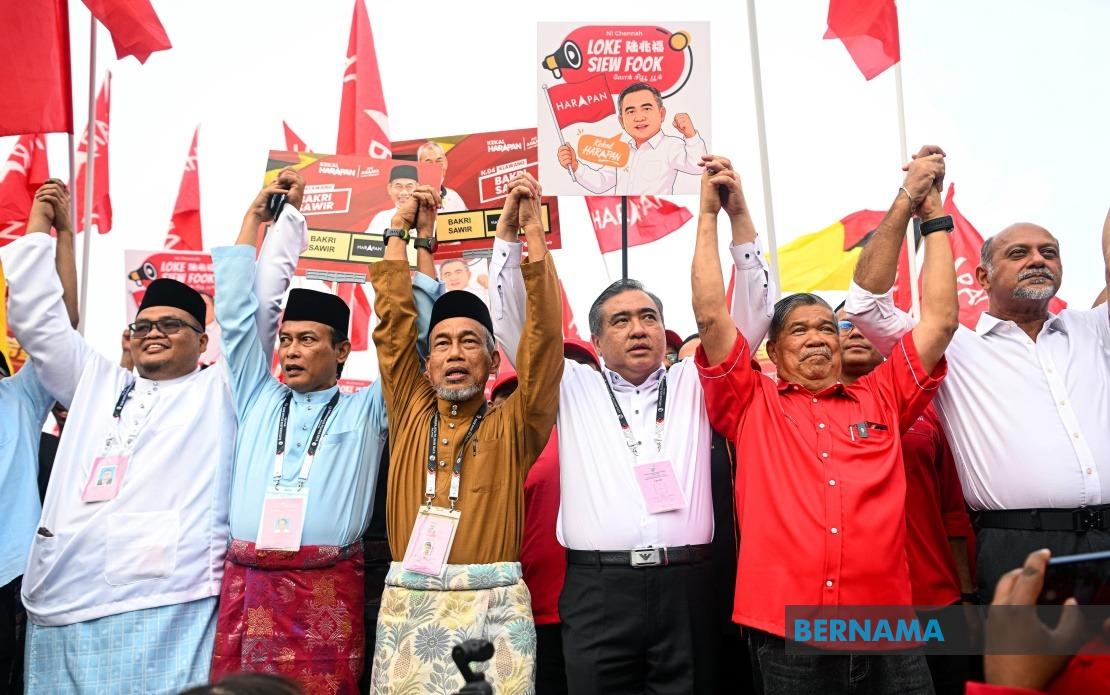
Transport Minister Anthony Loke faces a direct electoral showdown to retain the Chennah state seat he has represented since 2013, with the Negeri Sembilan state election now underway. The DAP secretary-general and Seremban Member of Parliament will contest against Siow Kong Choon, the state MCA Youth chief standing as a Barisan Nasional candidate. The nomination centre at Dewan Besar Kuala Klawang in Jelebu confirmed the straight fight after the official nomination window closed today at 10 am, with both candidates filing their papers within minutes of each other during the morning.
Loke's hold on the Chennah seat appears solid based on recent electoral performance. In the 2023 Negeri Sembilan state election, the DAP leader secured 5,888 votes, defeating Perikatan Nasional contender Rosmadi Arif by a commanding margin of 2,200 votes. That substantial victory margin suggests strong grassroots support within the constituency, though the political landscape has shifted since then with various realignments across the nation's coalitions. The question now is whether the BN machinery, traditionally strong in Negeri Sembilan, can mobilise voters effectively behind Siow's challenge in what remains a competitive seat.
The contest carries significance beyond the individual state seat. Loke's position as both a key DAP figure and a federal Transport Minister makes his electoral fortunes symbolically important for the coalition government. A strong performance would underline DAP's continued relevance in Negeri Sembilan despite the state's historical leanings toward UMNO-dominated BN structures. Conversely, any slippage in his vote share would signal shifting voter sentiment at the grassroots level, potentially offering insights into broader challenges the federal coalition faces heading into future elections.
Siow Kong Choon's candidacy represents BN's determination to reclaim ground in constituencies where the opposition has established footholds. The MCA Youth leader brings party machinery and historical BN networks to bear, positioning himself as an alternative for voters seeking different representation. However, BN faces its own internal dynamics and must navigate the complex interplay of constituent party interests in Negeri Sembilan, where UMNO traditionally commands the largest share of elected positions.
The Electoral Commission has structured the voting schedule to allow for early voting on July 28, with the main polling day set for August 1. This timeline gives both candidates approximately two weeks to campaign intensively across Chennah's precincts. The early voting window is particularly significant in Malaysian elections, as it allows working professionals, shift workers, and others with mobility constraints to participate, potentially affecting turnout patterns and candidate strategies.
Politically, this contest sits within the broader context of Negeri Sembilan's political trajectory. The state has been experiencing competitive multi-cornered contests in recent election cycles, with PN making significant inroads in 2023 before the national political landscape reorganised. The emergence of a straight fight between DAP and BN suggests a consolidation of opposition and establishment forces, eliminating the three-way splits that characterised earlier contests. This binary structure could simplify voter choice but also intensify competition for the middle ground.
The Chennah seat itself encompasses mixed urban and semi-rural demographics typical of constituencies near Selangor's influence zone. Voters here balance concerns about urban development pressures, transportation infrastructure, and traditional community interests. Loke's portfolio as Transport Minister provides him with a platform to highlight federal government infrastructure investments and policy initiatives affecting the constituency. Conversely, BN can emphasise traditional governance structures and local connections that long predated the current federal administration.
Historical context matters significantly here. Negeri Sembilan has undergone substantial political shifts since 2018, when the initial reversal of BN's three-decade dominance reshuffled state politics. Subsequent elections have seen further realignments as parties recalibrated strategies and voters reassessed their preferences. The 2023 result that gave Loke his comfortable majority occurred within a specific political configuration that may not entirely persist in 2024. Voter sentiment around issues including cost of living pressures, infrastructure development, and governance performance will likely shape how constituencies respond this time.
The nomination process completion marks the formal beginning of the intensive campaign phase. Both candidates now must articulate compelling visions for their constituents while mobilising their respective party machines to turn out supporters. Loke will emphasize continuity and federal government achievements, while Siow will likely stress BN's traditional strength in the state and alternative governance approaches. The fortnight ahead will test both candidates' organisational capabilities and their ability to resonate with Chennah voters on issues that matter most.
For observers tracking Malaysian electoral trends, the Chennah contest provides a valuable case study in coalition politics and voter behaviour. Negeri Sembilan's smaller size compared to larger states means results emerge quickly on polling night, offering early indicators of voter sentiment that may foreshadow outcomes in other constituencies. The straight fight between a DAP federal minister and a BN state-level politician encapsulates the tension between federal and state level considerations that increasingly characterise Malaysian electoral politics.

