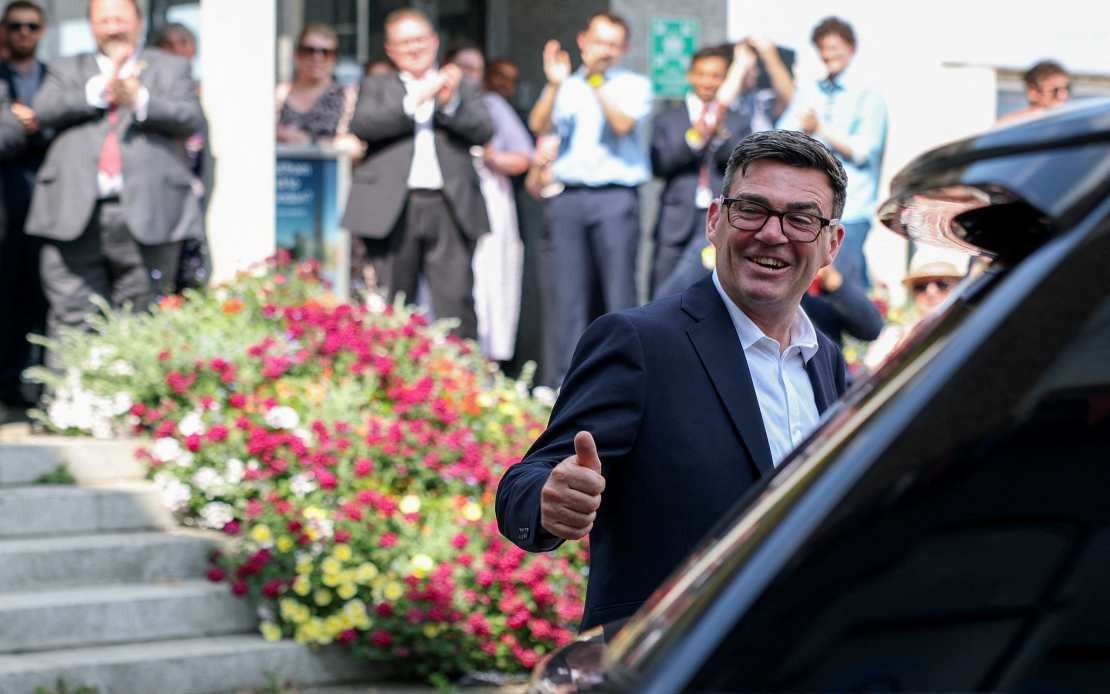
Andy Burnham took over as United Kingdom prime minister on Monday, stepping into the role barely a month after unexpectedly returning to Parliament and winning the Labour leadership without facing any contest. The former mayor of Greater Manchester delivered his inaugural address after formally visiting King Charles III, outlining an agenda centred on restoring public faith in government and offering what he termed "breathing room" to British households struggling with economic pressures. His elevation marks a significant shift in Westminster leadership, coming at a moment when political instability has become a defining characteristic of recent British governance.
In his first major speech from Downing Street, Burnham cast the current juncture as a time demanding both "reflection and resolution." He emphasised that the nation must confront its difficulties honestly and demonstrate genuine capacity to address them, a message clearly aimed at reassuring voters fatigued by years of political turmoil. The new prime minister pointedly acknowledged that the UK has cycled through seven different leaders over the past decade, underscoring his conviction that restoring steady, principled administration represents an urgent necessity. This framing suggests Burnham intends to position himself as a stabilising force after a period of considerable flux at the highest levels of government.
Central to Burnham's platform is the promise that increased political stability will yield tangible, measurable improvements in people's daily lives. Beyond the rhetorical emphasis on providing "breathing room" regarding cost-of-living pressures, his advisors stressed that he intends to move quickly from promises to concrete action. The focus on immediate, practical results reflects awareness that voters have grown sceptical of grand political commitments and expect visible change within months rather than years. This pragmatic approach contrasts with some of the more ideologically driven agendas of recent administrations.
One of Burnham's flagship commitments involves fundamentally recalibrating the relationship between central government in London and regional authorities across the United Kingdom. Devolution of power away from the capital figures prominently in his strategic thinking, suggesting he intends to use his position to empower local communities and reduce the concentration of decision-making in Westminster. This priority reflects his background leading Greater Manchester, where he gained experience with devolved governance structures. Should he pursue this agenda vigorously, it could reshape how Britain's constituent parts are governed for years to come.
Within his first week, Burnham is expected to announce policies addressing several immediate pain points affecting ordinary households. Energy bills have emerged as a critical focus, with reports indicating the government may authorise expanded oil and gas exploration in the North Sea. This proposal, however, has provoked resistance from environmental organisations, which argue that additional drilling will not meaningfully reduce prices for consumers. The tension between pursuing short-term economic relief and honouring commitments to environmental sustainability suggests Burnham faces difficult trade-offs early in his premiership. His 2024 election manifesto explicitly promised against issuing new North Sea drilling licences, creating potential friction between campaign commitments and governing realities.
The prime minister has also signalled willingness to revisit the digital ID programme championed by his predecessor Keir Starmer, with plans to scrap it entirely. This decision would redirect resources toward addressing cost-of-living concerns, reflecting a reordering of priorities away from security and identity verification technologies toward immediate household economic relief. The move demonstrates how new administrations often reshape policy direction, abandoning initiatives of their predecessors in favour of different approaches, even within the same party.
Another major decision confronting Burnham concerns Thames Water, the country's largest water company, which faces a crushing £20 billion debt burden and has become a symbol of failed regulation within essential services. Burnham has previously expressed support for expanded public involvement in managing critical infrastructure, positioning himself sympathetically toward intervention in sectors like water supply and energy. The firm's main creditors have indicated openness to discussions with the new government about potential rescue arrangements, including possible temporary nationalisation, to prevent the company entering formal insolvency proceedings.
Burnham's selection of his Cabinet in the immediate aftermath of taking office will offer crucial signals about the direction his government intends to pursue. Particular attention has focused on the chancellor position, with speculation centring on two senior figures: Energy Secretary Ed Miliband and Home Secretary Shabana Mahmood. Either appointment would carry significant implications for economic policy, with Miliband's background in energy matters suggesting potential emphasis on green industrial strategy, while Mahmood's law-and-order credentials might indicate different priorities. The identity of the chancellor will substantially influence how Burnham's broader vision translates into concrete fiscal policy and economic management.
For Malaysia and Southeast Asia more broadly, the shift in British leadership carries implications for regional trade, investment, and diplomatic relationships. The United Kingdom maintains significant economic interests throughout the region, and changes in London's political direction can affect policy toward bilateral relationships and regional trade agreements. Burnham's emphasis on devolution and local empowerment might suggest a different approach to international partnerships compared to his predecessor, potentially creating opportunities for renewed engagement with Malaysian counterparts at various governmental levels. The stability Burnham promises could also provide reassurance to regional investors concerned about policy uncertainty in British governance.
Burnham's rapid ascent from returning to Parliament to the premiership within weeks represents an unusual trajectory in modern British politics, accomplished without the prolonged leadership contests that have often preceded recent transitions of power. This compressed timeline means he has had limited opportunity to develop and articulate a comprehensive governing agenda, making his early policy announcements and Cabinet selections particularly significant indicators of intended direction. The months ahead will reveal whether the emphasis on stability and cost-of-living relief can deliver the tangible improvements Burnham has promised, and whether his devolution agenda can reshape British governance as fundamentally as his rhetoric suggests.

