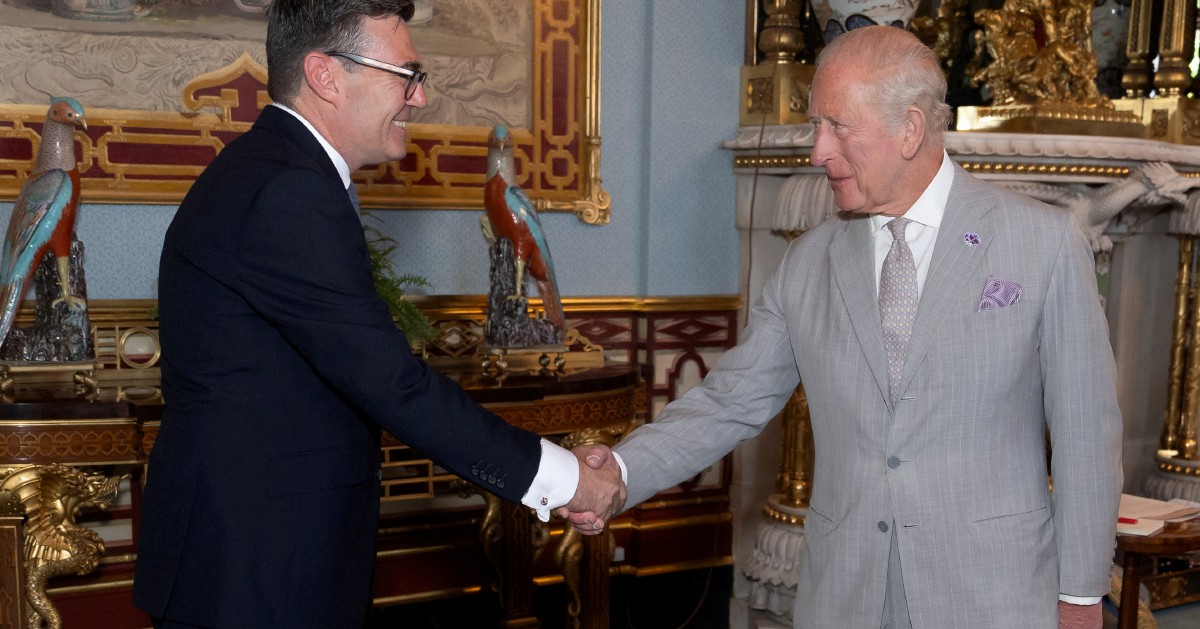
Andy Burnham has formally assumed office as Prime Minister of the United Kingdom following a ceremonial meeting with King Charles III at Buckingham Palace in London on Monday. The transition marks a significant shift in British political leadership, with Burnham succeeding Keir Starmer at the helm of the government during a period of considerable domestic and international challenges.
The appointment of Burnham, a seasoned Labour politician with extensive experience in regional government and national politics, represents a new chapter for Westminster governance. His path to Number 10 reflects the evolving dynamics within the Labour Party and the broader political landscape that has reshaped British politics in recent years. The formal ceremony at Buckingham Palace, a constitutional ritual steeped in tradition, underscores the continuity of parliamentary democracy despite the change in leadership.
Burnham's tenure begins against a backdrop of economic pressures, public service demands, and the need to establish clear policy direction for the nation. Having previously held prominent roles in government and local administration, he brings a track record of managing complex political situations and stakeholder relationships. His appointment signals Labour's confidence in his ability to navigate the competing priorities facing modern Britain and maintain the party's electoral mandate.
For Malaysian and Southeast Asian observers, this transition in British leadership carries implications for regional engagement and partnership. The United Kingdom remains a significant player in Indo-Pacific affairs, and the continuity or evolution of British foreign policy under new leadership affects bilateral relationships and regional security arrangements. Commonwealth ties, trade partnerships, and collaborative mechanisms between Britain and ASEAN nations continue regardless of domestic political changes, yet leadership transitions often bring fresh perspectives to diplomatic priorities and strategic emphasis.
The handover from Starmer to Burnham demonstrates the workings of parliamentary democracy, where governments change through constitutional processes without disruption to institutional frameworks. This contrasts sharply with various governance models globally and underscores the stability that underpins British political institutions, even during periods of leadership transition. The orderly nature of power transfer reflects decades of established practice and constitutional convention.
Burnham now faces the substantial task of articulating and implementing his vision for the country across multiple policy domains. Economic management, healthcare provision, education reform, and infrastructure development rank among the pressing issues requiring immediate attention. Additionally, international relations, including Britain's standing within global institutions and bilateral relationships with major powers, will require careful stewardship during a period of geopolitical uncertainty.
The political landscape that produced Burnham's ascension reflects broader trends within the Labour movement and British society. His elevation represents the party's assessment of leadership requirements at this particular juncture and the qualities deemed necessary to maintain public confidence and deliver on policy commitments. The dynamics within the Labour caucus, regional representation considerations, and generational factors all contribute to such significant personnel changes.
Burnham's background in North West England and his work on devolution and regional development suggest potential emphasis on territorial governance and local empowerment within his administration. These priorities could reshape how central government interacts with devolved administrations in Scotland, Wales, and Northern Ireland, as well as how English regions are engaged in decision-making processes. Such approaches have implications for how the United Kingdom is governed as a union of constituent nations.
The international community's response to British leadership transitions generally focuses on ensuring policy continuity in critical areas such as defence commitments, intelligence partnerships, and economic relationships. NATO obligations, support for Ukraine, and Indo-Pacific engagement represent continuities likely to transcend the Starmer-to-Burnham transition, though implementation styles and diplomatic emphasis may evolve. The established frameworks within which British foreign policy operates provide stability despite leadership changes.
For Malaysian stakeholders engaged with British institutions—whether in trade, education, security cooperation, or cultural exchange—the transition presents an opportunity to assess bilateral relationships and identify areas for enhanced engagement. The new Prime Minister's administrative machinery and foreign office will soon establish patterns of engagement with Commonwealth partners and regional powers throughout Asia and the Pacific.
Burnham's first weeks in office will prove critical in establishing his government's tone, policy priorities, and legislative agenda. Parliamentary procedures, backbench management, and media relations will require careful navigation as he builds confidence both within his party and among the broader electorate. The effectiveness of his opening moves will shape perceptions of his leadership and set the trajectory for his administration's tenure.
The succession in London represents a routine operation of democratic governance, yet carries significance for international observers. How Burnham charts Britain's course through current economic, social, and security challenges will influence Britain's role in global affairs and its relationships across the Commonwealth and beyond. His administration's approach to deepening ties with partners in Southeast Asia, particularly Malaysia, will merit close attention from regional policymakers and business communities seeking to strengthen trans-regional cooperation.

