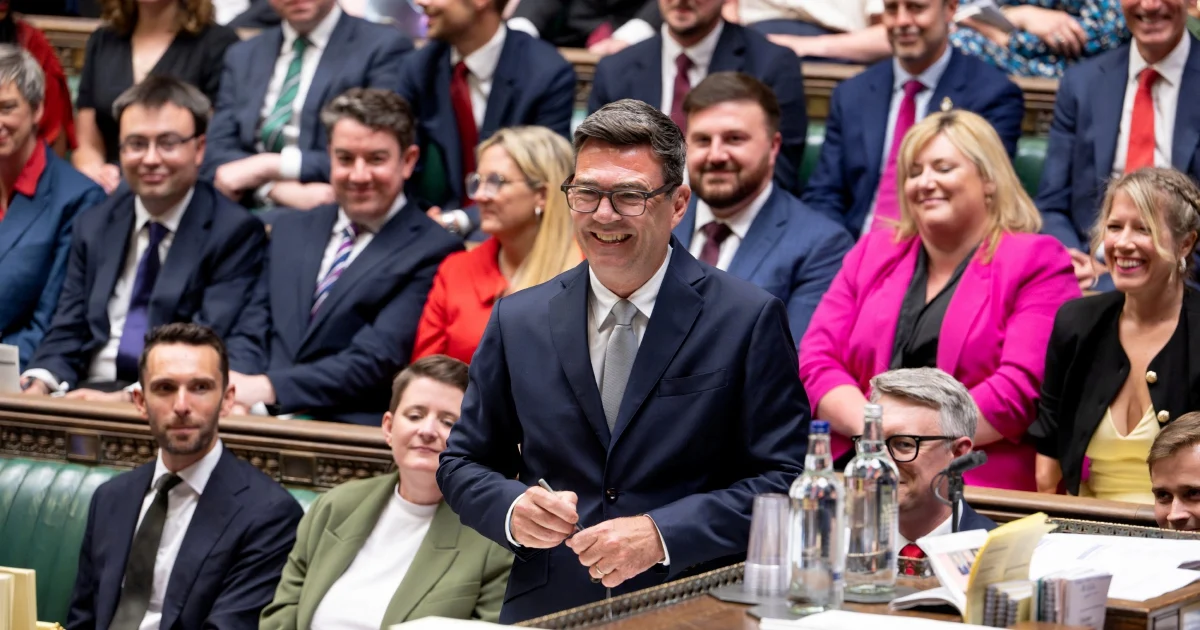
Andy Burnham, the charismatic mayor of Manchester and a prominent voice within Britain's Labour Party, has positioned himself as a serious contender for the party's top leadership position following Keir Starmer's unexpected announcement of his resignation in parliament on Monday. The development has triggered speculation across Westminster and beyond about who will lead the opposition party into its next chapter, with Burnham receiving considerable parliamentary support and media attention as a potential successor.
Burnham's appeal extends well beyond London's political establishment. His tenure as Manchester's elected mayor has earned him the informal title of "King of the North," reflecting his successful advocacy for greater devolved powers and investment for regions beyond the prosperous south-east. This distinctive positioning—as a powerful voice for provincial interests during a period when many voters feel sidelined by London-centric politics—has contributed substantially to his growing prominence within party circles and his appeal to a broad cross-section of Labour supporters.
The circumstances of Starmer's departure mark a significant turning point for Labour after a relatively short tenure as prime minister. The timing and manner of the resignation have created an immediate vacuum in party leadership, and multiple figures have begun positioning themselves as potential replacements. The race to succeed Starmer will test the party's unity and determine the direction of its policy agenda for years to come, making the contest far more than a procedural matter of choosing new figureheads.
Burnham's background offers considerable political depth. His career encompasses service as a Member of Parliament, experience within government during Labour's previous tenure in power, and his more recent success in translating mayoral authority into genuine improvements in Manchester's profile and economic prospects. This progression from national-level politics to regional power has given him perspectives on both Westminster operations and the practical challenges facing communities across Britain, positioning him uniquely to bridge these two worlds.
The "King of the North" moniker reflects more than merely geographic association. During years of Conservative governance, northern English regions faced particular economic challenges and infrastructure gaps relative to wealthier areas. Burnham's persistent advocacy for these constituencies, combined with his willingness to challenge both Conservative policies and some Labour positions when he believed northern interests required it, has built him a formidable reputation as a politician who prioritises ordinary voters' material concerns. This independence has enhanced rather than diminished his standing within Labour circles seeking a leader who can appeal beyond traditional urban progressive constituencies.
The parliamentary reception Burnham received on Monday suggests substantial goodwill among Labour MPs, though a formal party leadership election will ultimately determine the outcome. The process typically involves both parliamentary colleagues and party membership voting, making broad appeal across different Labour factions essential for any winning candidate. Burnham's ability to command respect from moderate and progressive wings alike gives him notable advantages in such contested races.
For Malaysian and Southeast Asian readers observing British politics, Burnham's rise illustrates broader patterns reshaping wealthy democracies. Regional inequality, the political backlash against concentrated power in capital cities, and the emergence of leaders championing provincial interests have emerged as significant forces across multiple countries. Labour's potential turn toward a provincial power base through Burnham's leadership would represent a substantive shift in how the British left approaches governing and prioritising resources.
The leadership race will necessarily force Labour to clarify its vision for economic policy, regional development, and the relationship between national government and devolved authorities. Burnham's involvement will almost certainly elevate these themes beyond their previous prominence. His track record suggests he would likely prioritise infrastructure investment, employment creation, and political accountability in regions traditionally neglected by Westminster-focused parties seeking London and southern suburban votes.
Starmer's resignation creates genuine uncertainty about Labour's political trajectory at a particularly consequential moment. The party previously won power on a platform emphasising stability and competent management. The circumstances forcing a change of leadership so soon after electoral success will inevitably raise questions about internal stability, the effectiveness of the governing team, and whether Labour can maintain the electoral coalition that brought it to office. Burnham's candidacy will partly constitute an argument that Labour requires new direction and fresh approaches beyond Starmer's tenure.
The broader British political context remains turbulent. Challenges including post-pandemic economic adjustment, pressures on public services, industrial relations tensions, and structural economic weaknesses persist regardless of who leads Labour. Whoever ultimately becomes party leader will inherit these intractable difficulties, making the choice of successor consequential not only for Labour but for the direction of British policy and politics more generally in coming years.