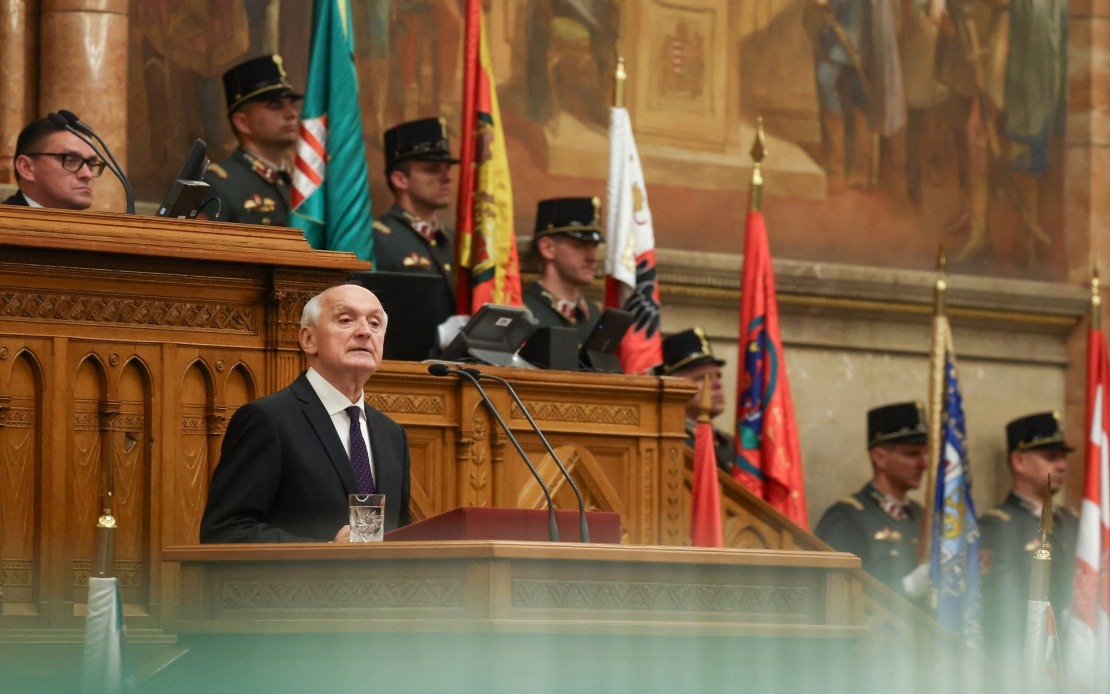
Andras Baka has officially assumed the presidency of Hungary on August 19, 2026, marking a significant transition in the country's political leadership. Prime Minister Peter Magyar announced the development through social media, offering his congratulations to the newly inaugurated president and expressing hopes for his success in the role. The formal assumption of office concludes a process that began with parliamentary elections held earlier in the month, reflecting the culmination of Hungary's constitutional procedures for selecting its head of state.
Baka's election to the presidency represents an unusual appointment given his controversial exit from Hungary's judicial system more than a decade earlier. The former jurist served as president of Hungary's Supreme Court between 2009 and 2011, a period that coincided with significant institutional reforms initiated by the government under Viktor Orban. Rather than accepting the structural changes being implemented across the judiciary, Baka chose to resign from his position, signalling his disagreement with the government's approach to legal system modernisation. This decision established him as a figure willing to resist executive pressure on judicial independence.
Prior to his domestic judicial career, Baka had gained international experience working within the European Court of Human Rights located in Strasbourg. This continental exposure to human rights jurisprudence and constitutional interpretation likely shaped his perspective on judicial autonomy and the protection of individual liberties. When Hungary restructured its Supreme Court following Baka's resignation, the country established a new institution called the Hungarian Curia to replace the previous arrangement. Baka returned to take a leadership position within this reformed body, serving as chairman from 2012 until 2020, suggesting a pragmatic acceptance of the institutional changes he had previously protested against.
The transition to Baka's presidency occurred against a backdrop of considerable political friction within Hungary's parliament and society. The parliamentary election that saw Baka chosen as president took place on August 11, 2026, but the process was significantly disrupted by the absence of certain political actors. Hungary's opposition parties—specifically Fidesz and the Christian Democratic People's Party—made a coordinated decision to boycott the presidential election entirely. Their refusal to participate represented a formal protest mechanism against what they characterised as the improper removal of the previous president, Tamas Szujok, whose departure from office had been achieved through constitutional amendment procedures.
This boycott strategy reveals deep divisions within Hungarian politics regarding the appropriate processes for selecting and removing high-ranking state officials. The opposition's objection centres on their view that constitutional amendments were manipulated to facilitate Szujok's departure, potentially setting a concerning precedent for future presidential transitions. By abstaining from the election, these parties sought to delegitimise the selection process and highlight their concerns about constitutional norms and democratic procedures. Their absence from the parliamentary vote meant that Baka's election proceeded without participation from significant segments of the political spectrum, complicating the legitimacy narrative surrounding his appointment.
For Malaysia and Southeast Asian observers, Hungary's presidential transition offers instructive parallels regarding institutional checks and balances in presidential and parliamentary systems. The judicial reform controversies that defined Baka's earlier career reflect ongoing tensions across Central and Eastern Europe concerning the independence of the judiciary from political pressures. These issues resonate particularly in Southeast Asia, where countries frequently grapple with questions about appropriate judicial autonomy, the pace of institutional modernisation, and the balance between executive efficiency and constitutional constraints. Hungary's experience demonstrates how judicial reform initiatives, regardless of their stated objectives, can generate substantial political opposition when perceived as threatening institutional independence.
The appointment of someone with Baka's judicial background to the presidency potentially signals a recalibration of how Hungary's political leadership intends to address legitimacy concerns. A president with demonstrated commitment to legal institutions and human rights frameworks might be expected to champion judicial independence more vigorously than predecessors. However, the controversial nature of his appointment and the opposition boycott suggest that his presidency begins with significant political capital already depleted, requiring careful navigation of Hungary's fractious political landscape.
Baka's inauguration occurs within the broader context of Central European politics, where Hungary occupies a distinctive and often contentious position. Relations between Budapest and Brussels remain strained over judicial independence concerns, rule-of-law issues, and Hungary's distinctive foreign policy orientation. A president with international human rights experience and a history of resisting government pressure on judicial matters may potentially improve Hungary's standing on these matters, though such improvements would require consistent action throughout his term. Alternatively, critics may view his appointment as merely cosmetic unless accompanied by substantive institutional reforms that genuinely insulate the judiciary from political manipulation.
The political tensions surrounding Baka's inauguration underscore the challenges facing Hungary as it attempts to maintain constitutional stability while managing competing visions for the country's development. Opposition parties' boycott demonstrated their lack of confidence in the process and suggested deep institutional discord that extends beyond personality-driven disputes. These divisions carry implications for Hungary's democratic health and its relationship with European institutions concerned about rule-of-law standards and constitutional governance across the continent.

