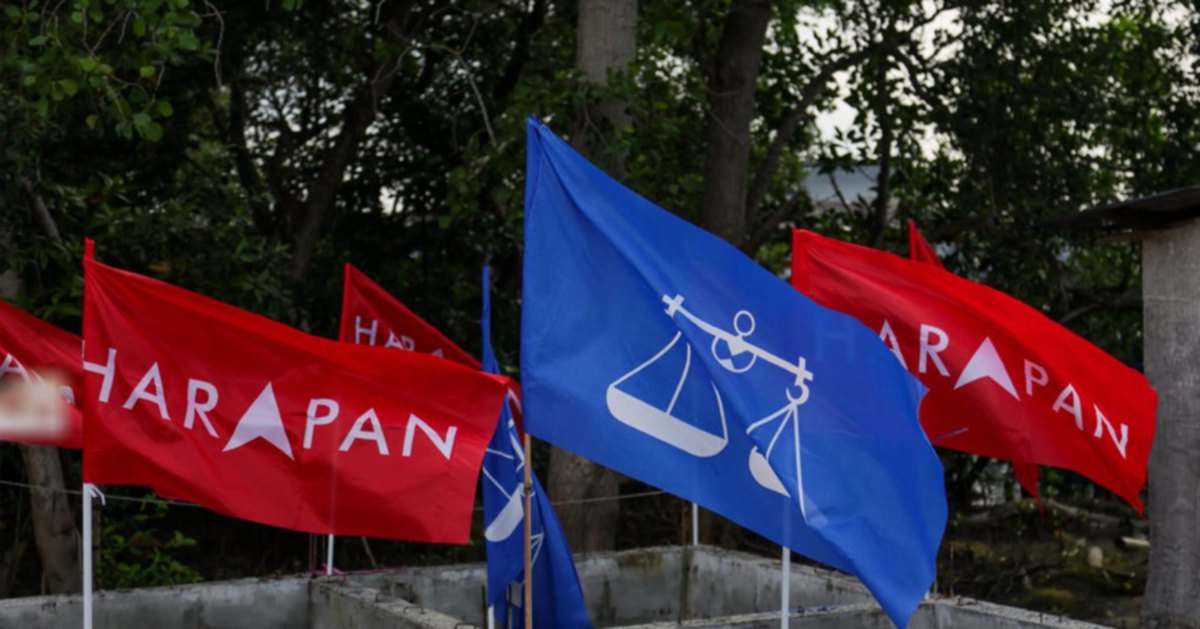
Datuk Seri Fahmi Fadzil, the communications strategist for Pakatan Harapan, has officially acknowledged that Datuk Seri Amirudin Shari, who directs the coalition's election operations, held discussions with Datuk Seri Anwar Ibrahim, the coalition's chairman, addressing intensifying speculation about internal coordination on seat-sharing arrangements.
The confirmation marks a deliberate public acknowledgement of high-level coalition activity at a time when Pakatan Harapan and Barisan Nasional continue negotiating the distribution of parliamentary constituencies ahead of anticipated electoral contests. The meeting between Amirudin and Anwar represents routine but significant internal coordination, as the coalition seeks to optimise its electoral positioning while maintaining its governing alliance with Barisan Nasional.
Amirudin's role as election director places him at the heart of strategic planning, overseeing candidate selection, constituency analysis, and resource allocation across the coalition's member parties—PKR, DAP, and Amanah. His meetings with Anwar, as party chairman, would naturally encompass discussions about contested seats, competitive dynamics in various regions, and the broader electoral mathematics that shape coalition negotiations. Such coordination is essential given the complexity of managing interests across multiple parties with differing geographical strongholds and demographic bases.
The timing of Fahmi's confirmation suggests that Pakatan Harapan is projecting confidence and transparency about its internal decision-making processes. Rather than allowing speculation to dominate public discourse, the coalition's communications apparatus chose to acknowledge the meeting directly. This approach contrasts with earlier political cycles when coalition movements were often shrouded in secrecy, with only leaked reports and speculation guiding public understanding of negotiations.
For Malaysian observers, such meetings underscore the intricate choreography required to maintain the current political configuration. The Pakatan Harapan-Barisan Nasional alliance, whilst unprecedented in scale, requires constant recalibration to address the distinct interests of individual coalition members. Smaller parties within Pakatan Harapan, particularly Amanah, have historically expressed concerns about seat allocations, while DAP and PKR have competed intensely in urban constituencies where voter preferences are volatile.
The seat-sharing negotiations extend beyond simple arithmetic. They involve assessments of which coalition partner can most effectively contest particular constituencies based on historical performance, demographic composition, and incumbent strength. Amirudin, drawing on sophisticated electoral modelling and historical data, would present options to Anwar that balance maximising overall coalition victory likelihood whilst maintaining sufficient seat distribution to keep all partners satisfied and committed to the alliance.
Barisan Nasional's participation in these discussions adds another dimension. The traditional ruling coalition, historically dominant across rural and semi-urban constituencies, brings substantial electoral machinery and entrenched support networks. Negotiations between Pakatan Harapan and Barisan Nasional require determining which party contests which seats to prevent split opposition votes in constituencies where they might face stronger Islamic opposition or independent challengers. These calculations become particularly nuanced in states with mixed political allegiances or constituencies with shifting demographic patterns.
The confirmation by Fahmi, a senior communications figure, indicates that Pakatan Harapan leadership has decided these discussions are sufficiently advanced or important to merit public acknowledgement. Communications strategies within political coalitions typically reflect leadership confidence levels—visibility of high-level meetings often signals progress or resolution of contentious matters, whereas silence might suggest ongoing disagreements or uncertainty.
For Southeast Asian context, Malaysia's coalition dynamics offer insights into managing multi-party democracy. Unlike more established two-party systems, Malaysian politics requires frequent recalibration of alliances, and the transparency increasingly surrounding such arrangements reflects voter demand for understanding how political forces align and negotiate. The Pakatan Harapan-Barisan Nasional partnership has already disrupted traditional political patterns; how their seat-sharing proceeds will influence not only electoral outcomes but also precedents for future coalition-building across the region.
Regional observers will watch how these negotiations conclude, particularly regarding which constituencies emerge as genuinely contested between the coalition partners and which are allocated through agreement. Such patterns reveal underlying power dynamics within the alliance and provide indicators for electoral forecasting. Amirudin's analytical work, filtered through discussions with Anwar, ultimately shapes not just who contests which seats but which voter preferences receive meaningful electoral competition.

