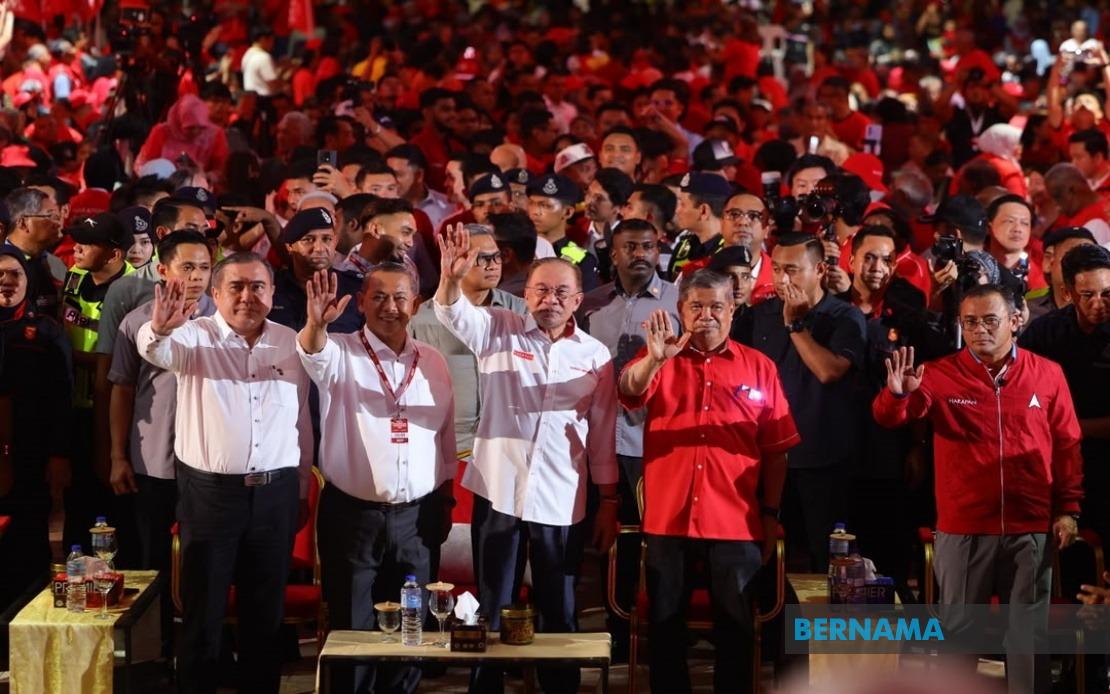
Pakatan Harapan's campaign in Negeri Sembilan is gaining momentum following the coalition's setback in neighbouring Johor, as the state chapter intensifies efforts to secure voter confidence for the 16th state election. At the candidate announcement ceremony in Kuala Pilah, Negeri Sembilan PH chairman Datuk Seri Aminuddin Harun made a direct appeal to constituents to maintain the coalition's hold on power, framing the election as pivotal for preserving the administrative continuity that has underpinned the state's recent progress.
The central argument advanced by Aminuddin is fundamentally centred on investor sentiment and economic stability. A government that enjoys political certainty can more effectively retain and attract foreign and domestic capital, he argued, pointing to the state's achievement in securing RM19.1 billion in investments as tangible evidence of market confidence in PH's stewardship. This economic dimension reflects a broader strategic messaging by the coalition: electoral victory translates directly into material benefits for residents through uninterrupted infrastructure development, business activity, and employment opportunities.
Since assuming office, Aminuddin highlighted substantial gains in revenue mobilization, particularly in the religious endowment sector. Zakat collection in Negeri Sembilan has more than doubled from approximately RM80 million to nearly RM200 million, a surge that permits significantly expanded welfare assistance to vulnerable populations. The increase underscores both improved state administration and growing religious participation, demonstrating that effective governance can yield benefits across multiple dimensions of public life simultaneously.
The coalition has positioned its welfare agenda as central to its case for re-election. Beyond zakat distribution, PH's programme encompasses education support initiatives and the provision of tablets to schoolchildren, interventions that carry particular weight with family-focused voters and lower-income households. By itemizing these programmes, Aminuddin sought to demonstrate that PH's mandate has translated into concrete improvements in the lives of ordinary Negeri Sembilans, rather than remaining confined to abstract promises.
Coordination between state and federal authorities emerged as a secondary but significant theme in the campaign messaging. Aminuddin emphasized that close partnership between Negeri Sembilan's state government and the federal administration in Kuala Lumpur is essential for realizing development projects efficiently. This messaging carries implicit acknowledgement that state governments, however well-managed, remain constrained without harmonious relations with federal institutions—a reality that resonates with voters cognizant of how intergovernmental dysfunction can impede local progress.
The presence of senior coalition figures, including DAP secretary-general Anthony Loke, Amanah president Datuk Seri Mohamad Sabu, and federal communications director Datuk Seri Fahmi Fadzil, signals that Negeri Sembilan has acquired heightened strategic importance within PH's broader electoral calculations. For Loke, the state election represented what he explicitly termed a "second round"—a critical opportunity for PH to rebound after its disappointing performance in Johor and recapture momentum before potentially larger federal contests. The language of resurrection reflects genuine anxiety within the coalition about its electoral trajectory and the necessity of demonstrating that Johor's reversal does not presage a broader collapse in support.
Loke's candid acknowledgement that Johor "did not succeed and the result was not in our favour" provided unexpected honesty in a campaign setting. Rather than attempting to obscure the loss, he pivoted toward forward-looking determination, invoking Negeri Sembilan as PH's "home ground" where the coalition must prove it remains competitive and capable of governing. This rhetorical move sought to reframe the Johor defeat not as systemic weakness but as a localized reversal susceptible to correction through enhanced campaigning and organizational discipline.
The coalition deliberately emphasized unity across its component parties, with Loke pledging that PH would function as "one united team" irrespective of party affiliation, and confirming that Aminuddin would remain the coalition's menteri besar candidate and overall "commander" for the election. This organizational messaging addressed implicit concerns that PH's multiparty structure might fragment during campaigning, a risk that has historically plagued the coalition during periods of electoral difficulty. By visibly consolidating around Aminuddin's candidacy, PH sought to project coherence to voters.
Domestic decorum and respect for constitutional institutions featured prominently in Loke's statements, with explicit reminders that campaign workers and members must "conduct themselves respectfully" and honour "Negeri Sembilan's customs and royal institution." This injunction reflected acute sensitivity to past controversies involving DAP members and statements perceived as insufficiently deferential toward the monarchy. By pre-emptively emphasizing DAP's commitment to constitutional monarchy and the Rukun Negara, the coalition attempted to neutralize a traditional vulnerability and prevent opponents from deploying cultural and institutional narratives against it.
Among Malaysian observers, the Negeri Sembilan election carries implications extending beyond the state itself. PH's performance will provide an early indicator of whether the coalition has stabilized after Johor's reversal or whether deeper organizational and messaging problems persist. Should Negeri Sembilan revert to opposition control, narrative momentum would likely shift further toward Barisan Nasional and away from the coalition. Conversely, a decisive PH victory would provide psychological reinforcement and suggest that the coalition's brand damage, while real, remains manageable.
For Southeast Asian readers monitoring Malaysian political trajectories, the Negeri Sembilan campaign illustrates broader regional patterns in how ruling coalitions defend incumbent positions. The emphasis on economic performance, welfare programmes, and institutional stability reflects globally familiar strategies employed by governments seeking re-election. Yet the particular Malaysian context—with constitutional monarchy, federalism, and multiethnic coalition politics—creates distinctive campaign dynamics where institutional respect and intergovernmental coordination acquire outsized importance.
Looking forward, PH's campaign machinery faces the challenge of executing a coordinated effort across geographically dispersed communities while maintaining party discipline and cultural sensitivity. The presence of senior federal figures suggests that PH intends to deploy substantial organizational resources and messaging capabilities toward Negeri Sembilan. Whether these investments translate into electoral victory remains uncertain, but the state has unquestionably become a crucial testing ground for PH's political resilience and capacity to recover from setbacks.

