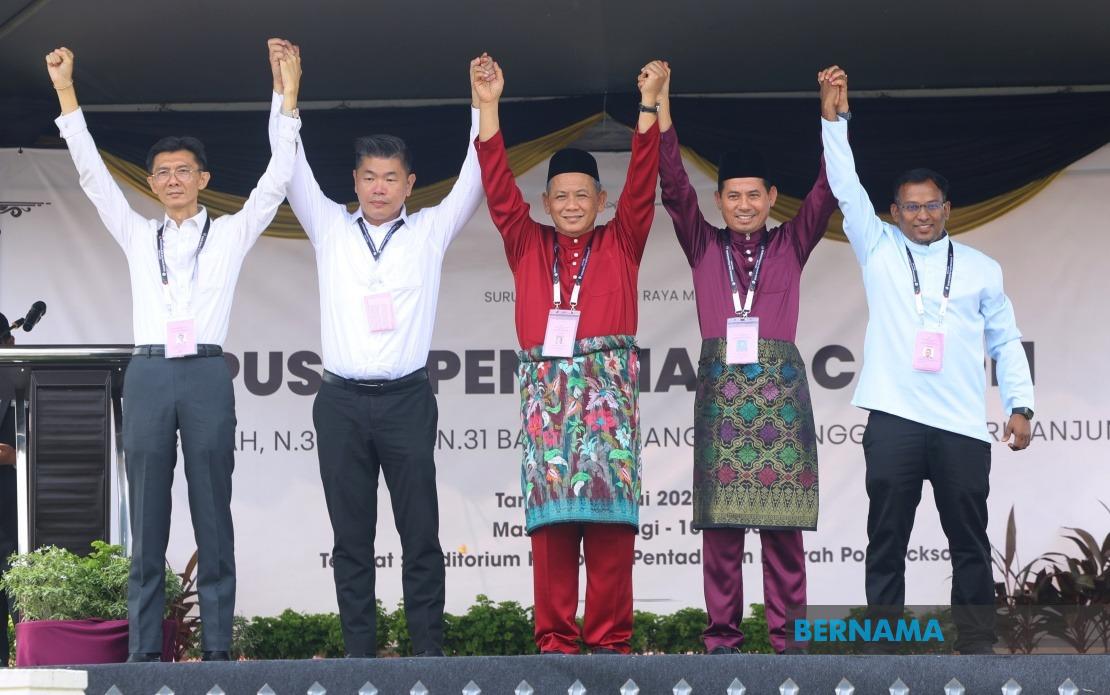
Negeri Sembilan Menteri Besar Datuk Seri Aminuddin Harun has unveiled an ambitious economic development blueprint for the Linggi state constituency, announcing intentions to establish both a port facility and an industrial complex should Pakatan Harapan secure victory in the 16th Negeri Sembilan state election scheduled for August 1. Aminuddin disclosed the plans during a campaign appearance at the District Administration Complex Auditorium in Port Dickson, where he formally entered the electoral contest as the opposition coalition's candidate. The proposed infrastructure projects are positioned as centrepieces of a comprehensive strategy designed to modernise the constituency's economic foundation while broadening employment prospects for local residents.
As Negeri Sembilan Pakatan Harapan chairman, Aminuddin characterised the infrastructure initiatives as components of a wider vision to strengthen the region's connectivity and industrial capacity. He indicated that these development priorities had originated from his own policy recommendations and had been formally endorsed by the coalition's leadership hierarchy. The timing of such announcements reflects the crucial role that concrete economic promises play in competitive election campaigns, particularly in constituencies where voters have grown accustomed to developmental pledges from both establishment and opposition quarters.
Aminuddin's entry into the Linggi contest represents a strategic gambit by Pakatan Harapan to contest territory traditionally dominated by Barisan Nasional. He faces incumbent Datuk Mohd Faizal Ramli, who has represented the seat for the ruling coalition, as well as Datuk Zamri Md Said fielded by Bersatu in what has become a three-cornered battle. By openly acknowledging the formidable challenge posed by BN's organisational and electoral machinery in the constituency, Aminuddin sought to frame his candidacy as a courageous undertaking rather than a presumptive bid. His remarks conveyed a determination to mobilise Pakatan Harapan's campaigning apparatus effectively whilst appealing to voters to exercise informed judgment at the ballot box.
The infrastructure proposals carry particular significance for Negeri Sembilan's economic trajectory. A dedicated port facility in Linggi would potentially enhance the state's maritime trade capacity and reduce logistical dependency on neighbouring Selangor's more congested ports. Such a development could position the constituency as a secondary logistics hub within the broader Klang Valley and Selangor economic ecosystem, attracting container operations and regional trade flows. The industrial zone component would complement port operations by providing manufacturing, processing, and warehousing facilities designed to absorb value-added activities upstream and downstream of port-dependent industries.
For Malaysian readers and policymakers tracking Negeri Sembilan's development trajectory, these proposals merit scrutiny regarding feasibility and financing mechanisms. Port development in Malaysia typically requires substantial capital expenditure, environmental assessments, and federal-level coordination given maritime jurisdiction overlaps. The industrial zone would similarly demand land acquisition, utilities infrastructure, and regulatory alignment with state and federal industrial policies. Aminuddin's framing of these projects as election commitments raises questions about implementation timelines, funding sources, and the extent to which such initiatives align with existing federal and state economic planning frameworks.
The incumbent Mohd Faizal responded to the campaign challenge by cautioning that Barisan Nasional could not afford complacency despite Linggi's historical alignment with the coalition. His emphasis on maintaining campaign propriety—calling for an election process free from excessive provocation, inflammatory rhetoric, and unsubstantiated allegations—suggests recognition that the opposition's renewed vigour in targeting traditionally safe seats reflects broader electoral volatility in Malaysian politics. His appeal for a respectful campaign dynamic also implicitly acknowledges that voters in Linggi may be receptive to alternative political messaging, particularly on developmental and economic governance grounds.
The Linggi contest exemplifies a wider pattern in contemporary Malaysian state elections where opposition coalitions increasingly contest constituencies previously considered insurmountable bastions of Barisan Nasional strength. The appointment of a sitting Menteri Besar to contest a single state seat represents an escalation in resource commitment and political stakes for Pakatan Harapan. Such tactics underscore the coalition's assessment that targeted investments in high-profile candidacies and infrastructure pledges can shift voter calculations in constituencies where economic stagnation or perceived neglect may have eroded establishment loyalty.
Regionally, the Negeri Sembilan election reflects broader Southeast Asian trends wherein opposition movements employ infrastructure and economic development messaging to compete with incumbents whose primary advantage traditionally derived from access to state apparatus and patronage networks. As economic performance and developmental outcomes increasingly drive electoral behaviour across the region, Aminuddin's emphasis on tangible port and industrial projects rather than abstract governance promises reflects contemporary campaign strategy evolution. The viability of such pledges and their realisation following elections remains a critical indicator of political credibility and democratic accountability in Malaysian electoral cycles.
The two-week campaign period preceding the August 1 polling date will test whether Pakatan Harapan's development-focused messaging and Aminuddin's personal stature as sitting Menteri Besar can overcome Linggi's historical voting patterns and Barisan Nasional's traditional organisational advantages. The outcome will carry implications beyond Negeri Sembilan, potentially signalling the extent to which opposition coalitions can make substantive inroads into previously secure electoral territories through combination of credible leadership, specific policy proposals, and renewed grassroots mobilisation efforts.

