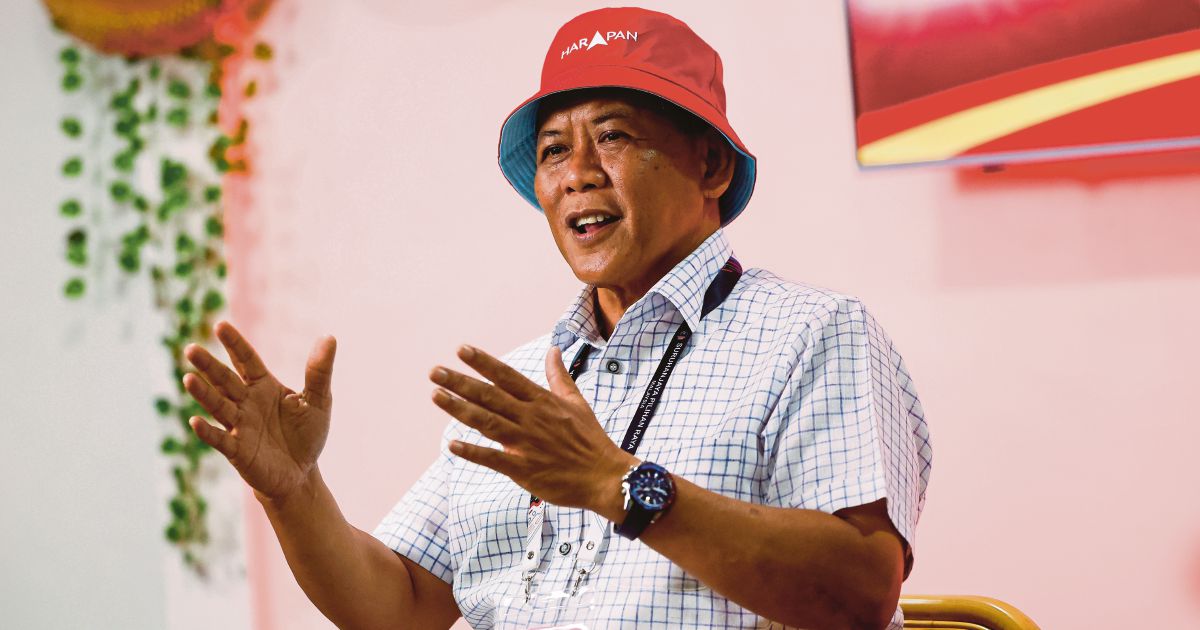
Caretaker Negri Sembilan Menteri Besar Datuk Seri Aminuddin Harun is banking on the state administration's governance credentials to clinch victory in Linggi during tomorrow's 16th Negri Sembilan state election. Speaking in Port Dickson, the incumbent political leader expressed optimism that voters in his constituency will recognise the tangible achievements delivered by the state government over its tenure, translating public satisfaction into electoral support.
The Linggi state seat holds particular significance in the broader Negri Sembilan political landscape, representing a crucial test of whether the government's policy implementation and infrastructure development initiatives have resonated with constituents. Aminuddin's strategy centres on articulating what he characterises as the state's measurable accomplishments across diverse portfolios including economic development, public services, and social welfare programmes. This approach reflects a broader trend among incumbent candidates nationwide who rely on demonstrating competence and delivery rather than purely partisan messaging.
Negri Sembilan, as Malaysia's smallest state by population, often operates as a barometer for voting sentiment in the broader peninsular region. The outcomes in key constituencies such as Linggi can provide insights into whether rural and semi-urban voters in Selangor's neighbouring state remain satisfied with current governance structures or are seeking alternative political directions. This electoral round thus carries implications extending beyond state-level administration, potentially influencing the broader political climate ahead of federal parliamentary deliberations.
The emphasis on government track record reflects a calculated pivot away from personality-driven or opposition-focused campaigning. By foregrounding concrete outcomes—whether infrastructure projects, healthcare accessibility, educational facilities, or economic initiatives—Aminuddin's campaign strategy attempts to frame the election as a referendum on competence rather than ideological preference or party affiliation. This pragmatic approach appeals particularly to swing voters who prioritise effective service delivery over political symbolism.
Linggi's voter composition encompasses diverse demographic segments, from urban professionals commuting to Kuala Lumpur to rural agricultural communities and port workers in Port Dickson itself. This heterogeneity demands a campaign message that speaks to multiple economic interests and quality-of-life concerns. Aminuddin's focus on developmental achievements attempts to bridge these divides by highlighting benefits that transcend class and occupational boundaries—improved roads, better schools, accessible healthcare, and economic opportunities.
The caretaker Menteri Besar's confidence appears grounded in institutional advantages inherent to incumbent status. Control over state resources, media access, and established administrative networks typically favour sitting governments during electoral campaigns. However, Negri Sembilan's relatively compact electorate and tight-knit social structures mean that voters maintain direct, visceral understanding of government performance. Promises ring hollow against daily lived experience, making actual service delivery outcomes disproportionately important in swaying electoral sentiment.
The timing of these state elections follows the broader pattern of staggered state-level polls across Malaysia, with Negri Sembilan joining other states in conducting electoral refreshes. The 16th state election represents a moment where the accumulated governance record of the sitting administration faces direct voter assessment. For Aminuddin and his coalition partners, this necessitates not merely invoking achievements but ensuring they are properly communicated and understood by ordinary citizens who may not closely follow political announcements or media coverage.
For Malaysian political observers, particularly those tracking Negri Sembilan's unique position as a swing state with shifting political allegiances, the Linggi contest provides early indicators of voter mood. Should Aminuddin's message regarding government performance gain traction among voters, it suggests that Malaysian electorates remain responsive to competence-based campaigning. Conversely, should opposition candidates gain ground despite the incumbent's developmental narrative, it would indicate that factors beyond service delivery—such as dissatisfaction with leadership style, concerns about corruption, or broader political realignment—are driving voter behaviour.
The Port Dickson setting for Aminuddin's confidence statement carries symbolic weight, as the port city represents both Negri Sembilan's maritime economic interests and a constituency with strong working-class traditions. Securing Linggi therefore carries practical significance for state-level coalition mathematics, as electoral maps are redrawn and legislative majorities are determined. The state's dependence on federal support for infrastructure and development funding means that state elections here also reflect voter sentiments regarding the sitting federal government and its distribution of resources to state administrations.
Linggi voters face a choice between continuity and change, between maintained governance trajectories and fresh political directions. Aminuddin's strategy implicitly assumes that voters will prioritise stability and proven competence over the rhetorical promises offered by opposition candidates. This reflects a broader assumption in Malaysian electoral politics that development benefits and improved service delivery ultimately trump other political considerations—an assumption that successive elections continue testing but never definitively resolving.

