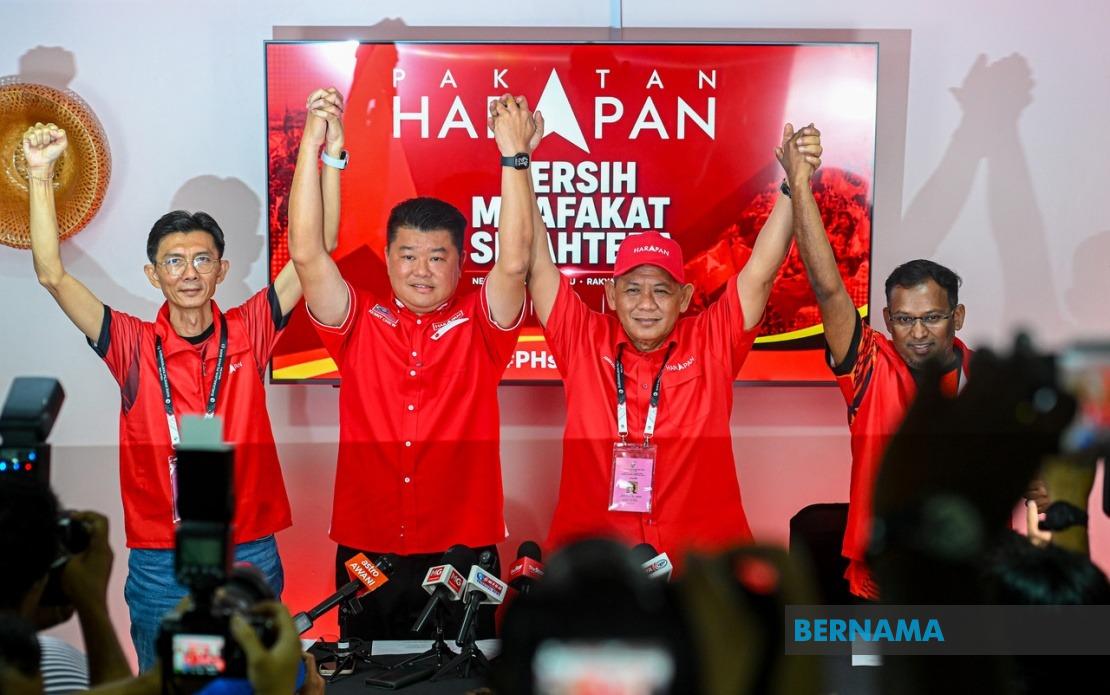
Negeri Sembilan's Pakatan Harapan hierarchy sought to settle mounting speculation about tensions within its electoral apparatus for Port Dickson, with the coalition's state chairman Datuk Seri Aminuddin Harun characterizing allegations of a leadership split as deliberate misinformation aimed at damaging PH's electoral prospects. Speaking at a press conference in Port Dickson on July 20, Aminuddin stressed that party structures and campaign operations across the five state constituencies falling within the Port Dickson parliamentary boundary—Chuah, Lukut, Sri Tanjung, Bagan Pinang, and Linggi—remained cohesive and focused on delivering victories for the coalition.
The contention has centred on the internal party processes surrounding the re-nomination of Chuah incumbent Datuk Yew Boon Lye, a matter that had surfaced on social media and implicated Port Dickson PKR deputy division chief Datuk Kenny Chiew Chi Kin. Rather than allowing such disputes to fester, Aminuddin indicated that the matter had been resolved through internal party channels. He emphasized that the resolution reflected the coalition's commitment to managing its internal dynamics maturely, setting aside any personal disappointments to prioritize collective electoral success. The characterization of the resolution as thorough underscores PH's desire to present a unified front to voters in the run-up to voting day.
Aminduddin, who holds the dual portfolio of Negeri Sembilan PKR chairman and Menteri Besar, pointed to Chiew's unequivocal commitment to backing all PH candidates contesting the state election, despite the deputy division chief's own non-selection as a candidate. This framing—positioning Chiew as a party loyalist willing to subordinate personal ambition to collective aims—served to minimize any perception of lingering grievance within PKR's Port Dickson apparatus. Aminuddin publicly acknowledged Chiew's historical contributions to strengthening the party division and lauded his dedication to supporting the coalition's slate, language designed to foreclose any narrative of internal fracture that might weaken voter confidence.
The timing of these reassurances reflects the compressed campaign calendar in Negeri Sembilan, where early voting occurs on July 28 and general polling takes place on August 1. In such a condensed timeframe, any indication of internal discord can rapidly corrode a coalition's electoral momentum, particularly in constituencies where margins are contested. The Port Dickson parliamentary area encompasses five state seats that are geographically and administratively interconnected, meaning that dysfunction in one locality risks cascading effects across the broader region. By moving quickly to contain speculation, Aminuddin sought to prevent localized party tensions from metastasizing into a broader erosion of PH support.
The incumbent Yew Boon Lye's retention of the Chuah seat in the 2023 state election provides context for current dynamics. His 6,298-vote majority over Perikatan Nasional candidate Tang Jay Son demonstrated the seat's competitive nature and the importance of organizational coherence to securing victory. In the current contest, Yew faces a fresh challenger in Barisan Nasional's Pau Jeou Ching, suggesting that complacency or internal division could jeopardize a holding that PH has come to regard as secure. The symbolic weight of defending previously won seats amplifies the pressure on coalition machinery to function seamlessly.
Aminduddin's public assertion that speculation had been fabricated by external actors seeking to damage PH's image introduces a conspiratorial framing that deflects blame from any genuine internal tensions. Whether such external actors genuinely exist or whether the framing represents a standard political rhetorical move remains unclear from available reporting. However, the invocation of deliberate sabotage serves a dual rhetorical purpose: it exonerates party machinery of organizational dysfunction while simultaneously suggesting that PH faces opponents so threatened by its prospects that they resort to psychological warfare. This narrative positioning bolsters the coalition's self-image as a force under siege from multiple adversaries.
The Port Dickson constituency presents particular significance within Negeri Sembilan's political economy. As a parliamentary seat encompassing multiple state constituencies, control over resources and representation cascades through local governance structures in ways that concentrate political capital. The alignment of Aminuddin's own candidacy in Linggi—one of the five state seats feeding into Port Dickson—with his broader efforts to rally coalition discipline suggests a personal stakes in the outcome. As Menteri Besar standing for election, Aminuddin carries institutional responsibility for governance continuity, making his coalition's electoral performance a reflection on his own political legitimacy.
For Pakatan Harapan more broadly, the Negeri Sembilan contest represents a test of coalition functionality after internal turbulence in other states has occasionally surfaced. The normative expectation that coalition partners suppress internal disagreements to present unified campaigns assumes a level of party discipline that reality often strains. However, the disciplined public messaging emanating from Negeri Sembilan's PH apparatus suggests that at least at the state level, mechanisms for managing internal dissent appear functional. Whether such state-level unity will hold beyond the election—and whether it reflects genuine alignment or merely temporary electoral alignment—remains a longer-term question.
The five constituencies targeted for PH retention represent a diverse electoral geography within Negeri Sembilan. Chuah, Lukut, Sri Tanjung, Bagan Pinang, and Linggi span different demographic and socioeconomic profiles, from industrial zones to agricultural hinterlands to urban residential areas. Each constituency demands tailored campaign messaging and localized organization, complicating the challenge of maintaining coherent coalition strategy across the entire Port Dickson parliamentary footprint. Aminuddin's confidence in the coalition's ability to execute such coordinated campaigning provides a baseline forecast of expected performance, though actual outcomes will reflect voter sentiment in individual constituencies.
The broader context of Malaysia's political realignment since 2018 informs the significance of Negeri Sembilan's state election. The state has served as a testing ground for coalition governance models and intra-alliance dynamics. Its position within the broader Peninsula political geography—adjacent to major urban centers but retaining significant rural constituencies—makes its electoral trajectory relevant to national coalition building and the viability of different political alignments. Results in Negeri Sembilan carry symbolic weight beyond the state's legislative composition, signaling to other states' political actors the relative strength of competing coalitions and the salience of different voter grievances.
Aminduddin's public intervention to address coalition coherence reflects recognition that electoral outcomes depend partly on voters' confidence in governing capacity and organizational fitness. Speculation about internal divisions strikes at the credibility dimension of electoral choice, suggesting that a coalition incapable of managing its own internal affairs lacks fitness to govern. By moving aggressively to quell such perceptions, the Menteri Besar sought to preserve the reputational capital that enables electoral mobilization. Whether his reassurances convince skeptical voters or merely satisfy party faithful remains to be tested by the August 1 polling outcomes.

