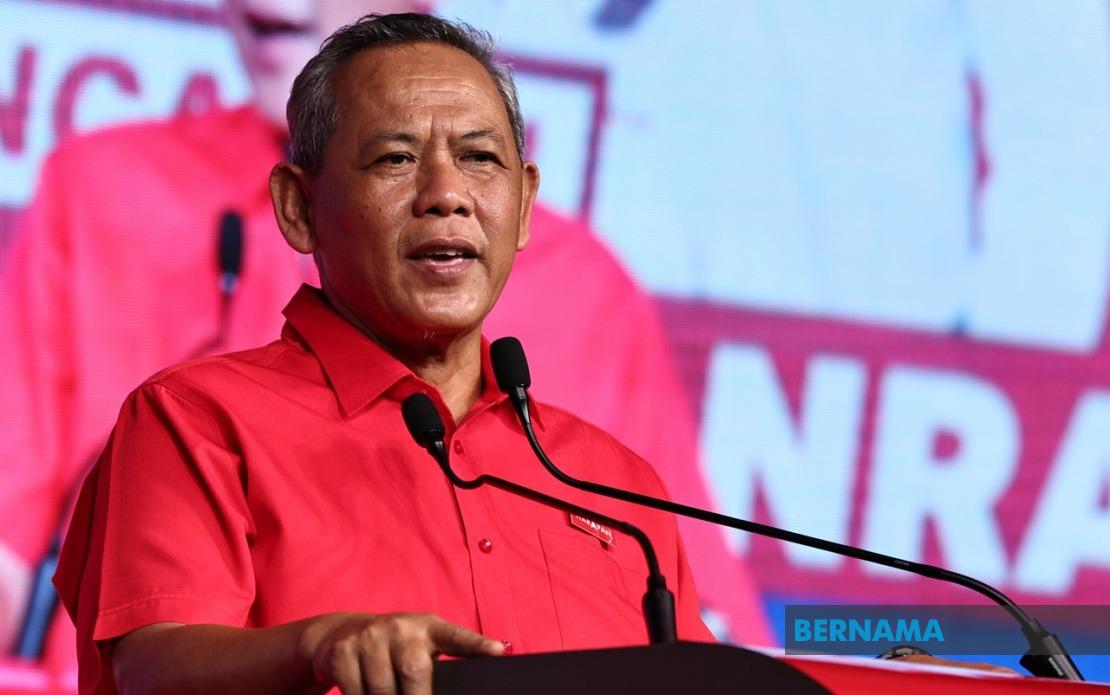
Menteri Besar Datuk Seri Aminuddin Harun has firmly rebutted suggestions that his switch from Sikamat to the Linggi state seat ahead of Negeri Sembilan's upcoming election amounts to a strategic move designed to sidestep defending his traditional stronghold. In a statement released on Wednesday, the Pakatan Harapan politician characterised the decision as an autonomous choice rooted in his political vision rather than a calculated manoeuvre to evade electoral challenge. The timing of his announcement has nonetheless sparked considerable speculation within political circles, particularly given that his previous constituency represents four consecutive electoral victories and deep organisational infrastructure.
Aminuddin's declaration to contest Linggi introduces a significant recalibration of Negeri Sembilan's political landscape as the state heads toward the polls on August 1. His incumbent opponent in the new battleground will be Datuk Mohd Faizal Ramli, the sitting Barisan Nasional assemblyman for Linggi, establishing what observers regard as a high-stakes confrontation between the ruling state administration and the federal opposition alliance. The nomination process is scheduled for Saturday, with early voting occurring on July 28, providing a compressed campaign window for candidates to mobilise grassroots support and articulate their policy platforms to voters.
In his public response, Aminuddin invoked his track record in Sikamat to underscore his commitment to constituent service, noting that he intends to apply the same developmental approach and dedication to Linggi's residents. His reflection on his Sikamat tenure painted a narrative of gradual institutional maturation, describing how the constituency's political machinery evolved from rudimentary operations conducted above a commercial shophouse to a more established service apparatus. He emphasised that during his opposition years, resource constraints necessitated innovative fundraising and community mobilisation strategies, experiences he framed as formative to his understanding of grassroots governance.
The Negeri Sembilan Pakatan Harapan chairman highlighted the personal bonds cultivated across four election cycles in Sikamat, suggesting these relationships transcend individual electoral contests. His invocation of Allah's will—expressed through the Islamic phrase "Insya-Allah"—in the context of seeking voter support represents a commonplace rhetorical device in Malaysian political discourse, particularly among Muslim leaders addressing predominantly Muslim constituencies. Such language resonates within cultural expectations and demonstrates respect for religious sentiment among the electorate, though it carries no formal electoral significance.
Aminuddin's acknowledgment of Nor Azman Mohamad as his designated successor in Sikamat signals an orderly transition mechanism within Pakatan Harapan's organisation. This succession arrangement suggests internal party consensus regarding the strategic reallocation of leadership resources, with Nor Azman expected to consolidate the gains achieved across Aminuddin's previous tenure. The successful transmission of electoral machinery and community networks to an incoming representative often determines whether a ruling party maintains territorial control during transitions, particularly in constituencies where personal relationships between representative and constituents have deepened over multiple election cycles.
The broader context of Aminuddin's repositioning reflects pragmatic calculations within Negeri Sembilan's political arithmetic. The Linggi contest represents a genuinely competitive engagement with Barisan Nasional representation, whereas Sikamat had gravitated toward established Pakatan Harapan dominance. Such seat reallocation strategies enable governing coalitions to deploy experienced senior politicians to battleground constituencies requiring enhanced organisational capacity and political credibility. From this perspective, Aminuddin's relocation to Linggi demonstrates confidence in both his political durability and the viability of expanding Pakatan Harapan's territorial hold within the state.
The electoral calendar compressed into a fortnight will test whether Aminuddin's narrative framing—emphasising continuity of service commitment rather than defensive repositioning—resonates convincingly with Linggi voters. His four terms representing Sikamat have furnished him with extensive parliamentary experience and ministerial credentials, assets that carry electoral weight beyond individual constituency appeal. Barisan Nasional's Mohd Faizal Ramli conversely enters the contest as an incumbent assemblyman with established administrative authority and local institutional connections, positioning this encounter as a genuine contest between contrasting visions of governance and representation.
For Malaysian observers tracking state-level political dynamics, this contest exemplifies the intricate manoeuvring that characterises competitive federalism in Malaysia's devolved political system. The voluntary repositioning of senior leadership figures responds to evolving electoral geography, demographic shifts, and assessment of relative competitive advantage across different constituencies. Aminuddin's public statements defending his strategic choice simultaneously serve an internal communication function, reassuring Pakatan Harapan's grassroots cadres in Sikamat that his departure reflects calculated political logic rather than diminished commitment to the state's political trajectory.
The August 1 polling date will ultimately determine whether his gambit succeeds in expanding Pakatan Harapan's assembly representation within Negeri Sembilan. A victory in Linggi would vindicate the repositioning strategy and strengthen his credentials as an asset to the coalition beyond his home constituency. Conversely, an unfavourable outcome would invite retrospective questions about the wisdom of abandoning an established electoral stronghold. Regardless of the electoral outcome, Aminuddin's manoeuvre illustrates how senior Malaysian politicians navigated the complex terrain of seat selection, party strategy, and constituent expectations during competitive campaign seasons.
The state election occurs within Malaysia's broader political context of coalition fluidity and shifting electoral alignments. Negeri Sembilan's electoral arithmetic will partially determine whether Pakatan Harapan consolidates its position as the state's governing administration or whether Barisan Nasional can recapture significant ground. Aminuddin's repositioning to Linggi thus represents more than an individual electoral decision—it reflects strategic deployment of political resources within a broader campaign narrative designed to consolidate and expand Pakatan Harapan's electoral performance across the state assembly.

