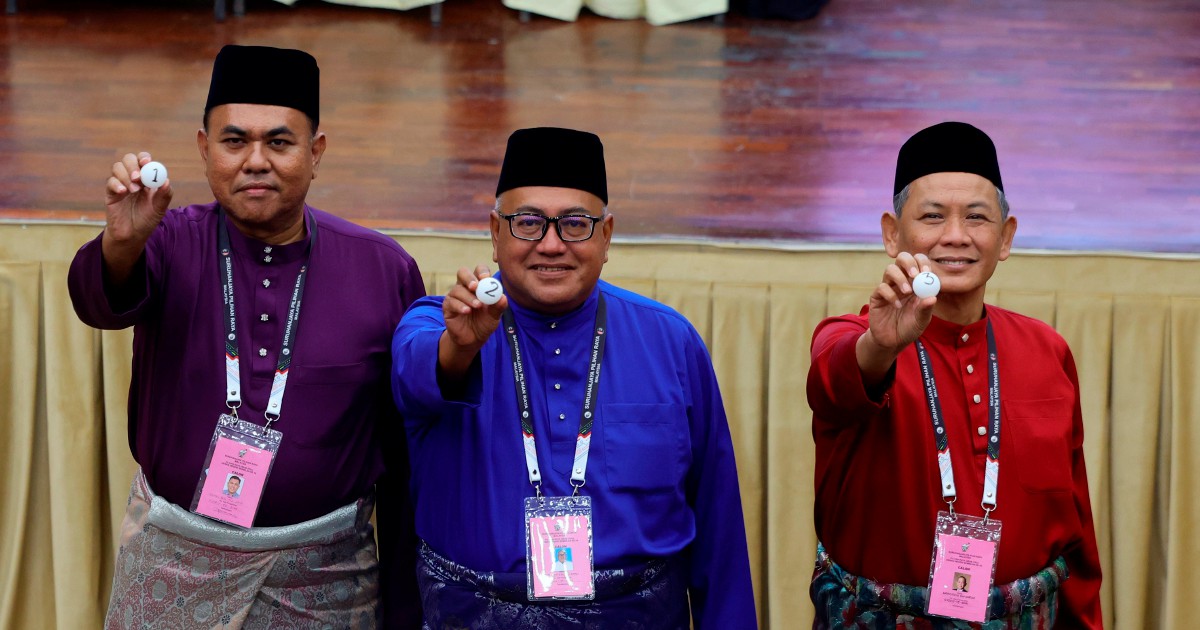
Datuk Seri Aminuddin Harun, who serves as caretaker Menteri Besar, has offered a candid assessment of his electoral prospects in Linggi, one of Negri Sembilan's most significant constituencies. Speaking at a political gathering in Port Dickson, the Barisan Nasional stalwart described the competition for the seat as fundamentally uncertain, estimating his chances at a fifty-fifty proposition—an acknowledgment that even traditionally safe territories cannot be taken for granted in Malaysia's evolving political landscape.
The Linggi seat has long represented a cornerstone of BN's political machine in Negri Sembilan, a state where the coalition has historically maintained considerable influence despite nationwide shifts in voter sentiment. However, Aminuddin's measured rhetoric signals awareness that the political calculus has shifted, reflecting broader demographic changes and shifting electoral mood across the peninsula. His straightforward assessment, rather than the customary confident projections often heard from incumbent office-holders, suggests a sober recognition of the challenges facing his party ahead of the state election campaign.
Negri Sembilan's political trajectory offers instructive lessons for understanding BN's position across Malaysia. The state remains one of the coalition's strongholds, yet recent electoral cycles have demonstrated that no seat is wholly immune from the ground-level pressures that have reshaped Malaysian politics since 2018. Aminuddin's willingness to acknowledge competitive headwinds in Linggi reflects neither weakness nor pessimism, but rather a pragmatic understanding that modern Malaysian voters have become increasingly selective and issue-focused in their electoral choices.
The caretaker Menteri Besar's position carries additional weight given his role steering the state administration. As the top executive, Aminuddin would typically enjoy incumbency advantages—control over state resources, media visibility, and the machinery of government. Yet his candid assessment suggests these traditional levers may not guarantee success in a constituency where opposition parties have invested substantial organisational effort. This dynamic mirrors patterns elsewhere in Malaysia, where administrative power alone no longer translates automatically into electoral victory.
Linggi's demographic composition and electoral history provide context for understanding Aminuddin's cautious outlook. The seat encompasses areas with diverse voter bases and competing political narratives, requiring candidates to navigate complex local issues ranging from economic development to community services. The presence of a competitive opposition presence, combined with potentially fragmented voter alignments, creates genuine uncertainty even for seasoned political operatives with the resources of the state machinery at their disposal.
Aminuddin's frankness about the electoral battle reflects a broader pattern of political maturation among Malaysian leaders, who increasingly recognise that overconfident projections can backfire spectacularly when voter sentiment proves more volatile than anticipated. By pitching his expectations realistically, he positions his campaign to adapt flexibly to emerging challenges while avoiding the credibility damage that often follows if initial confident claims prove unfounded when ballots are counted.
The Linggi contest will likely serve as a bellwether for BN's broader capacity to retain control in Negri Sembilan. A victory would suggest that the coalition's traditional machinery remains functional and capable of mobilising support even in tightening contests. Conversely, a loss would intensify pressure on the BN organisation and potentially embolden opposition strategies across the state's remaining constituencies. For Malaysian political observers, the Linggi outcome carries implications extending beyond mere seat tallies, potentially influencing perceptions about whether BN can sustain its foothold in what remains among its stronger state bases.
The campaign period will test whether Aminuddin's constituent-focused governance and administrative track record can overcome whatever challenges the opposition mounts. State issues affecting Negri Sembilan voters—infrastructure investment, employment opportunities, education quality, and cost-of-living pressures—will likely dominate the electoral conversation. Aminuddin's ability to link his administration's record to tangible improvements in these areas could strengthen his position, while opposition efforts to highlight unmet demands or highlight governance shortcomings will seek to erode his support among undecided voters.
For Southeast Asian observers monitoring Malaysian politics, Aminuddin's candid assessment illustrates how even established political actors operating within advantageous structural positions acknowledge the genuine competitiveness that now characterises many Malaysian electoral contests. The shift from almost automatic incumbent victories to closely fought battles reflects voter empowerment and a fragmentation of political loyalties that extends beyond peninsular Malaysia's major urban centres into smaller towns and rural constituencies.
As the Negri Sembilan state election campaign develops, the Linggi constituency will warrant close monitoring as an indicator of broader voter sentiment and BN's continuing relevance in Malaysian politics. Aminuddin's measured expectations provide a useful framework for evaluating the contest on realistic terms, avoiding both dismissive underestimation of opposition strength and premature assumptions about the outcome. Whether the caretaker Menteri Besar's forecast of fifty-fifty odds ultimately proves accurate will become clear when Negri Sembilan voters cast their ballots, their decisions potentially reshaping political alignments across the state and offering lessons applicable to Malaysia's wider electoral future.

