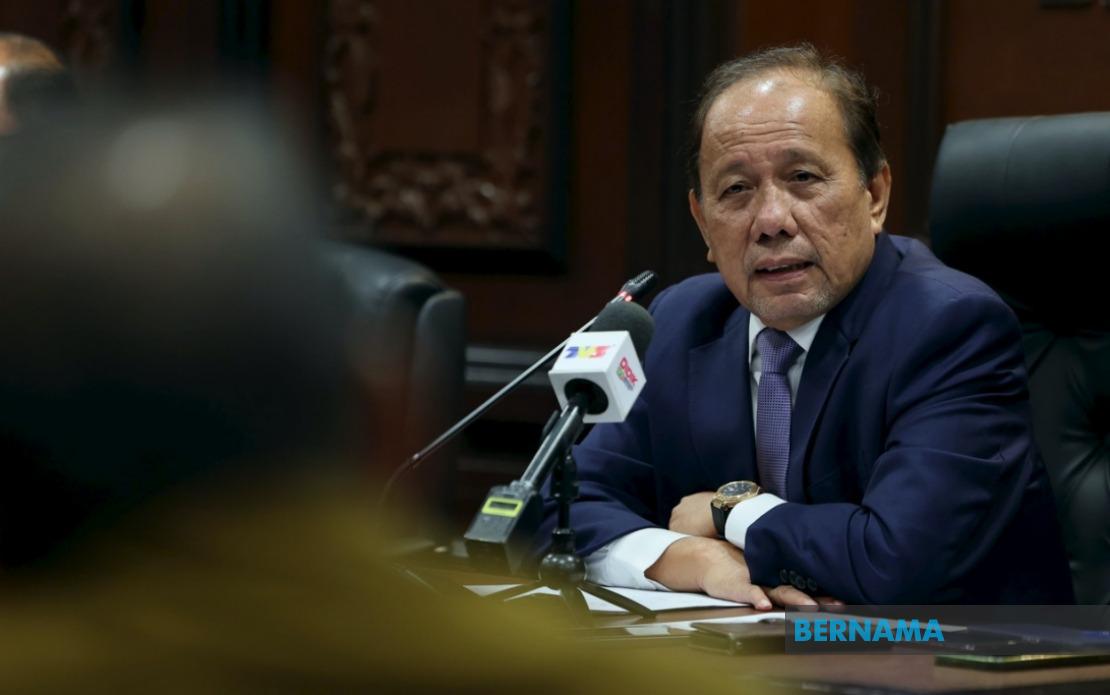
The financial reckoning following Negeri Sembilan's political transition has revealed starkly different compliance patterns among former Pakatan Harapan legislators, with current Menteri Besar Datuk Ismail Lasim singling out his predecessor Datuk Seri Aminuddin Harun as uniquely forthcoming in settling his obligations. Speaking in Seremban on August 27, Ismail indicated that while many ex-PH assemblymen have begun reimbursing state funds since late June, their efforts remain incomplete—a disclosure that underscores the administrative complexity surrounding the June 5 dissolution and its financial aftermath across the state's fourteen constituencies.
The distinction awarded to Aminuddin carries symbolic weight in Malaysian politics, where questions of fiscal accountability frequently intersect with perceptions of integrity and governance. That the former menteri besar, who led Negeri Sembilan's PH administration, managed full repayment while his former colleagues have struggled to do so suggests either superior financial discipline or a more straightforward situation regarding his allocations. Ismail's public acknowledgment of this disparity signals the new state government's determination to establish clear accountability standards, particularly as multiple constituencies remain unsettled in their accounting.
Partial returns have emerged from several quarters, notably from coordinators representing the Paroi and Labu state constituencies, both of which initiated reimbursement processes from June 30 onwards. Yet the incompleteness of these payments has prompted the Menteri Besar's Office to embark on a comprehensive audit of all historical allocations, recognising that standardised recovery amounts would misrepresent the reality of diverse disbursements across the state. Ismail acknowledged that former assemblymen had deployed these funds for constituent welfare and unspecified purposes, suggesting that tracking expenditure against allocations has become a forensic exercise requiring detailed justification.
The recovery effort itself presents significant procedural hurdles, as each former representative received varying sums dependent on their specific constituencies' entitlements and circumstances. Rather than issuing uniform demand letters, Ismail's office intends to tailor each notice according to outstanding balances calculated from official records—a methodologically sound but administratively demanding approach that explains the delay in formal recovery notices. This granular approach reflects awareness that blanket demands could invite legal challenge or generate political friction across the opposition benches.
A crucial temporal distinction emerged in Ismail's explanation: state executive councillors serving at the time of dissolution, including Aminuddin, retained ex-officio status through July 31 and consequently maintained entitlement to allocations for that final month. This clarification proves significant because it establishes a legitimate boundary between permissible and impermissible fund usage, reducing ambiguity about whether former office-holders engaged in unauthorised expenditure. The demarcation also suggests that full compliance, as demonstrated by Aminuddin, necessarily accounts for these transitional monthly entitlements.
From the opposition perspective, DAP assemblyman J. Arul Kumar defended the allocative usage pattern, asserting that pre-dissolution disbursements had uniformly served public welfare rather than partisan political objectives. This framing addresses a latent concern within recovery efforts: whether prior PH administrations exploited state funds for political consolidation during their final weeks in office. Kumar's insistence that unspent balances had been returned by early July, accompanied by comprehensive financial documentation for each constituency, positions the opposition's record as transparent and cooperative, if administratively incomplete regarding specific allocations.
The incident illuminates broader governance challenges confronting Malaysian state administrations during transitions of power. Unlike the federal level, where machinery for fund recovery and accountability remains established through decades of precedent, state-level protocols often lack standardisation. Negeri Sembilan's experience demonstrates how allocation systems designed for continuity become administratively problematic when sudden political change occurs. The need for detailed audits, individual assessments, and tailored recovery letters reflects institutional gaps that merit attention as Malaysia experiences increasingly fluid electoral dynamics.
For Malaysian readers, particularly those in Negeri Sembilan, the recovery process carries implications extending beyond mere financial bookkeeping. The outcome will influence public perceptions of whether the transition from PH to the current state government occurred cleanly and whether opposition parties managed public resources responsibly during their tenure. Full transparency in this process, alongside equitable treatment of former assemblymen from various constituencies, becomes essential for maintaining institutional credibility ahead of the next electoral cycle.
The emphasis on comprehensive expenditure documentation also raises questions about systemic record-keeping standards across Malaysian state administrations. If former assemblymen struggled to provide detailed justifications for allocation usage, it suggests that tracking mechanisms may be inadequately developed or that transparency expectations differ significantly between Kuala Lumpur's perspectives and ground-level practice. Ismail's insistence on receiving explanations and expenditure records represents an attempt to establish higher accountability benchmarks, though whether this becomes precedent for future transitions remains uncertain.
Aminuddin's full reimbursement, positioned as exceptional among his former colleagues, paradoxically raises questions about whether his complete compliance reflects superior governance philosophy or simply circumstances more conducive to rapid settlement. The public nature of his distinction may generate resentment among other ex-assemblymen still working through recovery procedures, potentially complicating future cross-party cooperation on governance matters. Political opponents might interpret his rapid compliance as either exemplary leadership or as evidence that he benefited from preferential treatment—a perception that could undermine the current administration's legitimacy claims.
Looking ahead, the outcome of this recovery process will inform how future Malaysian state governments approach fund accountability during political transitions. Should Negeri Sembilan successfully establish transparent, verifiable protocols for allocation recovery, the framework could become instructive for other states navigating similar circumstances. Conversely, if the process becomes protracted or generates legal disputes, it will reinforce perceptions that Malaysian political transitions lack adequate institutional guardrails, necessitating reforms to standardise how public resources are managed during periods of flux.
The underlying policy question extending from this situation concerns whether state allocations to assemblymen should operate on fixed entitlements or performance-based disbursements. Current systems, which distribute funds based on constituency and official status rather than deliverables, create ambiguity about appropriate usage and complicate recovery when administrations change. Malaysia's state governments might benefit from reviewing allocation frameworks to establish clearer parameters around permissible expenditure, documentation requirements, and rapid settlement procedures, reducing future conflicts and strengthening public confidence in the responsible stewardship of taxpayer resources.

