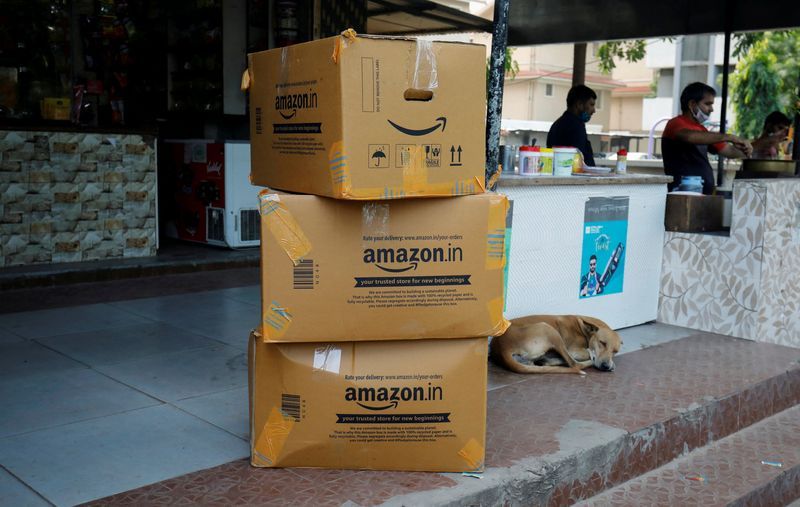
Amazon has pledged to take appropriate action against one of its delivery partners in India following the completion of a police investigation into a fatal warehouse fire that claimed two lives, the e-commerce giant said on Thursday. The incident has intensified scrutiny of labour conditions and workplace safety standards across Amazon's sprawling logistics network in the country, where the company relies heavily on third-party contractors to manage its expanding delivery infrastructure across thousands of cities and towns.
The fire occurred on June 5 at a facility operated by M&M Logistics Solutions, an Amazon delivery partner located in Uttarakhand, a state in northern India. According to police documentation reviewed by international media outlets, the building where the tragedy unfolded lacked basic fire safety provisions, including a valid fire safety certificate, fire alarm systems, smoke detection equipment, and properly designated emergency exits. These omissions represent serious violations of India's building and workplace safety codes, raising fundamental questions about how the e-commerce platform's vetting processes are applied to third-party logistics operators.
Beyond its public statement committing to unspecified corrective measures, Amazon has initiated its own independent internal investigation into the circumstances surrounding the fire, according to sources familiar with the matter. The company's response reflects growing pressure from multiple stakeholders, including worker advocacy groups and government bodies concerned about labour standards in the rapidly expanding e-commerce sector. Amazon stated that it will determine appropriate consequences once the official police investigation concludes, though the timeline for that determination remains unclear.
M&M Logistics Solutions operates an extensive network of delivery hubs on behalf of Amazon, running 45 distribution centres across 21 cities throughout northern India, according to information disclosed in an Amazon press release from 2023. This scale of operation underscores how deeply integrated such third-party partners are within Amazon's logistics ecosystem. The contractor's significant presence in the region means the fire has implications not just for Amazon's operational continuity but also for the broader safety culture within the company's supply chain across the subcontinent.
Amazon's own supplier code of conduct explicitly prohibits working environments that pose uncontrolled fire risks and other hazards to workers. The code grants the company authority to suspend or terminate third-party contractors who fail to meet its stipulated safety and labour standards. However, critics argue that Amazon's enforcement of these standards has historically been inconsistent, particularly when it comes to contractors operating in India, where regulatory oversight can be fragmented and enforcement mechanisms are sometimes weak. The extent to which Amazon will leverage its contractual powers against M&M Logistics Solutions remains to be seen.
The tragedy comes amid a broader pattern of workplace safety concerns at Amazon facilities across India. Earlier in 2024, the National Human Rights Commission, India's statutory human rights watchdog, launched an examination into allegations that Amazon violated labour laws during an intense heatwave at a warehouse facility near New Delhi. Workers reported inadequate cooling systems, insufficient breaks, and hazardous working conditions during the period of extreme temperatures. Following the commission's intervention, the state government subsequently initiated formal legal proceedings against Amazon under India's labour legislation, signalling that workplace safety has become a focal point for regulatory action against the global e-commerce giant.
The Amazon India Workers Union has escalated its response to the warehouse fire, demanding that a judicial inquiry be established to independently examine the circumstances of the June 5 deaths. The union characterised the incident as emblematic of systematic failures in workplace safety protocols and accused Amazon of failing to protect the dignity and wellbeing of workers embedded in its supply chains. This represents a significant challenge to Amazon's public messaging, which consistently emphasises worker safety as a paramount concern.
For Malaysian and Southeast Asian observers, the developments in India offer cautionary lessons about the human costs of rapid e-commerce expansion and the outsourcing of logistics to third-party operators. Malaysia's own e-commerce sector, which continues to grow rapidly, faces similar questions about whether delivery partners operating under franchise or subcontracting arrangements maintain adequate safety standards. The fire at an Amazon facility in India demonstrates how operational pressures and cost-cutting measures in competitive logistics markets can compromise fundamental worker protections, a dynamic that applies across the region.
The incident also highlights the asymmetry of power between multinational e-commerce platforms and their logistics partners. While Amazon can revoke contracts or impose penalties on underperforming vendors, workers at those facilities bear the physical risks associated with inadequate infrastructure and safety systems. This dynamic has become increasingly relevant in Southeast Asia, where the gig economy and contractor-based employment models have expanded dramatically, often with minimal regulatory oversight or worker protections.
Amazon's commitment to taking action rings somewhat hollow without specific timelines, transparent criteria for determining culpability, and assurances that systemic improvements will be implemented across its entire third-party logistics network in India. The company has repeatedly declared that worker safety is a top priority, yet incidents such as the Uttarakhand fire suggest a disconnect between stated commitments and operational reality. Moving forward, stakeholder groups, including worker unions, civil society organisations, and government agencies, will be monitoring whether Amazon's promised action translates into meaningful structural reforms or merely symbolic gestures.
The investigation's conclusion and Amazon's subsequent decisions will offer important indicators about whether multinational corporations operating in India and the broader region are genuinely accountable for the safety of workers throughout their supply chains, or whether responsibility can be effectively offloaded to third-party contractors while the platform itself maintains plausible deniability. This tension will likely shape regulatory responses and corporate accountability standards across Southeast Asia for years to come.

