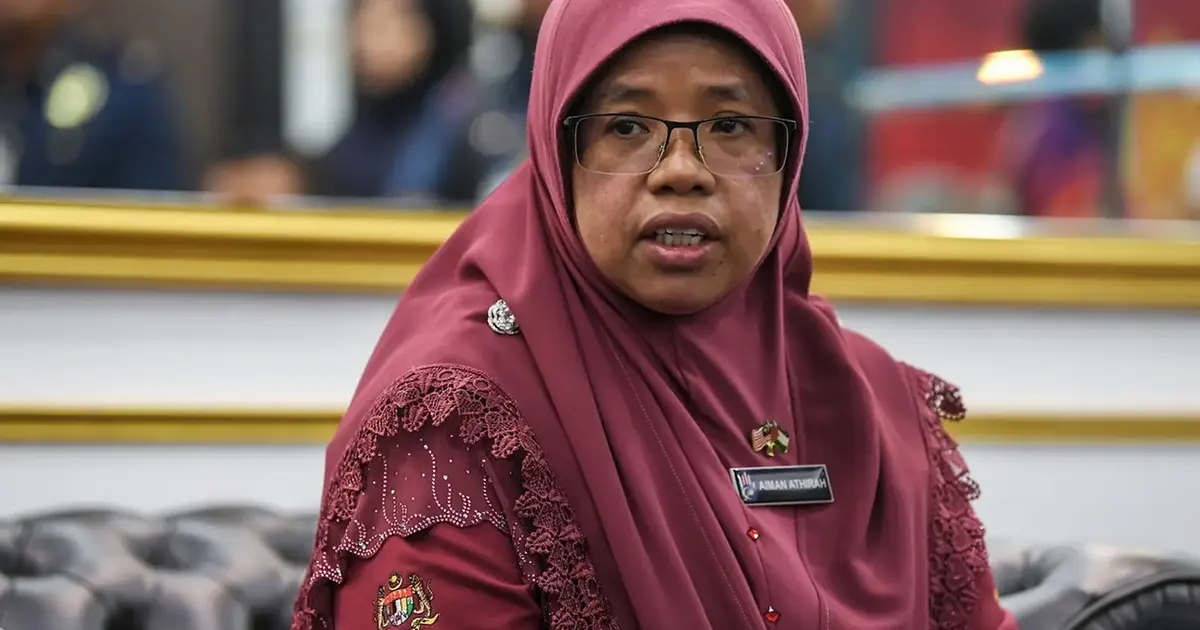
Amanah's vice-president Aiman Athirah Sabu has issued a direct challenge to PAS president Abdul Hadi Awang, demanding that he either furnish tangible proof of his allegations against the Democratic Action Party or resort to court proceedings to substantiate his claims. The challenge marks a significant escalation in the ongoing rhetorical skirmishes within Malaysia's fractious political landscape, where accusations of religious insensitivity and anti-Islam positioning have become routine volleys between rival coalitions.
The tension between these parties reflects deeper ideological fissures that have characterised Malaysian politics for decades. PAS, as a party rooted in Islamic governance principles, has long positioned itself as the custodian of Muslim interests in national affairs. Conversely, DAP's secular, multiethnic platform has frequently become a target for accusations that it harbours anti-Islamic sentiment, particularly from Islamist-leaning political actors seeking to consolidate their support base among religiously conservative voters.
Aiman Athirah's intervention highlights the increasingly untenable nature of unsubstantiated political accusations in contemporary Malaysian discourse. By calling on Hadi to either present evidence or pursue judicial remedies, she is essentially raising the stakes beyond mere partisan rhetoric. Her challenge implicitly suggests that if PAS leadership genuinely believes DAP opposes Islam as an institutional force in governance, then the appropriate recourse would be through the Malaysian court system, where claims can be tested against available evidence and constitutional frameworks.
This development carries particular significance for Amanah, which occupies a unique position within Malaysia's political ecosystem. As a party that emerged from PAS but maintains a more progressive interpretation of Islamic principles, Amanah has consistently sought to position itself as a moderate counterbalance to what it views as PAS's increasingly hardline approach to religious governance. The party's defence of DAP thus reflects not merely coalition politics but also a philosophical position on how Islam should be articulated within a pluralistic democracy.
The broader context involves the fragmentation of Malaysian political coalitions and the constant repositioning of parties as they navigate electoral calculations and ideological commitments. PAS's decision to join the government coalition following the 2023 general election represented a major realignment, while Amanah remained within the opposition alliance. These structural arrangements have inevitably sharpened antagonisms, with each side employing religious and moral framings to delegitimise opponents.
Diplomatic niceties have eroded considerably in recent months as parties compete aggressively for voter attention and support. Accusations that a political competitor is fundamentally opposed to Islam carry particular potency in a nation where religious identity intersects profoundly with political identity for substantial portions of the electorate. However, such accusations, when repeatedly deployed without substantiation, risk becoming devalued currency in political discourse, losing persuasive force through overuse.
Aiman Athirah's challenge strikes at the heart of this problem. By demanding either evidence or legal action, she is effectively calling for a raising of evidentiary standards. If Hadi possesses credible documentation demonstrating DAP's purported opposition to Islam in state governance or policy positions, the logical step would be to present such evidence publicly and comprehensively. Should he decline to do so while maintaining the accusations, the implication is that these charges rest primarily on political positioning rather than factual foundation.
For Malaysian readers and observers of regional politics, this exchange illuminates how Southeast Asian democracies grapple with the intersection of religion and governance. Unlike Western secular democracies where religious criticism operates within relatively settled parameters, Malaysian politics continues to navigate contested terrain regarding Islam's proper constitutional and institutional role. Political actors exploit this ambiguity, alternately accusing opponents of being insufficiently respectful toward Islam or excessively willing to prioritise Islamic concerns over secular governance principles.
The challenge also raises questions about accountability in political communication. In an era of digital media and rapid information dissemination, false or exaggerated accusations can circulate widely before correction mechanisms engage. Aiman Athirah's demand for substantiation thus addresses not merely the immediate dispute between PAS and DAP but also the broader question of how Malaysian political culture can maintain minimal standards of evidentiary rigour when discussing opponents' positions.
Moving forward, this confrontation will likely reverberate through opposition coalition politics, potentially influencing how component parties interact with one another and project their joint identity to voters. Should Hadi choose to present evidence, it would provide a concrete basis for public debate about DAP's actual policy positions on Islamic institutions and governance. Should he decline, the challenge may effectively neutralise such accusations by rendering them apparently baseless within the eyes of certain voter segments.
The fundamental question underlying this dispute extends beyond personalised political conflict to encompass how Malaysia's multiethnic, multireligious society debates the role of Islam in democratic governance. These conversations are essential for national cohesion, but they must be grounded in actual policy analysis and evidence rather than rhetorical positioning. Aiman Athirah's challenge, whatever its immediate political motivation, thereby serves the broader democratic interest by implicitly advocating for higher standards of political discourse.

