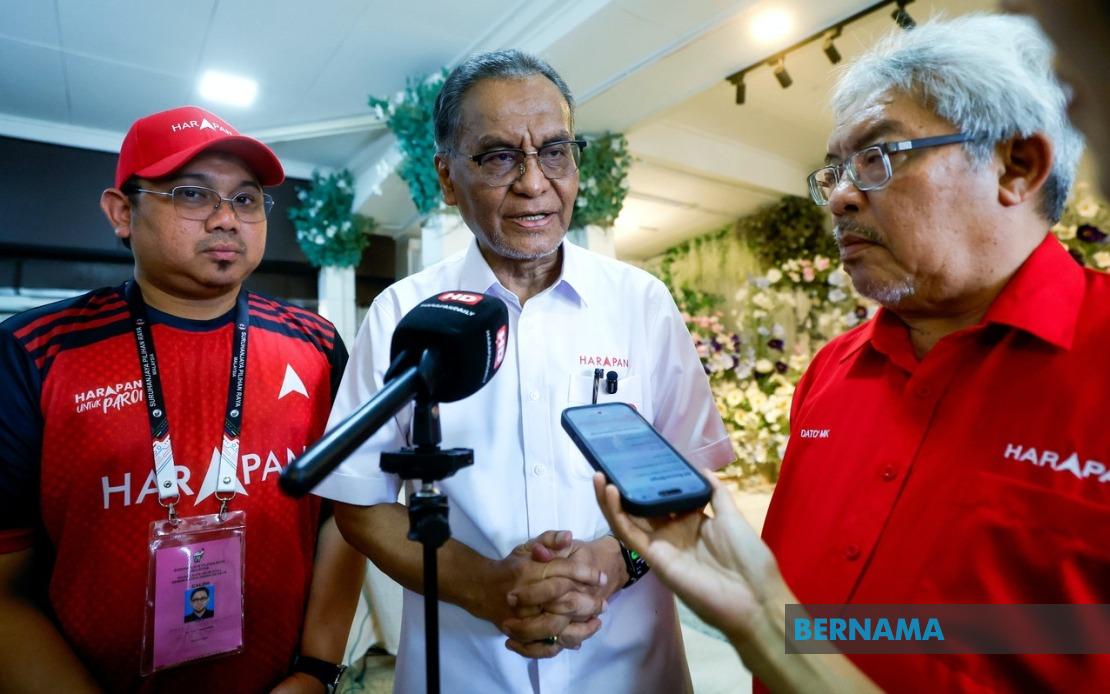
The Pakatan Harapan coalition's Amanah component is taking a performance-focused approach to the forthcoming Negeri Sembilan state election, deploying nine candidates who will emphasise the state administration's accomplishments and a community-centred model of governance. Rather than relying on high-volume campaigning or populist rhetoric, the party has chosen to centre its messaging on the track record of the sitting government and the calibre of individuals seeking election, an indication of how the coalition intends to differentiate itself in an increasingly competitive electoral landscape in the state.
Amanah vice-president Datuk Seri Dr Dzulkefly Ahmad outlined this strategy during a campaign event in Seremban, casting the contest not as a battle of noise but as a contest over credibility and demonstrated ability. The party's nine candidates represent roughly a quarter of the 36 seats that Pakatan Harapan is contesting, with the remainder divided between Parti Keadilan Rakyat, which is fielding 16 candidates, and the Democratic Action Party, which is standing 11. This allocation reflects the coalition's internal balance and division of political ground in Negeri Sembilan.
The emphasis on administrative record carries particular weight given Pakatan Harapan's position as the governing coalition in the state. In the 2023 state election, the alliance secured 17 of 36 seats, giving it a working majority, while Barisan Nasional captured 14 and Perikatan Nasional took five. That outcome positioned Pakatan Harapan to chart the state's direction for the past two years, and the coalition is now arguing that voters should reward continuity and proven governance rather than gamble on alternatives.
According to Dr Dzulkefly, the campaign strategy extends beyond simply reciting achievements. Instead, Amanah candidates are being positioned as representatives with genuine roots in their communities and a demonstrated commitment to resolving practical problems. This approach reflects a recognition that rural and semi-urban constituencies in Negeri Sembilan—characteristic of much of the state outside Seremban—often prioritise tangible local improvements over national-level political messaging. By selecting candidates with existing credibility and service records, the party hopes to build voter confidence through familiarity and trust.
The campaign mechanics themselves underscore this localist philosophy. Rather than mass rallies or prominent media advertising, Amanah is investing in small-group meetings, door-to-door visits, and social media engagement. These methods allow candidates to hear directly from residents about their concerns—licensing difficulties for traders, inadequate infrastructure, service gaps—and to demonstrate responsiveness by connecting constituents with relevant government agencies. In Malaysian politics, where personal relationships and visible responsiveness often determine electoral outcomes, this strategy may prove more effective than broader appeals to national issues.
One example is Ahmad Shahir Mohd Shah, the Amanah candidate contesting the Paroi state seat. He has identified support for small traders as a priority, proposing streamlined licensing procedures and improved business infrastructure in collaboration with local authorities. Paroi, with over 65,000 registered voters and roughly 140,000 residents, is a constituency where petty traders and small business operators form a significant constituency, making this focus both strategically sound and substantively relevant.
Amanah's slate includes both a sitting representative and several challengers. Datuk Bakri Sawir is defending the Klawang seat, while new candidates include Yaacob Mahmood in Serting, Zarrina Abu Zarin in Lenggeng, Mohd Hanis Alimin in Senaling, Mohd Zailan Mohd Munawar in Johol, Muhammad Allif Ibrahim in Kota, Nasir Raman in Bagan Pinang, and Abd Latif A. Tambi in Gemencheh. This mix of incumbents and newcomers suggests the party is balancing the need to retain experienced representatives with efforts to refresh its political presence and appeal to new voters.
For Malaysia and the broader region, the Negeri Sembilan contest offers a window into how governing coalitions approach mid-term elections. Pakatan Harapan has held federal power since 2018, though with fluctuations and internal tensions, and the state elections serve as a testing ground for messaging and electoral appeal. If the coalition's emphasis on administrative performance and grassroots engagement succeeds in Negeri Sembilan, it may inform strategy elsewhere. Conversely, if voters signal dissatisfaction with the pace of reform or demand faster delivery of services, that signal could reshape national political dynamics ahead of the next general election.
The election dates themselves—July 28 for early voting and August 1 for the main poll—are set, giving all parties roughly two weeks to make their case. For Amanah and its Pakatan Harapan allies, the question is whether emphasising governance track record and candidate credibility will resonate with voters or whether opposition parties can more effectively mobilise discontent. Barisan Nasional, the traditional governing coalition that still controls Putrajaya's federal government, will likely counter with appeals to economic management and stability, while Perikatan Nasional may attempt to position itself as a fresh alternative. The outcome in Negeri Sembilan will provide one of the clearest recent readings of voter sentiment in a state that has historically tilted towards the ruling coalition in Kuala Lumpur.

