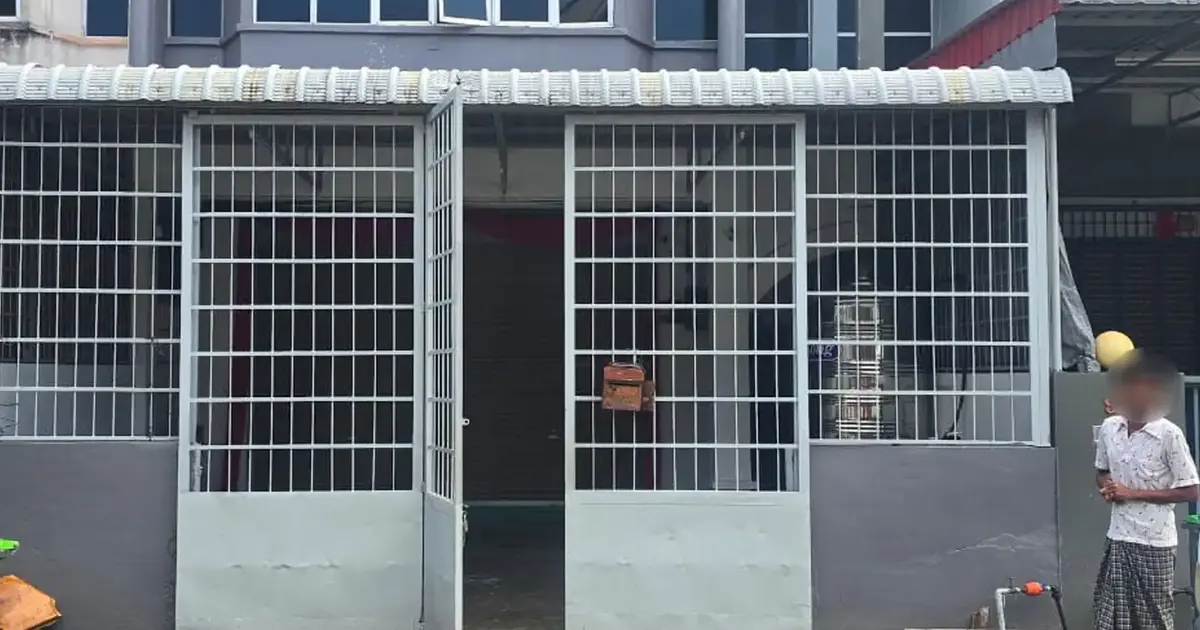
The Alor Setar Municipal Council has taken enforcement action against an industrial property being illegally converted into an educational facility, uncovering what authorities describe as an unlicensed school serving Rohingya refugee children. The raid represents the latest intersection of Malaysia's refugee management challenges and municipal compliance in Kedah, one of the nation's key administrative centres.
Investigators have launched a dual-pronged probe examining both the misuse of industrial zoning designations and the operation of an unauthorised educational institution. Under Malaysian planning and education law, industrial premises cannot legally serve as schools without appropriate reclassification and licensing from relevant federal and state education authorities. The discovery raises questions about oversight mechanisms for informal educational arrangements within refugee communities and how regulatory agencies coordinate enforcement efforts.
The Rohingya refugee presence in Malaysia remains one of the region's most sensitive humanitarian and policy issues. An estimated 180,000 Rohingya refugees live in Malaysia, many without legal status or access to formal government schooling. This has spawned informal educational networks operated by community organisations and volunteers, often in makeshift facilities. While such initiatives address a genuine gap in educational access, they frequently operate outside regulatory frameworks designed to ensure curriculum standards, teacher qualifications, and building safety compliance.
Alor Setar, the capital of Kedah, sits along major migration corridors and hosts a substantial displaced population. The state has grappled with balancing humanitarian concerns against resource constraints and legal compliance. Municipal authorities face pressure to enforce building codes and zoning regulations while authorities at state and federal levels navigate broader refugee policy, which remains contested politically and administratively. The council's action signals renewed commitment to zoning enforcement, though it also highlights the underlying tension between formal regulatory systems and grassroots attempts to provide services to marginalised groups.
Education access for refugee children presents Malaysia with a persistent policy dilemma. Government schools in theory welcome refugee children regardless of immigration status, yet practical barriers—language, documentation, discrimination, transportation—leave many unserved. This creates space for informal alternatives. However, unregulated educational spaces lack accountability mechanisms regarding curriculum content, teaching methodology, child safety protocols, and health standards. Industrial facilities, typically unsuited for residential or educational use, may lack adequate ventilation, sanitation, emergency exits, and space standards required for children's learning environments.
The investigation into misuse of industrial premises speaks to another layer of enforcement. Zoning laws exist to maintain functional separation between industrial activities and residential or public-service zones, protecting health and safety. When industrial properties are converted to other uses without consent, it undermines planning frameworks and may create liability for both operators and property owners. Municipalities rely on such classifications to manage urban development and prevent conflicting land uses.
The case will likely influence how other local authorities approach similar situations. Enforcement sends a message that informal education operations cannot indefinitely occupy spaces outside regulatory purview, yet it also deepens the practical crisis for refugee families seeking schooling. The outcome may depend on whether authorities pursue purely punitive measures or coordinate with education stakeholders and NGOs to facilitate legalised alternatives. Some jurisdictions have explored licensing informal schools under modified frameworks, though this remains uncommon in Malaysia.
For Malaysian policymakers and regional observers, the Alor Setar case exemplifies how refugee integration challenges permeate multiple government levels and policy domains. Federal education policy, state planning frameworks, municipal enforcement, and immigration regulations all intersect when a single facility operates. Effective resolution requires not just closing the unlicensed operation but addressing root causes—the absence of formal pathways for refugee educational access and the lack of coordinated mechanisms to legitimise community-led alternatives that meet safety and quality standards.
The political dimension should not be overlooked. Rohingya issues remain contentious in Malaysian discourse, with constituencies divided between humanitarian perspectives and security or resource-allocation concerns. Local authorities may face competing pressures: civic groups advocating for refugee services, neighbours complaining about zoning violations, and political actors using the issue to advance particular agendas. Municipal decisions thus become proxy battles over larger questions of refugee acceptance and resource distribution.
Moving forward, this incident may catalyse discussions between Alor Setar Municipal Council, Kedah education authorities, and federal agencies responsible for refugee affairs and education policy. Whether the outcome addresses the underlying need for accessible, quality education for refugee children—while maintaining legitimate regulatory standards—will shape community trust in governance and the sustainability of informal support networks that currently fill critical gaps.

