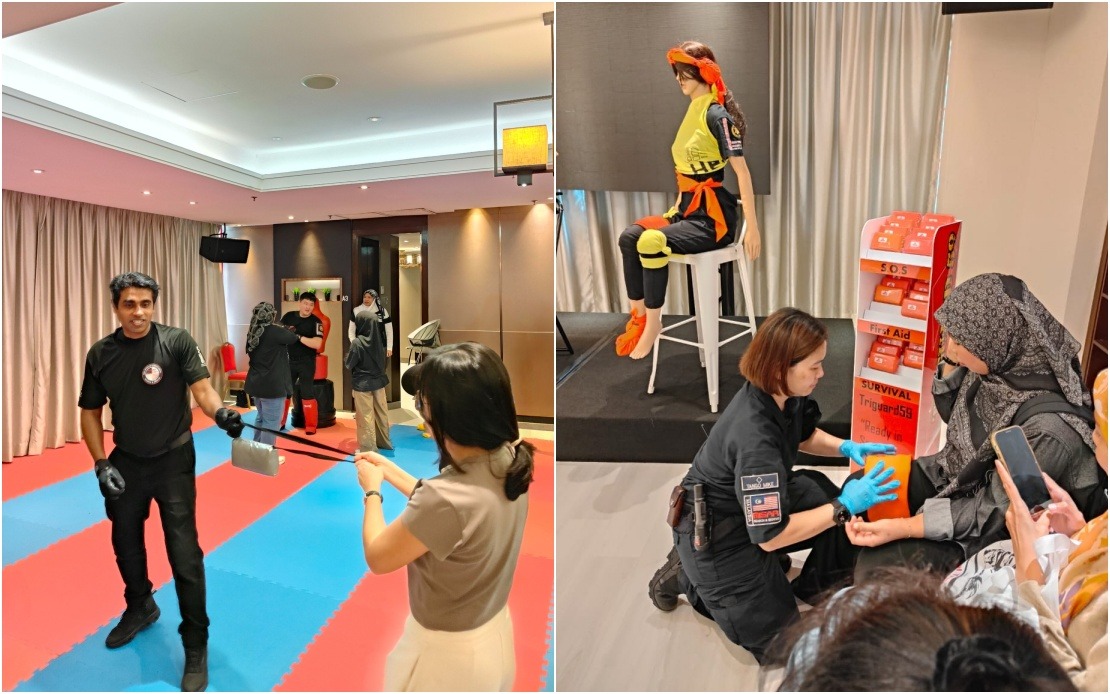
Allianz Malaysia Berhad and Kelab Marshal Keselamatan Jalan Raya Kuala Lumpur (RSMC) have deepened their partnership by launching the ninth iteration of a women-focused street crime awareness campaign, underscoring the insurance sector's growing commitment to community safety initiatives. The programme, conducted at Wisma Huazong YTL Hall in Seri Kembangan, Selangor, reached 200 female participants who received comprehensive training spanning personal security vulnerabilities, emergency response protocols, and risk mitigation strategies tailored for women navigating urban environments across Malaysia.
The curriculum reflected contemporary security challenges facing women in urban and semi-urban settings, incorporating knowledge about residential intrusions, street theft targeting handbags and personal belongings, vehicular scams, harassment and stalking behaviour, carjacking tactics, accident management procedures, defensive techniques, and disaster preparedness. By targeting women aged 16 and above, the programme addressed a demographic facing distinct safety risks that often go underaddressed in mainstream public safety discourse. Rather than focusing exclusively on crime statistics or fear-mongering narratives, the initiative emphasised empowerment through education and practical capability-building.
The expanded format this year introduced structured dialogue sessions where participants engaged directly with RSMC experts, transforming what might otherwise have been a one-directional educational experience into an interactive forum for addressing localised safety concerns. This methodology enabled attendees to contextualise theoretical knowledge within their own lived experiences, asking questions about neighbourhood-specific threats and receiving actionable guidance applicable to their daily routines. The shift towards participatory learning reflects contemporary best practices in public education, particularly within the safety and wellness sectors.
Allianz Malaysia's Chief Executive Officer Sean Wang emphasised that the programme's true measure of success extended beyond immediate attendance figures, noting that interest expressed by community leaders in replicating the initiative within their own neighbourhoods represented the campaign's most significant outcome. This grassroots expansion model transforms initial participants into ambassadors who can facilitate knowledge transfer within family units and community networks, exponentially multiplying the campaign's reach and social impact. The voluntary enthusiasm from local leaders suggests the training addresses genuine safety gaps that communities recognise within their environments.
RSMC founder and president Captain K. Balasupramaniam framed street crime awareness as fundamentally about building individual agency and informed decision-making capacity rather than instilling anxiety. This philosophical approach distinguishes the campaign from fear-based safety messaging that can inadvertently restrict women's freedom of movement and public participation. By equipping participants with knowledge and skills, the programme creates conditions for women to navigate their communities with greater confidence and reduced vulnerability, ultimately contributing to broader social participation and economic engagement.
The collaboration between Allianz Malaysia's corporate social responsibility framework and RSMC's operational expertise demonstrates how private sector organisations can meaningfully contribute to public safety infrastructure, particularly in areas where government resources may be constrained. Insurance companies possess obvious incentives to support loss prevention initiatives, but this programme transcends mere risk management by addressing systemic safety vulnerabilities affecting millions of Malaysian women. The partnership model offers a template for other corporate entities seeking to deliver measurable community benefits aligned with their core business operations.
For Malaysian women navigating increasingly complex urban environments, practical safety training addresses critical gaps in public education. While school curricula may include basic personal safety modules, adult women facing specific occupational, residential, and transportation risks often lack access to comprehensive, contemporary security training. This programme fills that void by providing evidence-based guidance on prevalent threats from burglary to digital scams to vehicular hijacking, equipping attendees with recognition skills and response protocols that could significantly reduce victimisation risks.
The regional implications of such initiatives warrant consideration as Southeast Asian cities experience rapid urbanisation alongside evolving crime patterns, including technology-enabled offences. Malaysian women's safety advocates have long highlighted gaps between official safety statistics and lived experiences, particularly regarding crimes like street robbery and stalking. Initiatives like this ninth campaign contribute to closing those gaps by creating safer communities through bottom-up awareness and mutual support rather than relying solely on reactive law enforcement responses.
The expressed interest from community leaders in bringing similar training to their neighbourhoods suggests untapped demand for women-centred safety education across Malaysia. Such enthusiasm indicates that existing institutional mechanisms for delivering this training may be insufficient to meet community needs, creating opportunities for both Allianz Malaysia and RSMC to expand their reach. Scaling these efforts strategically could significantly enhance safety awareness across diverse Malaysian communities, particularly in suburban and emerging residential areas where crime prevention resources may be limited.

