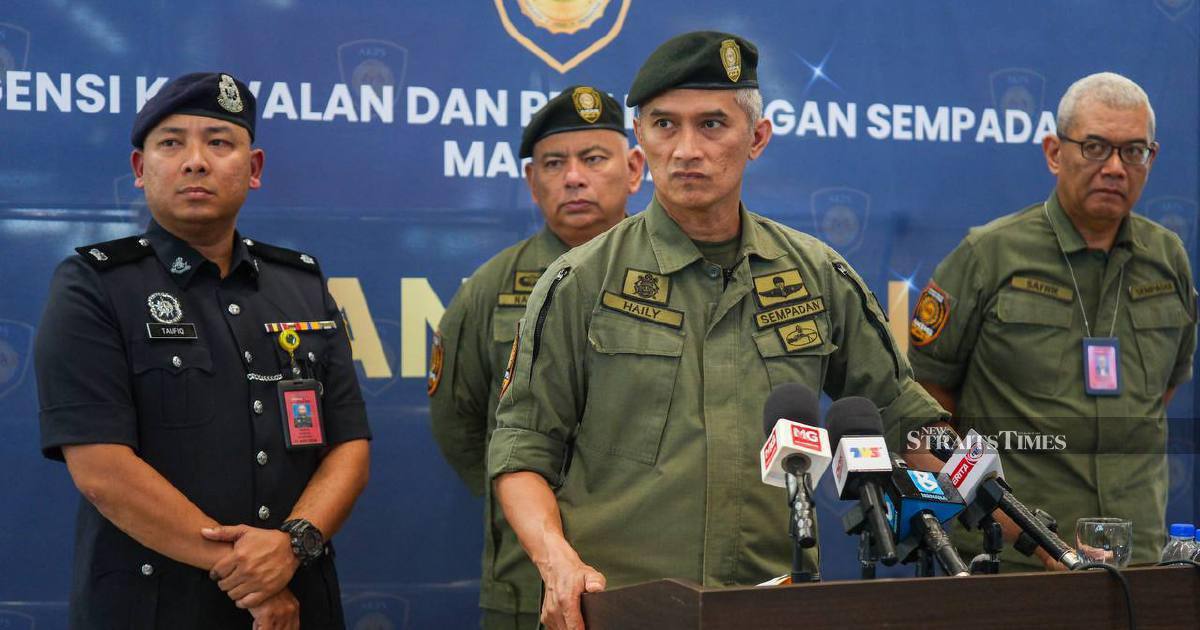
The Malaysia Customs and Border Agency (MCBA) has reaffirmed its commitment to rigorous screening standards following the arrest of a Malaysia Airlines pilot in Indonesia on suspicion of attempting to smuggle narcotics. Officials stressed that the agency followed every established checkpoint and verification procedure during the pilot's outbound screening, defending the competency of Malaysia's border control system against implicit questions about enforcement effectiveness.
The case has drawn attention to the technical capabilities and limitations of modern airport security infrastructure, particularly the artificial intelligence-assisted baggage scanning systems deployed at Malaysia's ports of entry. The MCBA's public statement emphasises that the advanced detection tools available to screeners performed according to specifications and did not identify any suspicious contents in the pilot's luggage at the time of inspection. This clarification suggests that either the items in question were not present during the initial screening, or the technology operated within expected parameters without generating false positives that might otherwise have triggered manual inspection.
Airport security screening represents a complex balancing act between thoroughness and operational efficiency. The involvement of AI-assisted scanning systems introduces both advantages and inherent limitations. These technologies excel at processing high volumes of baggage and identifying clear contraband signatures, yet they remain tools dependent on accurate operator interpretation and the quality of training personnel receive. The MCBA's assertion that procedures were fully followed indicates a systematic approach was applied, even though the outcome ultimately did not prevent the alleged illegal activity.
The incident occurs within a broader regional context of drug enforcement at Southeast Asian borders. Malaysia, positioned as a transit point and destination market for narcotics trafficking networks, faces persistent pressure to maintain stringent controls while managing the substantial passenger and cargo volumes that flow through Kuala Lumpur International Airport and other major entry points. The pilot's profile—a trusted aviation professional with legitimate access to aircraft and international routes—represents a particular vulnerability that border agencies across the region are attempting to address through enhanced monitoring protocols.
For Malaysian readers and business stakeholders, this development carries implications beyond the immediate legal matter. Malaysia's reputation for transport security standards directly influences international confidence in the country's aviation sector and the competitiveness of Malaysian carriers. Airlines operating from Malaysian hubs depend on maintaining trust with international regulators and passengers regarding operational integrity. The public handling of such cases, therefore, involves careful consideration of both accountability and institutional credibility.
The reliance on technology at border checkpoints, while significantly improving detection capacity compared to manual inspection alone, cannot eliminate human vulnerability to corruption or deliberate circumvention. Screening SOPs are designed to establish multiple defensive layers, with AI-assisted scanners functioning as one component within a broader security architecture. The MCBA's emphasis on procedural compliance suggests that supplementary measures—including documentation verification, behavioural observation, and intelligence cross-referencing—were also applied according to protocol.
Indonesia's subsequent detention of the pilot demonstrates the transnational nature of drug enforcement challenges in the region. When alleged contraband is discovered at a destination rather than at the point of departure, it raises questions about coordination between border agencies and the effectiveness of information-sharing mechanisms between Malaysia and neighbouring countries. The case underscores the importance of integrated regional approaches to preventing narcotics trafficking, where individual nations' border controls form part of a larger security network.
The technical question of why AI-assisted scanners did not flag suspicious items—assuming they were packed at the time of Malaysian departure—merits examination without necessarily implying systemic failure. Advanced scanning technology can be defeated through sophisticated packaging, compartmentalisation, or materials engineered to evade detection. Conversely, if items were acquired or added to luggage after international departure from Malaysia, the screening agencies cannot logically be held accountable for detecting contraband that did not exist when baggage passed through their jurisdiction.
This incident reflects the persistent challenge border authorities worldwide face in maintaining security effectiveness while respecting the legitimate movement of millions of travellers annually. For Malaysia's tourism and business aviation sectors, the critical message is that stringent screening standards remain in place and are being actively enforced. The case also serves as a reminder that individual actor misconduct, regardless of professional status, will be detected and prosecuted through collaborative international law enforcement efforts.
The MCBA's statement carries implicit acknowledgment that public confidence in border security depends on transparent explanation of procedures and outcomes. By clearly articulating that established SOPs were followed, the agency addresses potential criticism while maintaining that reasonable security protocols cannot guarantee detection of all concealment attempts by sufficiently determined individuals. This measured approach reflects operational realism—that security systems function as deterrents and detection mechanisms within defined technical and human parameters, not as absolute prevention guarantees.
Moving forward, this case may prompt Malaysian authorities to review whether existing SOPs require updating in light of emerging trafficking methodologies or technical capabilities. Enhanced training for personnel operating AI-assisted systems, improved intelligence-sharing with neighbouring enforcement agencies, and refined protocols for screening individuals with airport access represent areas for potential strengthening. The incident provides valuable data for ongoing optimisation of Malaysia's border security posture in an increasingly complex threat environment.

