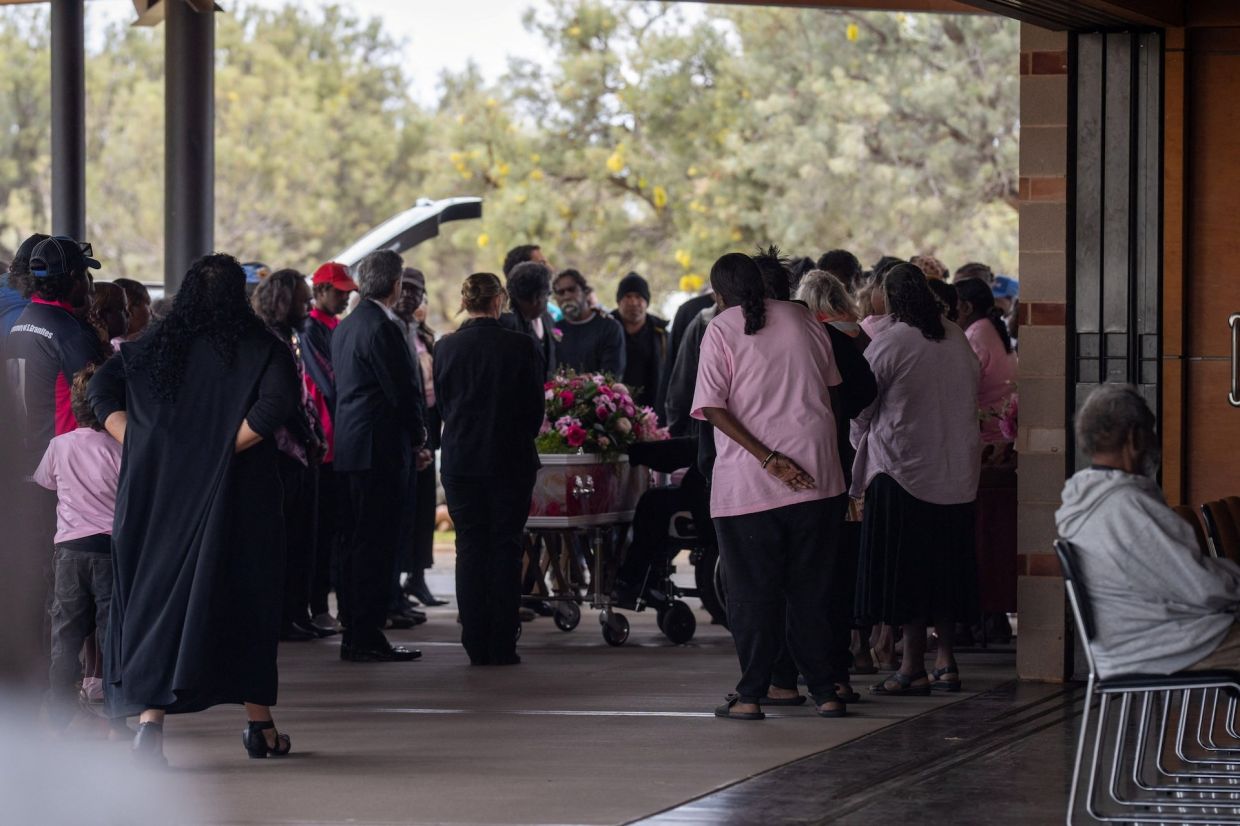
The remote Northern Territory town of Alice Springs came to a standstill on Saturday as hundreds of mourners gathered at Garden Cemetery to pay respects to Kumanjayi Little Baby, a five-year-old whose life ended in April under circumstances that would expose deep fractures within the community and trigger urgent calls for social reform across outback Australia. The funeral service, attended by family, local residents, and Indigenous community members, many dressed in the victim's favourite colour of pink, represented both a personal tragedy and a pivotal moment for a town grappling with systemic inequality and historical grievances.
The death of the young girl sent shockwaves through Alice Springs, a settlement of approximately 25,000 people located roughly 1,250 kilometres south of Darwin. What occurred in the immediate aftermath of her death drew particular attention: the arrest of the suspect followed a violent incident in which local residents discovered and assaulted the individual before authorities intervened. These clashes reflected the raw emotion and frustration that had accumulated within the community, transforming a personal loss into a broader social upheaval that dominated Australian media coverage and political discourse for weeks.
Following the fatal incident, the local Indigenous community entered what is known in cultural terms as "sorry business"—a traditional mourning period encompassing ceremonial practices and spiritual observances that remain central to Indigenous Australian customs. This period extends beyond the immediate funeral service to involve ongoing gatherings, cultural activities, and collective grieving that can last for considerable time. The funeral service itself demonstrated the significance placed on honouring the deceased through both contemporary and traditional means, with the procession and ceremony reflecting deep cultural values around death and community obligation.
The circumstances surrounding the tragedy have drawn renewed attention to the severe socioeconomic disparities that characterise Alice Springs and similar remote communities across Australia's interior. Approximately one-fifth of the town's population identifies as Indigenous, yet many live in what are euphemistically termed "camp communities" on the town's periphery. These settlements often lack adequate housing infrastructure, reliable access to clean water and sanitation, consistent electricity supply, and basic municipal services that residents in urban areas take for granted. The contrast between conditions experienced by different populations within the same town underscores persistent structural inequalities rooted in historical policy failures.
Prime Minister Anthony Albanese responded to the incident by calling on Northern Territory authorities to prioritise immediate improvements to living conditions within these camp communities. His statements acknowledged that the death and subsequent civil unrest should serve as catalysts for substantive policy change rather than temporary political gestures. However, translating political rhetoric into tangible improvements remains a complex challenge requiring coordinated investment, genuine consultation with Indigenous residents, and sustained political will across multiple government agencies and budget cycles.
The legal proceedings following the incident have proceeded with limited public disclosure. Jefferson Lewis, aged 47, has been formally charged with the girl's murder alongside two additional offences whose details remain restricted from public knowledge due to legal constraints and court procedures. This opacity, while standard in Australian criminal justice, has done little to satisfy community demands for transparency and accountability, particularly given existing mistrust between some Indigenous populations and law enforcement institutions shaped by historical interactions.
Alice Springs has experienced periodic episodes of social tension that reflect broader challenges in remote Indigenous communities across Australia. The riots following this incident were not isolated outbursts but rather expressions of accumulated frustration regarding poverty, inadequate services, limited economic opportunities, and a perceived indifference from government institutions toward resolving chronic problems. Understanding the violence requires examining these deeper systemic issues rather than treating the incidents as anomalies disconnected from underlying conditions.
The funeral service carries significance extending beyond Alice Springs itself. For Southeast Asian observers and Malaysian readers particularly, the situation illustrates challenges that similarly affect Indigenous and marginalised communities across the Asia-Pacific region. Questions about equitable resource distribution, cultural preservation amid rapid change, and meaningful self-determination for Indigenous peoples represent issues of shared regional concern. Australia's handling of these matters provides instructive lessons—both positive and cautionary—for other nations wrestling with similar tensions between development priorities and Indigenous rights.
The death of Kumanjayi Little Baby has catalysed broader conversations about Indigenous policy in Australia. Advocates have seized the moment to push for concrete commitments beyond symbolic gestures: substantial housing construction, healthcare facility expansion, educational investment, and employment programme development specifically targeted at remote communities. Whether political pressure translates into sustained budget allocations and program implementation will determine whether this tragedy becomes a genuine turning point or another moment of heightened attention that fades once media focus shifts elsewhere.
As Alice Springs continues its mourning and the legal system processes the case against Jefferson Lewis, the community faces a critical juncture. The funeral represents both an ending—closure for grieving family members—and potentially a beginning, if the incident truly catalyses the systemic reforms that advocates have long demanded. The challenge ahead involves transforming the outpouring of emotion evident at Garden Cemetery into durable political and social change that addresses root causes of inequality and ensures that future generations of Indigenous children in remote Australia enjoy conditions befitting a wealthy developed nation.

