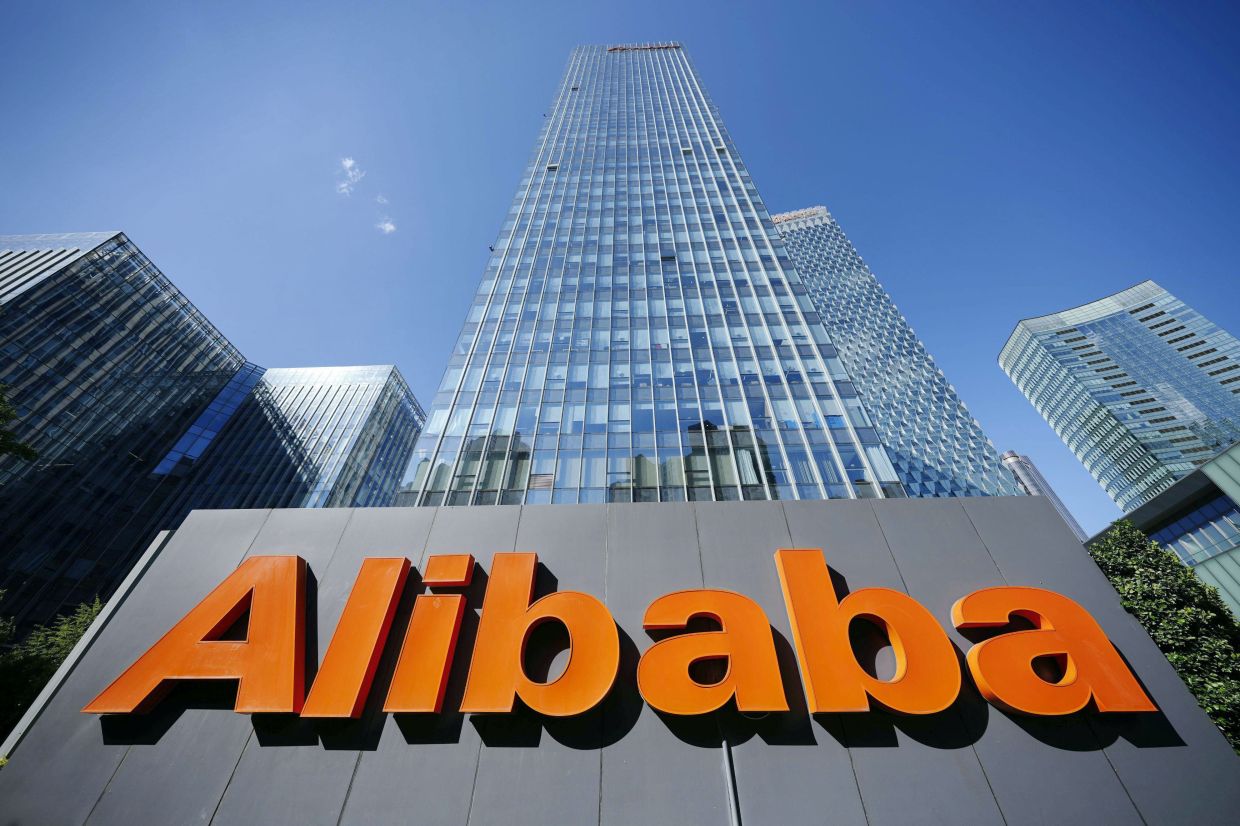
Alibaba Group Holding, the Hangzhou-based technology and e-commerce conglomerate, has filed a lawsuit against the US Department of Defence in San Jose, California, demanding removal from a Pentagon list of companies deemed to support China's military operations. The action represents an escalation in the simmering technology Cold War between Washington and Beijing, with major Chinese firms now resorting to American courts to contest what they view as politically motivated designations.
The Pentagon added Alibaba to its blacklist on June 9 under the provisions of Section 1260H of the National Defence Authorisation Act, simultaneously designating electric vehicle manufacturers BYD and Nio, search engine operator Baidu, robot maker Unitree Robotics, networking equipment supplier TP-Link, and firms across artificial intelligence, biotechnology, and solar industries. This coordinated action signals Washington's determination to target Chinese companies operating in strategically sensitive technology sectors where China and the United States are locked in fierce competition for global dominance.
Alibaba's legal filing argues that the Pentagon's action violates core constitutional protections, specifically the guarantee of due process and the fundamental right to free speech. The company characterises the blacklist designation as arbitrary and capricious, suggesting the government acted without proper legal foundation or transparent reasoning. An Alibaba spokesperson declared in a statement that the firm "is not a Chinese military company nor part of any military-civil fusion strategy," emphasising the company's view that it operates as a commercial entity without formal military connections or obligations.
While the Pentagon's designation does not immediately trigger automatic sanctions, the consequences for affected companies remain substantial and far-reaching. Being listed creates significant barriers to accessing US capital markets, securing American government contracts, and potentially conducting business with US defence contractors and their supply chains. For a global technology firm like Alibaba, which has international shareholders and aspirations for expanded Western markets, such restrictions impose real economic costs that extend beyond direct regulatory penalties.
Alibaba's challenge specifically contests two key Pentagon allegations. The company rejected the claim that it is indirectly affiliated with China's State-owned Assets Supervision and Administration Commission, the government body overseeing state enterprises. It also disputed the assertion that it contributes to military-civil fusion, the Chinese strategy of integrating civilian technological development with military capabilities, citing only routine regulatory interactions with the Ministry of Industry and Information Technology—interactions the company argues are standard compliance requirements for any technology firm operating within China.
The company revealed that it had engaged directly with Pentagon officials in January to discuss the potential designation, followed by a formal written response submitted in March. Despite this engagement and Alibaba's detailed response, the Pentagon proceeded with the blacklist decision in June without, according to Alibaba, providing adequate explanation for rejecting its arguments or clarifying the specific evidence underlying the military company designation.
Alibaba's legal action is not isolated. Other prominent Chinese firms facing similar designations, including Baidu and BYD, have similarly denounced the Pentagon's decision. The Chinese government has expressed strong opposition to Washington's approach, with the embassy in the United States formally stating it "firmly opposes" what it characterises as an overstretched interpretation of American national security interests and the deployment of discriminatory lists to constrain Chinese competitors.
Alibaba's lawsuit arrives amid an intensifying cycle of tit-for-tat sanctions between Washington and Beijing. On the same day the company filed its challenge, China's Ministry of Commerce announced export control restrictions against ten American firms: Aveox, Red Cat Holdings, Teal Drones, IMSAR, Jaia Robotics, Ball Aerospace & Technologies, Oshkosh Defense, L3Harris Maritime Services, MP Materials, and USA Rare Earth. A ministry spokesperson characterised these measures as responses to "malicious actions" by Washington, signalling that Chinese policymakers view American blacklisting efforts as provocative and unjustified.
Beijing's countermeasures extended further the same day, as China's Ministry of Finance announced restrictions barring 46 American companies from accessing Chinese government procurement. The prohibition took immediate effect and includes major defence contractors such as Lockheed Martin, Raytheon Missiles & Defense, General Atomics Aeronautical Systems, Boeing's Defence, Space & Security division, General Dynamics Land Systems, and Javelin Joint Venture—a fifty-fifty partnership between Lockheed Martin and Raytheon. The ministry exempted US-Chinese joint ventures already operating in China from these restrictions.
For Malaysian businesses and investors, Alibaba's legal challenge carries important implications. As a major regional e-commerce and technology platform with significant Southeast Asian operations, Alibaba's fate in American courts could influence how multinational technology firms navigate geopolitical tensions. The case underscores the broader reality that companies operating across competing great powers face mounting pressure to choose sides or face restrictions from one bloc or another.
The lawsuit also highlights the unpredictable nature of technology regulations in the current environment. Even companies without formal military ties face designation based on indirect government connections or participation in China's industrial policy frameworks. This uncertainty complicates business planning for Malaysian firms that source technology, invest in Chinese companies, or rely on Chinese platforms for their digital infrastructure.
The Pentagon's silence on the matter, stating only that it "does not comment on ongoing litigation," suggests the US government may view this case as a test of how aggressively it can employ its blacklist authority without facing significant legal resistance. If Alibaba succeeds in its challenge, it could open pathways for other Chinese firms to contest their designations, potentially constraining American policymakers' flexibility in deploying such tools. Conversely, if courts uphold the Pentagon's authority, the blacklisting approach may become an increasingly common feature of US-China technological competition, with profound consequences for global commerce and supply chains.

