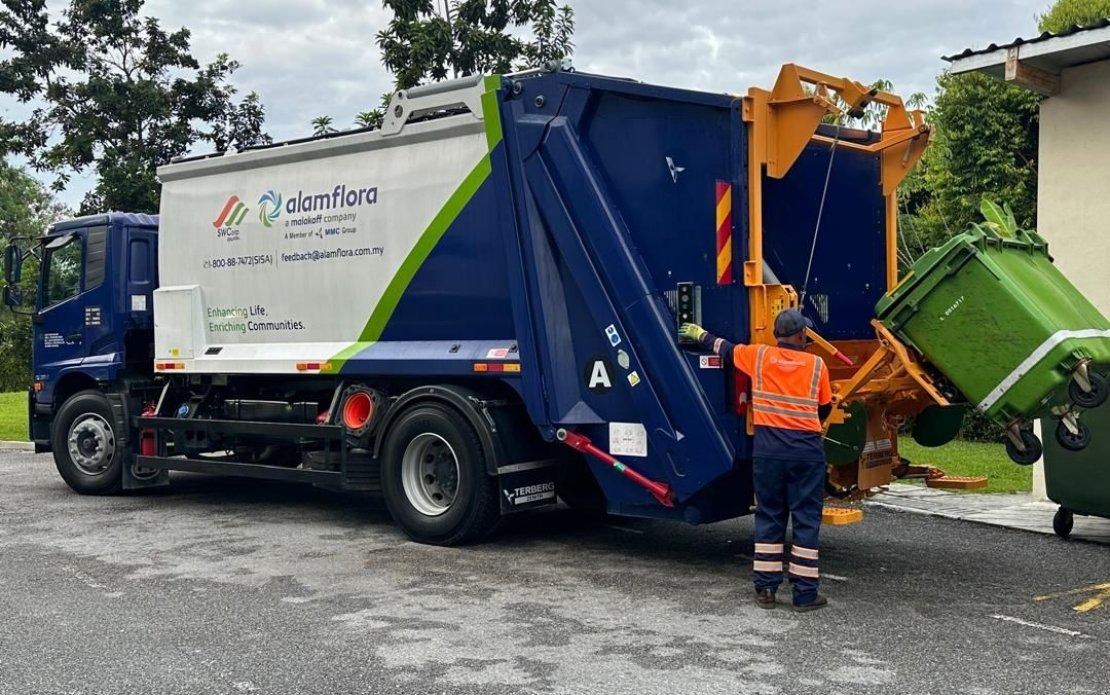
Alam Flora, the major waste management operator serving the Klang Valley, has committed to working fully with authorities investigating a compactor garbage lorry incident that occurred along Jalan Pantai Murni 1 in Pantai Hillpark yesterday morning. The pledged cooperation signals the company's intent to provide transparency throughout the investigation process and address public concerns surrounding the accident, which resulted in significant damage to a condominium perimeter wall.
The early-morning crash involved a suspected brake malfunction that caused the garbage collection vehicle to lose control and veer into the residential compound. According to the company's statement issued on August 13, the lorry will be transferred to the Computerised Vehicle Inspection Centre, commonly known as Puspakom, where specialists will conduct a comprehensive mechanical examination to pinpoint the exact technical cause of the incident. This step aligns with specific directives from the investigating officer leading the case.
Police conducted a breathalyser test on the lorry driver immediately following the crash, and the results confirmed he had not consumed alcohol before operating the vehicle. The driver subsequently filed an official report with the Kuala Lumpur Traffic Police Station, establishing a formal record of the incident. This preliminary finding eliminates impaired driving as a contributing factor, narrowing the focus to mechanical failure or maintenance issues as the probable cause.
The investigation is proceeding under Section 43(1) of the Road Transport Act 1987, a provision typically invoked when motor vehicles are involved in incidents that may involve breaches of road safety regulations or mechanical defects. This legal framework provides authorities with the necessary tools to examine whether the vehicle had been properly maintained and whether any regulatory violations occurred prior to the incident.
Alam Flora's statement emphasises that worker safety, contractor protection, and public wellbeing constitute the organisation's fundamental operational priorities. The company recognises that such incidents create anxiety within surrounding communities, particularly among residents living in close proximity to collection routes. By committing to high safety standards and thorough investigation protocols, Alam Flora seeks to rebuild confidence in its service delivery and demonstrate accountability.
The incident highlights the critical importance of vehicle maintenance regimens in the waste collection industry. Garbage compactor lorries operate under considerable stress, with frequent stop-start cycles, heavy loading patterns, and demanding daily schedules that place significant strain on hydraulic and mechanical systems. Brake systems, in particular, require rigorous maintenance schedules to prevent the type of failure suspected in this case. The transportation of tonnes of waste daily means that mechanical degradation can have severe consequences for public safety.
For Malaysian consumers and residents, this incident underscores broader questions about the maintenance standards and inspection protocols that apply to commercial fleets operating within urban areas. While individual vehicle inspections occur at specific intervals, continuous monitoring systems and preventive maintenance programmes determine whether potential failures are caught before they endanger communities. The investigation's findings may influence how waste management operators across Malaysia approach equipment maintenance and safety audits.
Alam Flora's cooperation with authorities follows established practice for major Malaysian corporations facing operational incidents. By voluntarily submitting vehicles for inspection and pledging transparent engagement with investigators, the company attempts to mitigate reputational damage and demonstrate that systematic safety failures are not endemic to its operations. The outcome of the Puspakom inspection will be critical in determining whether this was an isolated mechanical failure or evidence of systemic maintenance deficiencies.
The incident also reflects the often-invisible risks associated with essential municipal services. Garbage collection workers operate in early morning hours, navigating residential areas while managing heavy vehicles under tight schedules. Public awareness of these hazards remains limited, yet the safety of waste collection operatives and surrounding residents depends entirely on properly maintained equipment and stringent operational protocols.
As the investigation progresses through Puspakom's technical examination phase, the findings will inform whether additional regulatory measures, enhanced inspection frequencies, or industry-wide safety reviews are warranted. For Alam Flora and other waste management operators in Malaysia, the results will likely shape future maintenance standards and vehicle inspection requirements. The company's stated commitment to safety and transparent investigation provides a foundation for determining whether systemic improvements are necessary across the sector.

