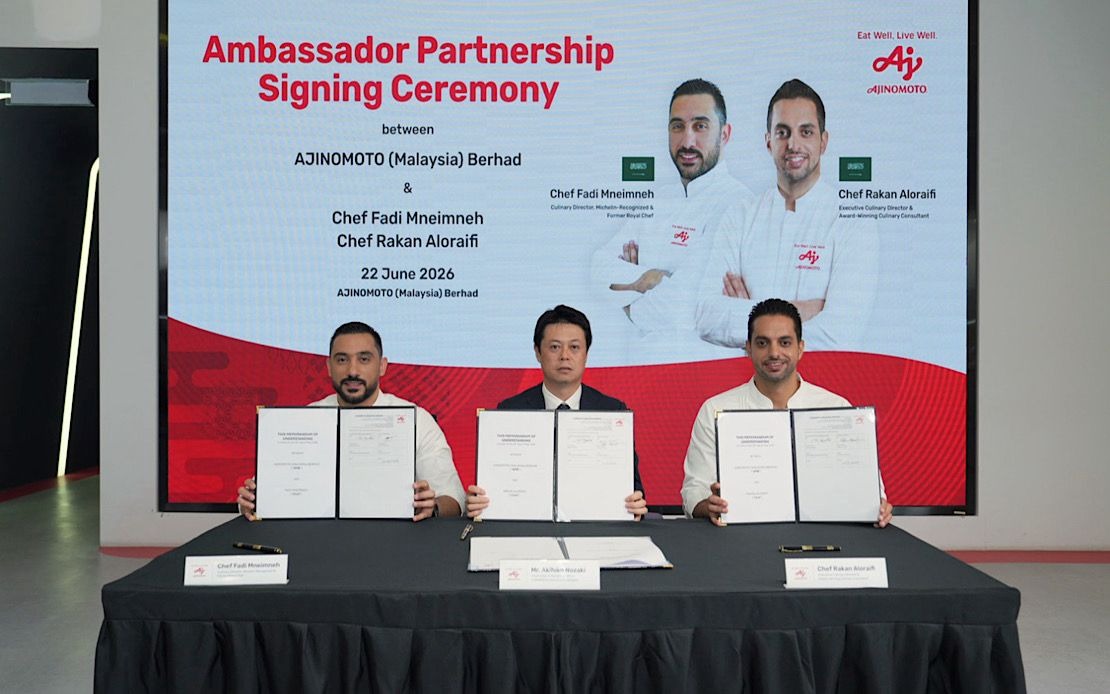
Ajinomoto (Malaysia) Berhad is strategically leveraging the culinary influence of two of Saudi Arabia's most prominent chefs to drive deeper market penetration across the Middle East, recognising that the region's explosive appetite for premium halal food solutions presents a substantial growth runway for Malaysian manufacturers. The partnership with Chef Fadi Mneimneh, a Michelin-starred culinary director and former member of the Saudi royal kitchen, alongside Chef Rakan Aloraifi, an acclaimed executive chef and food consultant, signals AMB's sophisticated approach to market entry—moving beyond traditional distribution channels to engage at the level of culinary tastemakers who shape industry standards and consumer preferences in high-value hospitality segments.
The collaboration reflects a deliberate pivot in how Malaysian food corporations are positioning themselves globally. Rather than competing primarily on price or volume, AMB is anchoring its regional strategy on halal credentials and Japanese culinary science, two advantages that resonate particularly strongly in Muslim-majority markets where food integrity commands premium pricing. The partnership announcement underscores the company's confidence that halal manufacturing excellence, when combined with chef endorsements and educational outreach, can establish AMB products as the preferred choice among elite restaurants, hotel kitchens, and corporate food services across the Arabian Peninsula.
During a recent visit to AMB's manufacturing facility in Bandar Enstek, Negeri Sembilan, the two Saudi culinary leaders conducted an in-depth orientation designed to deepen their understanding of the company's product portfolio, halal compliance frameworks, and the science of umami—the savoury fifth taste that underpins Japanese cuisine. This factory tour operated as both a quality assurance validation and a relationship-building exercise, allowing renowned chefs whose reputations depend on ingredient integrity to personally verify AMB's manufacturing standards and traceability systems. Such direct engagement between ingredient suppliers and high-profile culinary voices is uncommon and signals the strategic importance AMB attaches to securing advocacy from decision-makers within the Middle Eastern hospitality ecosystem.
The centrepiece of the partnership involves live culinary demonstrations where Chefs Fadi and Rakan prepare signature Middle Eastern dishes using selected Ajinomoto products, illustrating how umami-rich flavourings can amplify authentic regional cuisine without diluting cultural specificity. This pedagogical approach addresses a critical barrier in halal markets: convincing traditionalist chefs and kitchen managers that Japanese-origin ingredients enhance rather than replace conventional spice blends and cooking methods. By showcasing umami as a complementary flavour dimension that deepens rather than masks traditional Middle Eastern taste profiles, AMB is reframing its products not as imported substitutes but as sophisticated culinary tools that modernise traditional cooking without abandonment of heritage.
For Malaysian stakeholders, this initiative carries broader implications about competitive positioning in the halal economy. Southeast Asia and Malaysia specifically have invested heavily in halal branding and certification infrastructure, yet many Malaysian companies remain underrepresented in premium Middle Eastern markets where willingness to pay for certified halal products significantly exceeds domestic purchasing power. AMB's partnership model—pairing halal manufacturing excellence with celebrity chef endorsements and HORECA education—offers a template that other Malaysian food manufacturers could adapt. The company's decision to invest in sustained engagement with regional culinary influencers suggests recognition that the Middle East's hospitality sector prioritises relationship-based procurement and chef recommendations over transactional price competition.
The involvement of AMB's Brunei distributor representative in the programme indicates the company is simultaneously building regional distribution networks while conducting these upstream quality validation and relationship-building activities. This multi-layered approach—combining manufacturing transparency, chef education, distributor inclusion, and hospitality industry networking—demonstrates strategic patience and sophistication in market development that contrasts with simpler export approaches. By investing resources into comprehensive stakeholder engagement rather than seeking rapid volume growth, AMB is constructing a resilient market presence anchored in professional relationships and culinary credibility.
Upcoming participation in HORECA events scheduled for October 2026 in Riyadh and Jeddah will elevate this partnership from introductory engagement to sustained market activation. These exhibitions attract purchasing decision-makers, executive chefs, and procurement professionals from the entire Gulf region's hotel, restaurant, and catering sectors—the high-value customer segments where AMB's premium positioning and halal credentials justify volume growth and margin expansion. Live culinary demonstrations by internationally recognised Saudi chefs will function as powerful marketing assets, allowing AMB to present its products within the professional context where purchasing decisions are actually made, rather than relying on conventional trade advertising or distributor salesmanship.
The halal food industry across the Middle East has experienced sustained growth driven by rising incomes, expanding hospitality infrastructure, and strengthening regulatory emphasis on food safety and ingredient transparency. Saudi Arabia's Vision 2030 economic diversification programme has particularly accelerated investment in tourism and hospitality, creating expanded demand for premium ingredients across hotel chains, high-end restaurants, and catering operations. AMB's timing in establishing these partnerships aligns with peak investment cycles in the region's hospitality sector, positioning the company to capture procurement relationships during expansion phases when supply chains are being established and ingredient specifications defined.
For Malaysian manufacturers and exporters more broadly, AMB's model illuminates the strategic value of halal certification beyond regulatory compliance—it functions as a genuine competitive advantage in Muslim-majority markets and can command premium pricing when paired with quality assurance, chef advocacy, and professional hospitality engagement. As Malaysia continues positioning itself as a global halal hub, manufacturers that combine certification excellence with sophisticated go-to-market strategies that engage professional influencers will likely outperform competitors relying on cost leadership or generic quality claims. AMB's investment in partnerships with high-profile Saudi chefs reflects understanding that authentic market penetration in the Middle East requires more than certificates and compliance—it demands credibility validation from within the professional culinary community itself.

