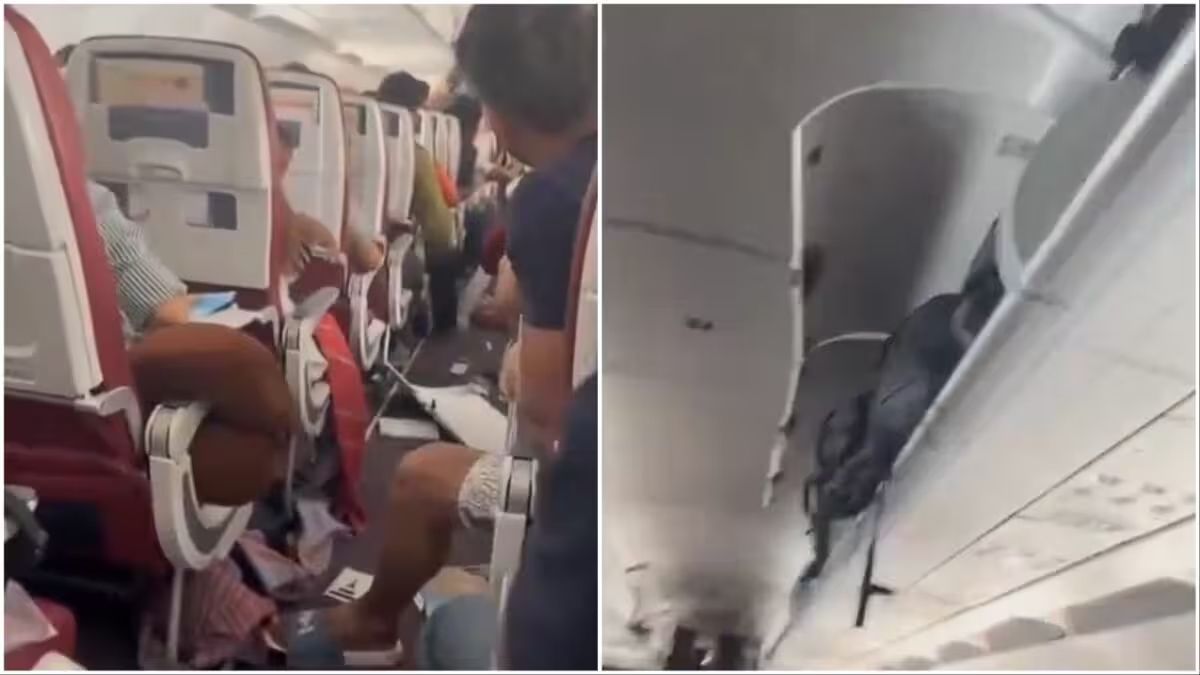
Airbus announced on Monday that it would send a team of technical specialists to New Delhi on Tuesday to provide expert support to investigators examining an Air India flight that experienced a sudden and alarming loss of altitude, leaving 17 people injured during what witnesses described as a terrifying mid-air incident. The aircraft manufacturer's involvement marks an escalation in the international dimensions of the probe, which has already drawn scrutiny from India's Aircraft Accident Investigation Bureau and the civil aviation authorities.
The Airbus A320 involved in the August 4 incident was operating as Air India Flight AIC-24, bound for New Delhi from Phuket International Airport with 137 passengers and eight crew members aboard. During its descent, the aircraft lost approximately 300 feet in altitude unexpectedly before stabilising and proceeding to land safely at its destination. Following the landing, eight passengers and four cabin crew members required hospital admission, marking the extent of injuries sustained during the rapid altitude change.
India's Ministry of Civil Aviation formally classified the occurrence as a Serious Incident, triggering a comprehensive investigation by the Aircraft Accident Investigation Bureau. Air India stated in its public statement that the aircraft had "experienced a sudden loss of altitude" and emphasised its full cooperation with all investigating parties. The airline also confirmed that it had immediately notified the aircraft manufacturer of the incident, initiating Airbus's involvement in the technical analysis phase.
In a statement released through official channels, Airbus confirmed its commitment to providing comprehensive technical assistance to Indian investigating authorities. The company's specialists will examine the aircraft's systems, flight data, and operational parameters to determine what triggered the unexpected altitude loss. Airbus said it would "actively support the airline and provide further information as it becomes available," positioning itself as a collaborative partner in resolving the incident.
Median scrutiny in Indian newspapers has focused on unconfirmed reports that the aircraft experienced multiple technical anomalies immediately preceding the sudden loss of altitude. However, neither Air India, the Indian authorities, nor Airbus have released official confirmation of specific technical faults. This absence of technical clarity has intensified public and media interest in what may have caused the incident, with various technical scenarios being discussed among aviation analysts across the region.
A particularly significant aspect of the investigation concerns psychoactive substance screening conducted on both pilots immediately after the aircraft landed. Standard procedure required both the pilot-in-command and first officer to undergo screening tests. Results from the chief pilot's initial screening indicated findings that necessitated confirmatory testing, prompting authorities to dispatch samples for detailed laboratory analysis. This development has added a medical and toxicological dimension to what might otherwise have been purely technical investigation. Both pilots have been removed from the flight roster pending completion of all investigative procedures, a standard precaution reflecting the seriousness with which authorities treat any factor that could have affected flight operations.
The timing of this incident compounds existing difficulties facing Air India, an airline that has been attempting to execute a comprehensive operational and safety turnaround. The carrier has endured significant disruptions stemming from geopolitical instability in the Middle East, which has affected flight routing and operational efficiency across its network. These external pressures come at a particularly challenging moment for the airline's management.
Most catastrophically, Air India's reputation sustained a devastating blow in June 2025 when Flight 171, a Boeing 787 Dreamliner operating from Ahmedabad to London, crashed shortly after takeoff. The disaster claimed all but one of the 242 passengers and crew aboard, along with 19 people on the ground, representing one of aviation's deadliest accidents in recent memory. That tragedy cast a long shadow over the airline's safety profile and operational credibility across international markets.
In response to these mounting challenges, Air India's board appointed Tewolde Gebremariam as chief executive just days before the August 4 incident. Gebremariam, former chief of Ethiopian Airlines, brings extensive experience managing complex aviation operations and safety protocols across challenging operational environments. His appointment signals the airline's determination to institute fresh leadership and potentially reformed operational practices to restore confidence among passengers, regulators, and international aviation partners.
For Malaysian and Southeast Asian readers, the Air India incident carries particular relevance given the region's extensive air travel connectivity. The August 4 flight originated from Phuket, a major regional hub serving millions of passengers annually from across Southeast Asia. The incident underscores how safety issues affecting major carriers operating throughout the region can impact travel confidence and operational standards across interconnected aviation networks. The involvement of Airbus in the investigation also highlights how manufacturer expertise crosses national boundaries when safety incidents occur involving aircraft operated across multiple jurisdictions, a pattern increasingly common as aviation becomes more internationally integrated.

