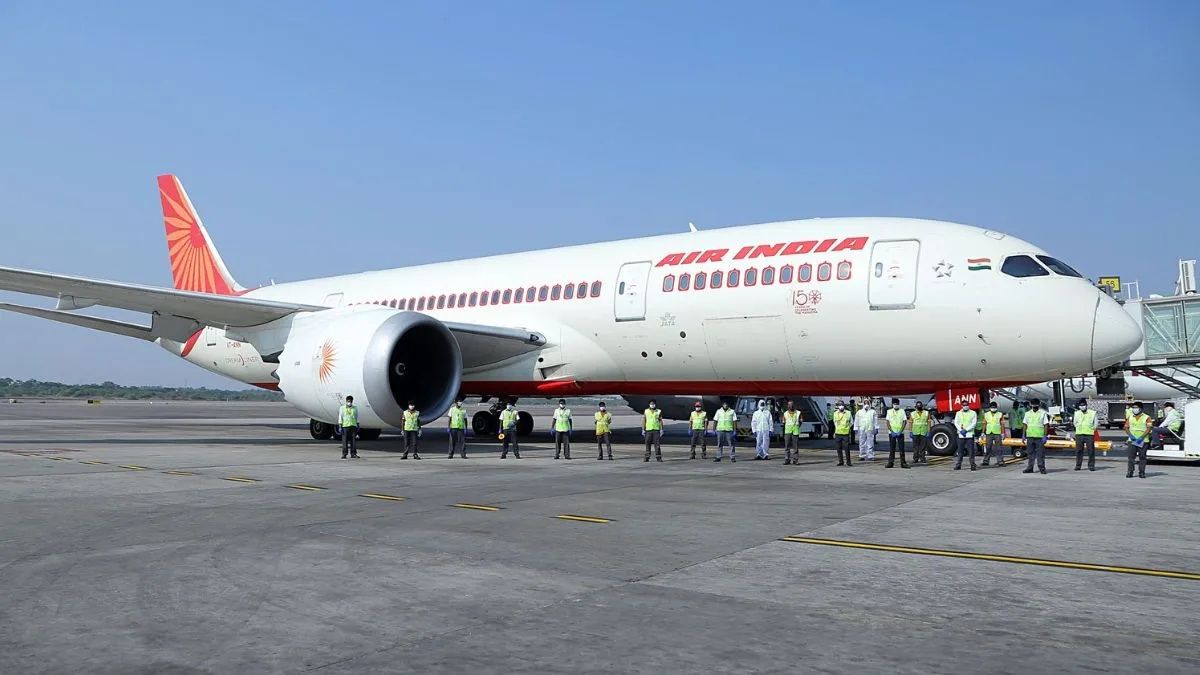
An Air India Airbus A321 operating between Delhi and Amritsar inadvertently crossed into Pakistani airspace on Monday evening following a technical failure in its navigation systems, marking another instance of an airspace incursion in the volatile India-Pakistan aviation corridor. The aircraft, identified as Flight AI-463, initially departed from Delhi's Indira Gandhi International Airport at 9.18pm on June 22 and encountered difficulties shortly after takeoff. According to official sources confirmed on Wednesday, the navigation malfunction caused the aircraft's flight path to veer westward from its intended trajectory, resulting in the unintended crossing of the International Border.
The breach was detected and reported by Pakistani Air Traffic Control personnel, who coordinated directly with the flight crew to notify them of the incursion. The pilots responded swiftly by correcting their heading and guiding the aircraft back into Indian airspace without further incident. A senior airport official, speaking on condition of anonymity, confirmed that the deviation was caught promptly and that the crew's immediate corrective action prevented any prolonged violation of Pakistani territorial airspace. The incident underscores the critical role of coordinated air traffic management between the two nations, particularly given the historically fraught relationship and occasional tensions over aviation matters in South Asia.
However, the aircraft's troubles did not conclude with its safe return to Indian airspace. As Flight AI-463 approached Sri Guru Ram Dass Jee International Airport in Amritsar around 10.30pm, the airport was experiencing significant congestion in its local airspace, a common occurrence during peak hours at major regional hubs in northern India. Air traffic controllers at Amritsar were unable to provide an immediate landing slot due to operational constraints and the volume of traffic already in the circuit. Faced with these challenges, controllers instructed the flight to divert back to Delhi rather than hold in a congested airspace pattern, a decision aimed at maintaining safety and operational efficiency.
The unexpected return to Delhi added considerable delay and complexity to what should have been a routine 45-minute flight. Upon landing back at Indira Gandhi International Airport, the aircraft underwent technical inspection and maintenance checks to address the navigation system failure and ensure it was cleared for subsequent flight operations. This inspection period extended the overall delay, as engineers needed to diagnose the fault, conduct repairs, and obtain the necessary clearances from air traffic authorities before the flight could resume its journey northward.
After receiving all required operational and safety clearances, Flight AI-463 departed Delhi once again for Amritsar. The flight finally touched down at its intended destination at approximately 2.20am on Tuesday morning, nearly four hours behind its originally scheduled arrival time. Passengers aboard experienced an exceptionally prolonged journey that night, enduring an unscheduled diversion, an unexpected return to the capital, and a significant delay before ultimately reaching their destination.
Neither Air India nor India's Directorate General of Civil Aviation (DGCA) has issued detailed public statements regarding the specific nature of the navigation system failure that triggered the incident. The lack of immediate transparency is typical of how aviation authorities in the region handle such matters, often preferring to release information only after thorough investigation. However, both organizations have initiated routine investigative procedures to determine the precise technical circumstances that led to the route deviation. Such investigations typically examine aircraft maintenance records, crew training documentation, and the operational timeline of the flight to identify root causes and recommend preventive measures.
The incident represents a concerning pattern of airspace incursions along the India-Pakistan border, where aviation operations remain subject to heightened scrutiny and strict adherence to designated flight corridors. Just one month prior to this occurrence, a Pakistan International Airlines flight had briefly ventured into Indian airspace due to adverse weather conditions before Indian air traffic controllers successfully guided it back to its assigned route. These recurring incidents, though handled professionally by air traffic authorities on both sides, highlight the inherent risks and challenges of maintaining safe aviation operations in a region characterized by geopolitical sensitivities and complex airspace management requirements.
For Malaysian and Southeast Asian aviation professionals and operators, this incident carries important implications regarding navigation system reliability and the critical importance of redundant safety measures. The rapid detection and resolution of the airspace breach by both Indian and Pakistani air traffic control demonstrates that despite political tensions, professional cooperation in aviation safety remains functional and effective. Airlines operating in the region, including Malaysian carriers that occasionally utilize routes passing through South Asian airspace, must ensure their navigation systems receive rigorous maintenance and that their crews maintain proficiency in handling navigation emergencies.
The event also underscores why modern aircraft are equipped with multiple navigation systems, including satellite-based Global Navigation Satellite System (GNSS) technology alongside traditional inertial and radio-based navigation aids. The Airbus A321, a widely operated regional aircraft, possesses sophisticated redundancy in its navigation architecture precisely to handle such failures gracefully. The successful recovery from this technical failure and the aircraft's safe return to both Indian airspace and its destination demonstrates that well-maintained systems and well-trained crews can effectively mitigate even significant technical challenges.