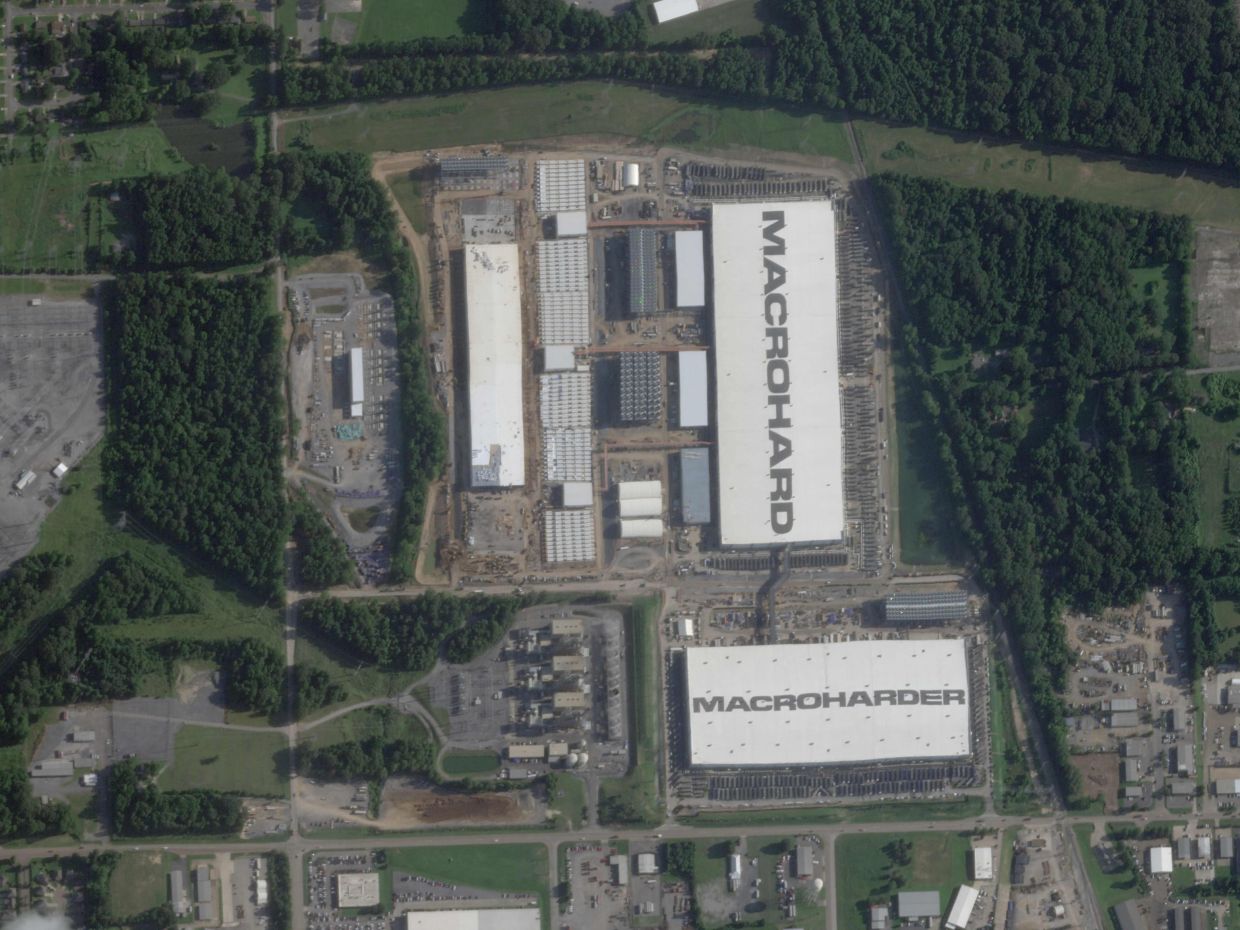
The frenzied construction of artificial intelligence data centres across the United States has sparked fierce opposition from residents in affected neighbourhoods, particularly in historically marginalised Black communities struggling with compounded environmental burdens. In Memphis and neighbouring Mississippi, sprawling facilities housing supercomputing infrastructure have brought acute pollution, water depletion, and noise disruption to regions already bearing the toxic legacy of industrial neglect dating back generations.
In South Memphis, the Boxtown neighbourhood—established by freed slaves following the Emancipation Proclamation of 1863—now faces fresh environmental threats from mega data centres serving the AI industry. The region has endured decades of factory pollution, resulting in a cancer risk rate four times higher than the national average. For teenager Jasmine Bernard, a two-year campaign against the gas turbines powering one major facility has become a struggle against historical patterns of abandonment. "This community of Boxtown and South Memphis as a whole historically just has been the subject of environmental neglect," the 17-year-old told AFP. "It's deeply tied to the history... it's been a Black community for centuries." Her activism reflects a broader awakening among residents that AI infrastructure is being imposed without meaningful community input or accountability.
KeShaun Pearson, co-founder of Memphis Community Against Pollution, has emerged as a leading voice documenting how Colossus I—identified as Elon Musk's SpaceXAI flagship supercomputer facility—exemplifies a pattern of corporate expansion at community expense. Pearson has travelled across the country raising awareness about data centre environmental impacts, positioning Boxtown as a cautionary tale of elected officials making promises about economic development while excluding those most affected from decision-making. "They don't listen or involve the community or the people who are going to be directly impacted," Pearson stated, highlighting how infrastructure decisions disproportionately burden marginalised neighbourhoods while benefits accrue elsewhere.
The physical footprint of Colossus I presents an imposing barrier to surrounding residents—approximately ten turbines and vast warehouse complexes containing Nvidia graphics processing units stretch across the landscape. The facility, now leased by AI company Anthropic for more than US$1 billion monthly, was constructed in merely four months and generated US$12 million in tax revenue. While SpaceXAI claims its turbines employ "advanced emission control technologies" and that "current monitoring shows that local air quality continues to meet or exceed EPA standards," residents and environmental advocates question the adequacy of these protections, particularly given the facility's unprecedented scale and rapid deployment.
Water depletion represents an equally pressing concern for Memphis residents who depend on the same aquifer being drained by Colossus I's cooling systems. The data centre pumps 1.2 million gallons of groundwater daily from reserves supplying the city's drinking water supply. Sarah Houston of Protect Our Aquifer has warned of unsustainable extraction rates, noting that SpaceXAI's promised water reuse facility remains suspended indefinitely. This dimension of the crisis reveals how AI infrastructure threatens essential public resources in communities already experiencing systemic neglect of their basic needs.
Memphis Mayor Paul Young recently announced a modest response, directing US$3.35 million of the US$12 million tax revenue toward affected communities. Yet this allocation barely addresses the scale of environmental and health impacts documented by residents. The neighbouring state of Mississippi has adopted similar approaches at Colossus II near Southaven, where SpaceXAI built a facility to train its Grok AI assistant. However, residents there report unrelenting operational impacts: sixty-nine turbines create constant noise, with family resident Krystal Polk describing the 24/7 drone sound as resembling a jet engine that never ceases. "If you're out here too long, the vibrations – that wave sound makes you nauseous," Polk told AFP, illustrating how even modest financial compensation cannot remediate severe quality-of-life degradation.
Legal and regulatory violations have characterised SpaceXAI's expansion strategy. Environmental and civil rights advocates argue the company circumvented requirements of the federal Clean Air Act by installing turbines without obtaining permits or conducting public consultation beforehand. Laura Thoms, representing the NAACP in litigation against SpaceXAI through the nonprofit Earthjustice, explained the regulatory breach: "Before you even start constructing the plant, you have to have the permit in hand that ensures the health and safety of the surrounding communities. Here, the company did not want to wait to get the permit. So what they did is they put these illegal turbines on site while at the same time going through the permitting process, so that they didn't have a power gap."
SpaceXAI's use of "temporary" classification for the turbines proved instrumentally effective in evading environmental scrutiny. This designation allowed the company to operate facilities technically subject to different regulatory standards, effectively creating regulatory gaps exploited for operational advantage. In late July, the company committed to dismantling the turbines and constructing a code-compliant power plant, but the agreement—negotiated without transparent public participation according to opponents—provides until July 2027 for completion, preserving years of continued pollution exposure for surrounding residents.
The expansion pipeline extends beyond the two major facilities already operational. A third data centre has been built proximate to Colossus II, with a fourth currently under construction, yet residents report receiving no information regarding power generation plans for these additional facilities. This information vacuum perpetuates the pattern of exclusion and uncertainty characterising community experiences with industrial expansion. Advocacy groups and residents remain mobilised, drawing on past successes: in 2021, Boxtown residents successfully prevented a pipeline project from proceeding through coordinated opposition. Similar campaigns are forming to resist further data centre proliferation in the region.
The AI data centre surge raises broader questions about how technological advancement and industrial expansion interact with environmental justice and community sovereignty in the United States and globally. For Southeast Asian policymakers and communities, the Memphis and Mississippi cases provide instructive cautionary tales about rapid infrastructure deployment without robust environmental assessment and meaningful community participation. As artificial intelligence computing demands accelerate, nations across the region must consider whether current regulatory frameworks adequately protect vulnerable populations and essential resources from similar concentrated environmental burdens. The US experience suggests that without proactive legal safeguards, community mobilisation, and genuine democratic participation in infrastructure decisions, marginalised communities will predictably bear disproportionate costs of technological progress.

