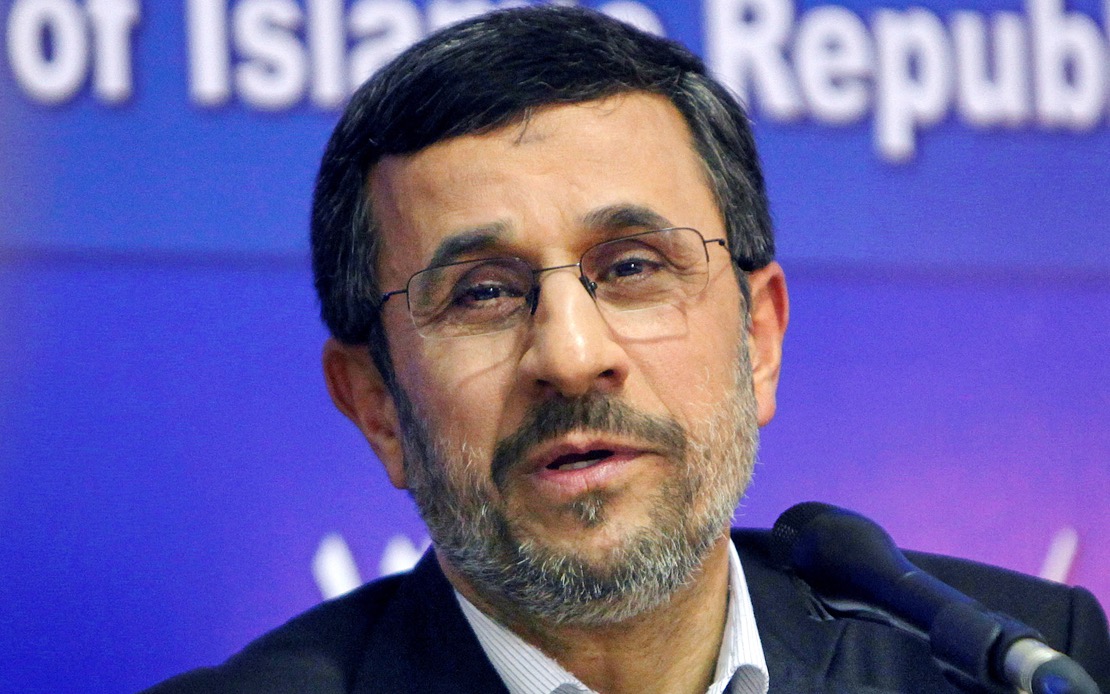
Former Iranian President Mahmoud Ahmadinejad moved quickly on Tuesday to refute a controversial report published by The New York Times, which alleged that Israel's Mossad intelligence service had attempted to recruit him and claimed he is currently confined to house arrest. Through a formal statement issued from his office, Ahmadinejad branded all such allegations as entirely without foundation, adding that the newspaper had engaged in a campaign of misinformation designed to sow discord within Iran and manipulate international opinion.
The contentious report, which emerged Monday, outlined an alleged scheme spanning recent years whereby Israeli operatives purportedly sought to cultivate a relationship with the former president, viewing him as a potentially plausible successor to Iran's current leadership. According to the Times account, this approach formed part of a larger Israeli strategy aimed at destabilising the Iranian government and engineering a change of power, building on military operations targeting senior Iranian officials.
According to the newspaper's sources—identified as American officials with knowledge of the matter—the arrangement involved Israeli intelligence providing financial support for Ahmadinejad's housing and travel expenses. The report claimed that operatives from Mossad made contact with him on multiple occasions outside Iran, including during trips to Budapest, suggesting a coordinated and sustained engagement over an extended period.
The most dramatic element of the allegations centred on events in late February, during the escalation of military tensions between the United States, Israel, and Iran. The Times reported that Israeli intelligence attempted to extract Ahmadinejad from Tehran as part of what it characterised as a plot to facilitate regime change and position him as a replacement leader. A specific incident on February 28 allegedly saw an Israeli airstrike directed at Ahmadinejad's residential compound, with munitions striking both a security outpost used by his bodyguards and his armoured vehicle.
The narrative became increasingly dramatic in the account provided to the Times by four Iranian officials with purported knowledge of the events. According to this version, a black Peugeot vehicle arrived at the targeted location shortly after the bombardment ceased and transported Ahmadinejad to an undisclosed secure location within Iranian territory. The newspaper suggested, citing both American and Iranian sources, that the vehicle was operated by Mossad operatives conducting what amounted to an extraction operation.
Ahmadinejad's office has systematically rejected each component of these allegations, characterising the entire narrative as a fabrication intended to undermine Iran's stability and manipulate domestic politics. The denial extended specifically to claims regarding his confinement, which the statement dismissed as an invention devised to lend credibility to what it termed the newspaper's "absurd" overall account. This measured but firm pushback reflects how sensitive questions of Israeli intelligence operations and attempts to influence Iranian succession dynamics remain in the region.
The timing of both the Times report and Ahmadinejad's response carries particular significance given his recent return to public prominence. Just one week prior to his denial, the former president made a notable public appearance by attending the funeral of Iran's Supreme Leader Ali Khamenei, marking his most significant visibility in the international arena since the escalation of military conflict between Iran and the Israel-US alliance. His attendance at this state funeral suggested he retains standing within Iran's political establishment, despite years away from executive office.
Ahmadinejad's presidency, which lasted from 2005 to 2013, remains a contested chapter in Iranian history both domestically and internationally. His inflammatory rhetoric regarding Israel and nuclear ambitions made him a particularly controversial figure in Western capitals, and such a background logically makes him either an unlikely or indeed a highly strategic potential target for recruitment by Israeli intelligence, depending on one's analytical perspective. The alleged scenario of Mossad viewing him as a viable future leader invites questions about the credibility and underlying sources of the Times reporting.
For Malaysian readers and the broader Southeast Asian audience, this episode illustrates the ongoing complexity of Middle Eastern geopolitics and the role of intelligence operations in regional power struggles. The allegations, whether substantiated or not, demonstrate how Israel and Iran continue to compete for influence and strategic advantage through unconventional means, with intelligence recruitment and regime-change planning forming core components of their rivalry.
The incident also underscores the potential consequences of military escalation in the Middle East when backed by covert intelligence operations. The alleged February airstrike and subsequent extraction, if it occurred as described, would represent a significant escalation in Israeli willingness to conduct brazen operations aimed at removing Iranian political figures and assets. Such tactics have historically carried enormous risks of miscalculation and unintended consequences.
Ahmadinejad's categorical denial and his office's broader accusations against The New York Times reflect a broader pattern in which Middle Eastern actors contest international media narratives about sensitive security matters. Both Iran and Israel maintain sophisticated information operations capabilities, making it difficult for external observers to independently verify such claims without access to classified intelligence.
Moving forward, the credibility of the Times report will likely depend on additional corroborating evidence emerging from other reputable sources and whether other international news organisations pursue independent verification. For now, Ahmadinejad's position stands as an emphatic rejection of what he characterises as a disinformation campaign, while the underlying question of whether such recruitment efforts actually occurred remains unresolved in the public domain.

