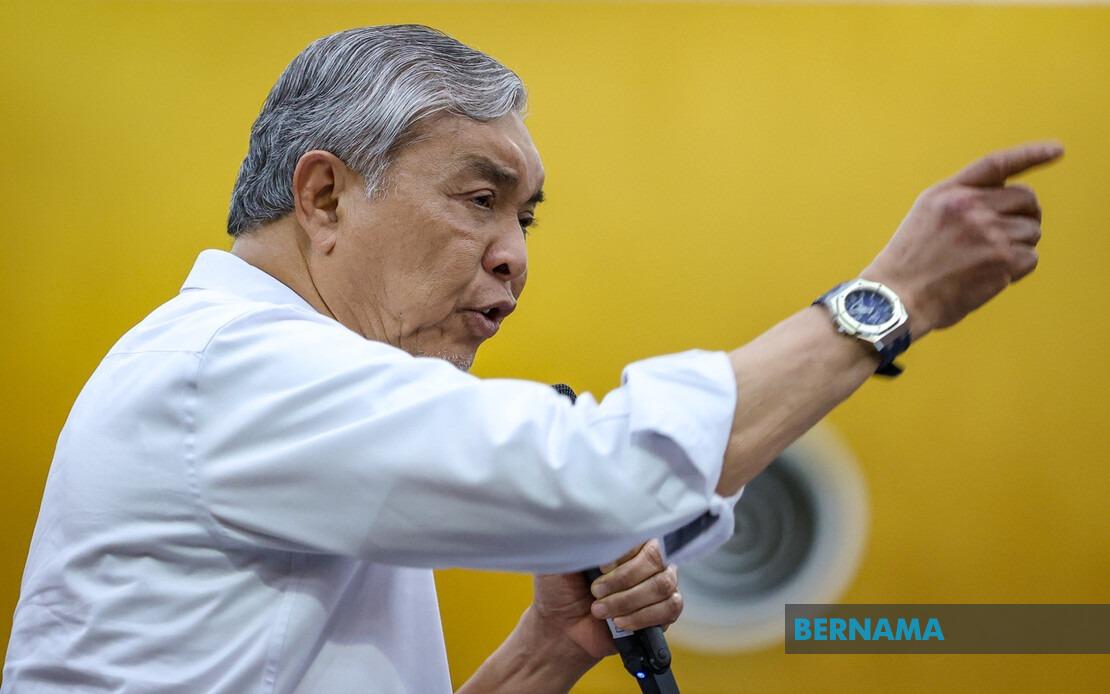
Deputy Prime Minister Datuk Seri Dr Ahmad Zahid Hamidi has put forward a proposal to equip student leaders across Malaysia's universities and colleges with dedicated training in governance and political affairs, positioning such knowledge as fundamental to developing a generation capable of navigating the nation's complex democratic system. Speaking in Johor Bahru on July 9, Ahmad Zahid outlined his vision for nurturing politically literate young leaders who grasp the nuances of contemporary national issues and policy challenges without necessarily requiring them to pursue active political careers.
The initiative centres on Student Representative Councils (MPP) receiving comprehensive courses designed to deepen their comprehension of democratic principles and Malaysia's political structures. Ahmad Zahid, who chairs Barisan Nasional, indicated that the government stands ready to finance these educational programmes if institutions submit formal requests, contingent upon approval from Higher Education Minister Datuk Seri Dr Zambry Abd Kadir. This funding commitment signals a broader investment in civic education as a strategic priority within the government's portfolio.
The Deputy Prime Minister framed the proposal not as an attempt to push young people toward political involvement, but rather as equipping them with knowledge essential for responsible citizenship. He distinguished between active political participation and political literacy, emphasising that understanding governance mechanisms and electoral processes represents a baseline competency for all voters regardless of whether they intend to contest for office or join political organisations. This distinction carries particular weight in a Malaysian context where student activism has historically been both celebrated and constrained.
Drawing on his personal trajectory, Ahmad Zahid referenced his formative experiences as a student leader at Universiti Malaya, suggesting that structured exposure to political dynamics during tertiary education serves as a catalyst for leadership development. His own career trajectory from campus activism to high office lends credibility to arguments that student years provide critical windows for developing civic consciousness and political acumen. However, he was explicit that such pathways should remain optional rather than prescriptive for the broader student population.
The emphasis on informed voting behaviour reflects acknowledged concerns within Malaysia's political establishment about voter engagement and electoral decision-making among younger demographics. Ahmad Zahid stressed that eighteen-year-old voters and those casting ballots for the first time should recognise the significance of their electoral choices, understanding that individual votes collectively determine which political movements gain power and thereby shape national policy directions. This framing positions voter education as essential infrastructure for democratic legitimacy.
Critically, the proposal arrives amid heightened political activity in Johor, where fifty-six state legislative seats were scheduled for competitive polling shortly after Ahmad Zahid's announcement. The timing suggests that enhanced political awareness among student leaders and younger voters could carry immediate electoral consequences, though Ahmad Zahid's language emphasised civic responsibility rather than partisan advantage. Nevertheless, improved political literacy particularly benefits established parties with sophisticated policy platforms and long institutional histories.
The proposal touches upon broader questions about how Malaysia's education system should address political knowledge and democratic participation. Currently, civic education in Malaysian schools emphasises constitutional structures and historical context but often avoids substantive engagement with contemporary political dynamics. Ahmad Zahid's suggestion would extend political education into tertiary institutions where students possess greater cognitive development and can engage with competing ideological frameworks more critically.
Student Representative Councils occupy a unique position within Malaysian higher education, functioning as primary forums through which student voices reach institutional leadership. Empowering these councils with enhanced political understanding could strengthen their advocacy capacity on issues ranging from curriculum development to campus facilities. Simultaneously, deepened political engagement by student leaders might amplify youth voices in national discourse, particularly on matters directly affecting younger citizens such as employment prospects, affordable housing, and educational opportunities.
The proposal also carries implications for how political parties themselves approach youth engagement. By channelling resources through government-funded leadership programmes rather than partisan student wings, the initiative potentially broadens participation beyond those already committed to particular political movements. This inclusive approach differs from traditional political party organising, which typically recruits student activists into formal party structures. Whether such programmes would maintain genuine political neutrality or inevitably reflect the governing coalition's perspectives remains an important consideration for implementation.
Regionally, Malaysia's approach to youth political education provides a template relevant for other Southeast Asian democracies grappling with declining youth voter participation and insufficient civic knowledge among younger populations. The proposal suggests that structured, government-resourced intervention in political education represents a potential strategy for addressing democratic deficits, though questions persist regarding curriculum design, instructor selection, and the balance between promoting informed citizenship versus advancing particular political narratives.
Implementation would require careful attention to pedagogical approaches that encourage critical thinking rather than rote memorisation of political facts. Effective political education fosters the ability to evaluate competing claims, understand competing value systems, and recognise how policy choices reflect different philosophical assumptions about governance. Such capabilities prove far more valuable for developing engaged, thoughtful citizens than simply increasing familiarity with current political configurations.
The financial commitment Ahmad Zahid articulated demonstrates apparent seriousness about translating the proposal into actual programmes. However, the pathway from announcement to implementation involves multiple layers of bureaucratic coordination spanning the Prime Minister's office, the Higher Education Ministry, and individual institutions. Clarifying curriculum standards, determining course frequency and duration, and establishing trainer qualifications will require sustained attention from multiple stakeholders.
Ultimately, Ahmad Zahid's initiative reflects recognition that political knowledge represents a public good requiring deliberate cultivation rather than something naturally acquired through media consumption or casual observation. Whether enhanced political education among student leaders proves sufficient to address broader youth disengagement from electoral processes, and whether such programmes achieve their stated goal of developing mature, informed voters, will become apparent only through careful monitoring of participation and electoral behaviour following programme implementation.

