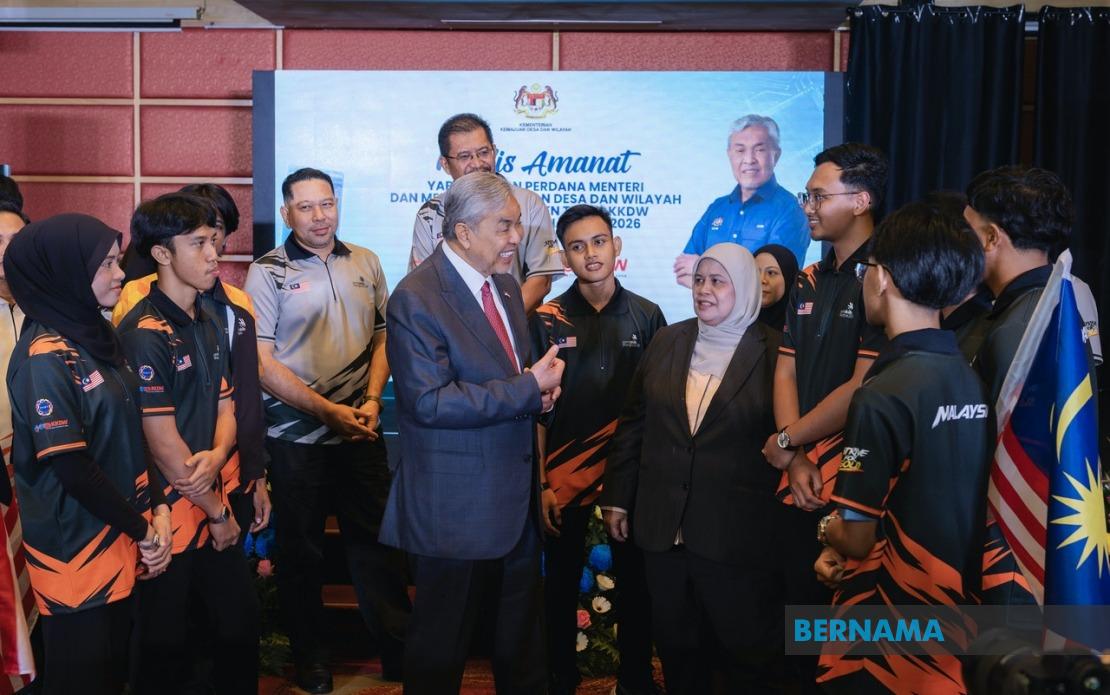
Deputy Prime Minister Datuk Seri Dr Ahmad Zahid Hamidi has announced an extraordinary incentive programme aimed at motivating Malaysia's technical and vocational education contingent competing at the WorldSkills Competition (WSC) 2026, pledging to personally fund umrah pilgrimages for any participant securing gold medals at the prestigious international event in Shanghai, China, between September 22 and 27 next year.
The initiative represents a substantial commitment from Ahmad Zahid, who simultaneously holds the portfolio of Rural and Regional Development Minister. Speaking at an address to the TVET@KKDW contingent—referring to technical vocational institutions operating under the Ministry of Rural and Regional Development—he articulated the scope of his personal pledge, emphasising that the rewards would extend beyond individual medallists to encompass their immediate families.
According to Ahmad Zahid's statement, the sponsorship would cover not only the costs of umrah pilgrimage for each gold medal winner but also the participation of their parents in the journey. The financial commitment would be entirely drawn from his personal resources rather than public funds, framing the initiative as a token of recognition for their achievements on the global skills stage. The announcement carries particular significance given the prestige associated with WorldSkills, which serves as one of the world's premier platforms for showcasing technical excellence among young professionals.
Malaysia's contingent to Shanghai comprises nine competitors representing a diverse range of technical disciplines. The roster includes Nadratulliyana Ab Malek specialising in Fashion Technology, Haziq Syahmi Nazri in Automobile Painting, and Amirul Sharif Sharifudin bringing expertise in Electronics. The team also features Mohammad Ezaly Iman Ramli competing in Cyber Security and Wan Hamiz Ozai Wan Hamidzi in Rail Vehicle Technology. Additional participants include Khairul Idham Bahari with Cabinetmaking qualifications, Muhamad Nashrul Zulkifli in Digital Construction, Muhammad Haziq Lailla Zamri in Electrical Installations, and Muhammad Huzairy Mohamad Thes competing in Mechanical Engineering CAD.
The breadth of disciplines represented reflects Malaysia's commitment to developing a comprehensive technical workforce capable of competing internationally across contemporary and emerging fields. The inclusion of cyber security and digital construction skills alongside traditional trades like cabinetmaking and electrical installations demonstrates an alignment with both current industry demands and future-oriented sectoral development. WorldSkills competitions have historically proven valuable for identifying and nurturing top talent while generating international recognition for participating nations' vocational education systems.
When Ahmad Zahid stated that if all nine participants returned with gold medals he would sponsor all nine contestants and their parents for umrah pilgrimage, the scope of his commitment became apparent. Such an outcome would represent an exceptional achievement on the international stage, as securing multiple gold medals at WorldSkills requires not only individual excellence but also institutional support and training excellence. For context, Malaysia has traditionally performed creditably at WorldSkills but medal counts vary significantly depending on competition year and skill category difficulty.
The timing of this pledge, announced ahead of the Shanghai competition, may serve multiple purposes within Malaysia's broader skills development strategy. Beyond its motivational value for competing students, the initiative generates public attention for vocational education pathways at a moment when Malaysia seeks to strengthen technical workforce development as part of economic diversification efforts. Deputy Rural and Regional Development Minister Datuk Rubiah Wang's presence at the announcement underscores institutional commitment to the contingent's preparation and success.
WorldSkills competitions represent far more than individual medal competitions; they function as benchmarking mechanisms for vocational education systems globally. Nations use performance metrics to identify skill gaps, evaluate curriculum effectiveness, and attract international recognition for their training institutions. For Malaysian TVET providers operating under KKDW, strong performance in Shanghai would validate recent institutional investments and curriculum developments while enhancing the sector's reputation domestically and across Southeast Asia.
The umrah sponsorship incentive also reflects broader patterns within Malaysian governance where senior officials utilise personal resources to recognise exceptional achievement. The approach differs from conventional government-structured reward systems and adds an element of personal patronage to state recognition. For the young competitors and their families, the dual rewards of gold medals and sponsored religious pilgrimage hold both tangible and symbolic significance, merging international recognition with spiritual fulfilment.
Looking beyond the immediate competition, this initiative may influence how Malaysia structures future incentives for excellence in technical education and skills development. Should participants perform exceptionally in Shanghai, the successful execution of Ahmad Zahid's pledge could establish a model for encouraging similar commitments from other government officials and potentially inspire private sector engagement in recognising vocational excellence. Such reinforcement of achievement-oriented incentive structures could strengthen Malaysia's competitive positioning within Southeast Asia's increasingly skills-focused economies.

