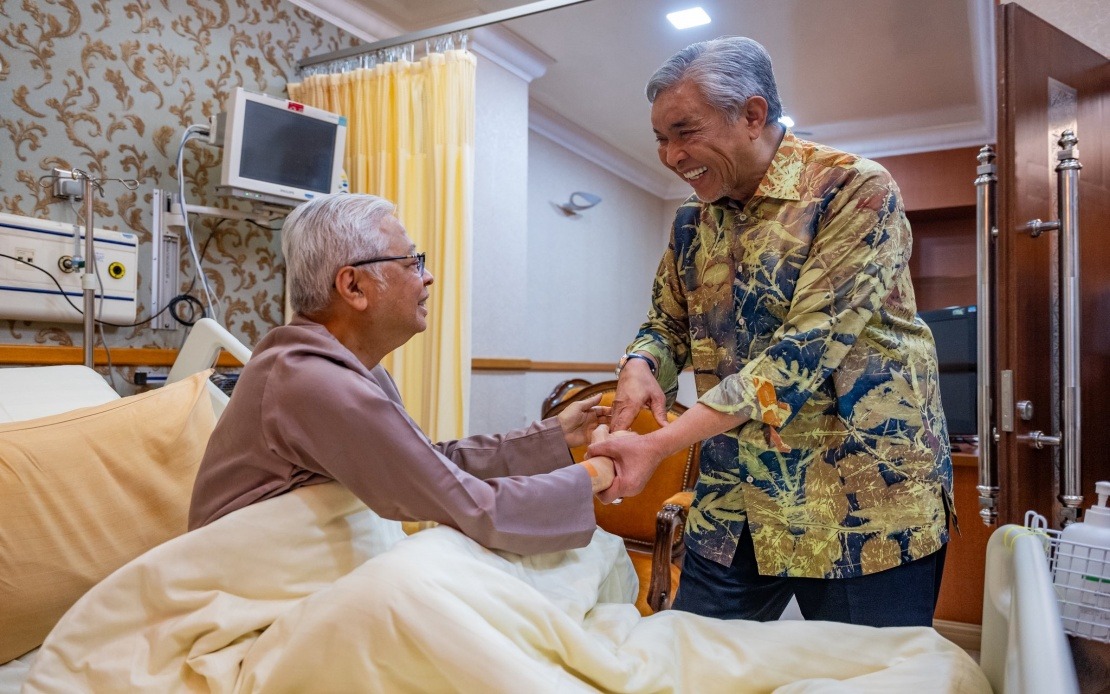
Deputy Prime Minister Datuk Seri Dr Ahmad Zahid Hamidi made a visit on August 10 to the National Heart Institute (IJN) here to see former Prime Minister Datuk Seri Ismail Sabri Yaakob, who is currently undergoing medical care at the facility. The two senior figures in Malaysia's political landscape maintained the tradition of cross-party solidarity during health challenges, with Ahmad Zahid later sharing details of his visit on social media platform X.
In his public message, Ahmad Zahid conveyed warm wishes for Ismail Sabri's recuperation, expressing hope that the former premier would regain his full strength and vitality. The deputy prime minister's remarks focused on recovery and returning to normalcy, reflecting the broader sentiment within Malaysia's political establishment regarding the health crisis affecting one of its recent leaders. The visit underscored the informal bonds that persist among members of the country's political hierarchy, transcending partisan divisions during periods of personal difficulty.
Ismail Sabri's hospitalization followed an unexpected medical incident that occurred on August 6 when he was at the Malaysian Anti-Corruption Commission (MACC) headquarters to provide a recorded statement. The Bera Member of Parliament experienced acute health complications while at the facility, necessitating immediate emergency transport to IJN for urgent treatment. The precise nature of his condition became apparent once he reached the cardiac specialists at the institute.
Doctors at IJN determined that Ismail Sabri required the implantation of a wireless pacemaker to address his irregular heartbeat. This procedure represents a significant intervention for treating abnormal cardiac rhythms and has become increasingly common among patients with conditions such as bradycardia or certain types of arrhythmia. The implantation of such a device typically occurs following comprehensive diagnostic testing to confirm the necessity of the intervention and to assess the patient's suitability for the procedure.
The timing of Ismail Sabri's health crisis raised questions given that his appearance at MACC was connected to official investigations. His hospitalization delayed any ongoing proceedings at the anti-corruption body, though officials did not immediately clarify the specific allegations or matters under examination. The incident highlighted the unpredictable nature of serious health events and their capacity to interrupt even scheduled official engagements at the highest levels of government.
Ismail Sabri served as Prime Minister from August 2021 to November 2022, representing a transitional period in Malaysian politics following the tumultuous events surrounding his predecessor. His tenure came after complex political negotiations and carried expectations of restoring stability to the government following months of uncertainty. Though his premiership was relatively brief by historical standards, it occurred during a pivotal moment when Malaysia's political institutions faced considerable strain.
The visit by Ahmad Zahid carries particular significance within Malaysia's current political context, where the Umno-led coalition government operates with intricate power-sharing arrangements. Ahmad Zahid himself holds a prominent position in this governmental structure, while Ismail Sabri remains an influential figure within the Umno party despite no longer holding the prime ministerial office. Their interaction during this period of personal challenge for Ismail Sabri demonstrates the personal relationships that endure beneath Malaysia's often-fractious political rivalries.
The IJN, located in the federal capital, serves as the country's premier cardiac care facility and draws patients from across Southeast Asia seeking advanced heart treatment. Its reputation for excellence in cardiology procedures makes it the natural choice for such cases among Malaysia's political and business elite. The institute's willingness to undertake wireless pacemaker implantation reflects the technological sophistication now available within Malaysia's private healthcare sector.
For the broader Malaysian public, news of Ismail Sabri's health challenges prompted reflections on the demanding nature of high office and the physical toll of political responsibility. The former premier's experience resonated with many citizens who understand the relationship between stress and cardiovascular health, particularly among individuals in positions of tremendous pressure and scrutiny. His situation also underscored the importance of accessible cardiac care facilities and the role they play in preserving the health of the nation's leadership cadre.
Ahmad Zahid's public expression of concern and prayer for Ismail Sabri's recovery aligned with Malaysian cultural and religious traditions emphasizing compassion during illness. Such gestures carry weight in a society where spiritual well-being and communal support are valued components of the healing process. The deputy prime minister's actions signaled to the Malaysian public that regardless of political position or past disagreements, figures in leadership recognize their shared humanity and mutual responsibility to support one another during times of vulnerability and medical crisis.

