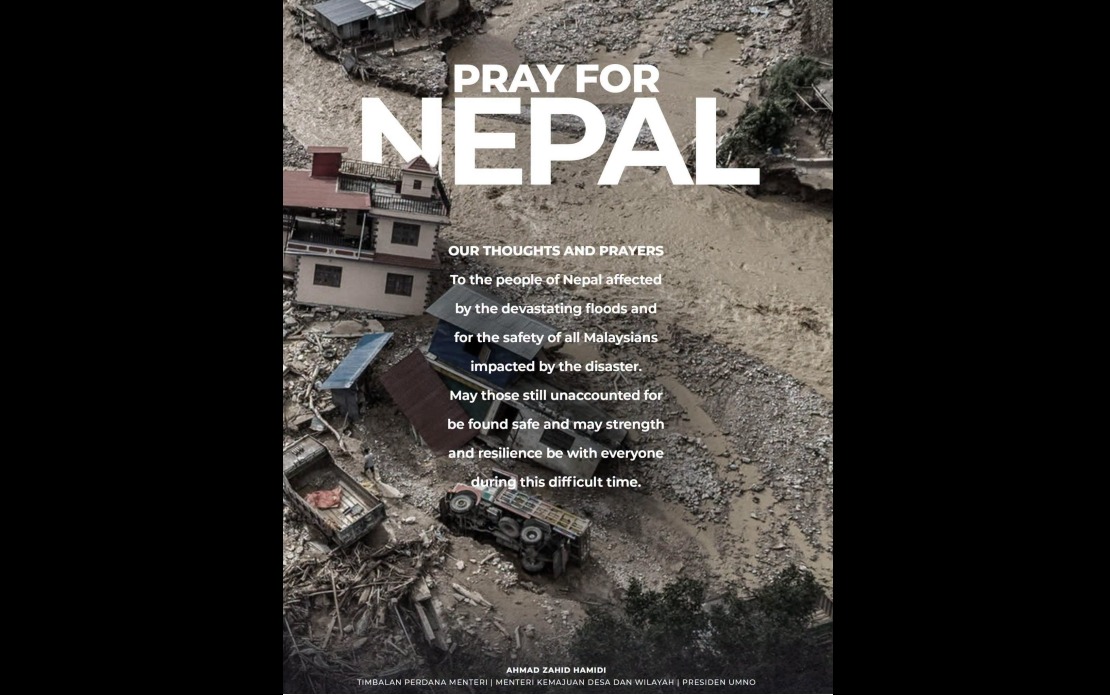
Deputy Prime Minister Datuk Seri Dr Ahmad Zahid Hamidi has conveyed his profound concern regarding the safety and welfare of Malaysians impacted by the severe flooding that has devastated Nepal, while simultaneously voicing hope that those currently missing will be located alive and restored to their families. His remarks underscore the Malaysian government's attentiveness to the welfare of its citizens abroad during natural disasters, a recurring concern for nations with significant populations travelling for tourism, business, and adventure activities in the Himalayan region.
In his statement released on Thursday, Ahmad Zahid extended formal condolences to the families of those who perished in the calamity, simultaneously affirming Malaysia's solidarity with the Nepali people during their hour of acute distress. The senior minister's intervention signals the government's readiness to mobilise consular resources and coordinate with Nepali authorities to account for and assist any affected Malaysian nationals. This diplomatic gesture reflects regional cooperation mechanisms that become critical when citizens of neighbouring nations face humanitarian crises.
Through a Facebook post, the Deputy Prime Minister articulated his emotional response to the tragedy, emphasizing the scale of human suffering involved. He described being deeply saddened by the cascading flash floods, which have not only claimed lives but also uprooted families from their homes and inflicted extensive infrastructural and economic damage across affected regions. His measured language balanced official sympathy with recognition of the magnitude of Nepal's crisis, a nation that frequently experiences seasonal flooding and geological hazards due to its mountainous terrain and monsoon exposure.
Ahmad Zahid's invocation of prayers for the ongoing search and rescue operations reflects both personal conviction and the seriousness with which Malaysian officials regard the situation on the ground. He specifically appealed for the facilitation and success of rescue efforts, acknowledging that time remains critical for locating survivors in the immediate aftermath of such disasters. The emphasis on extracting people from danger zones highlights the window of opportunity that exists in flood emergencies, where rapid response mechanisms can determine survival outcomes.
The Deputy Prime Minister's compassionate framing extended to offering spiritual and emotional support to affected families, expressing hope that they would find strength and resilience to endure the trauma unfolding. This pastoral dimension of his statement resonates with Malaysian audiences, where religious and cultural sensibilities inform public discourse. By invoking collective prayers and resilience, he tapped into shared values of compassion and community solidarity that transcend national borders.
According to Nepal's tourism board data compiled as of Thursday evening at 5:30 pm local time—corresponding to 7:45 pm Malaysian Standard Time—the confirmed death toll from the floods had escalated to 359 individuals. This figure underscores the catastrophic scale of the natural disaster, positioning it among the region's more severe recent flooding events. The tourism board's involvement in casualty tracking reflects how such disasters affect multiple sectors of Nepal's economy and governance apparatus simultaneously.
The context of Malaysian citizens in Nepal deserves particular attention, as the country has emerged as a popular destination for Malaysian tourists seeking trekking experiences, cultural immersion, and adventure activities in the Kathmandu Valley and surrounding regions. The monsoon season, which typically extends through August, intensifies hydrological risks in Nepal's river systems and mountain watersheds. Malaysian travellers, like those from other nations, may find themselves unexpectedly caught in weather events that escalate rapidly from manageable rain to dangerous flash flooding within hours.
For Malaysia's diplomatic corps, such crises necessitate rapid mobilization of resources to identify citizens in affected areas, coordinate with local authorities, and arrange evacuations or assistance where needed. The Foreign Ministry would typically activate its crisis management protocols, reaching out through tourism operators, hotels, and trekking companies to account for nationals. The Deputy Prime Minister's public statement serves to reassure Malaysian families that their government is engaged and monitoring developments, a critical function during international emergencies.
Nepal's vulnerability to flooding stems from its geographical position and climatic patterns. The monsoon brings torrential rainfall to the region, and the steep terrain of the Himalayas and their foothills creates conditions where water rapidly accumulates and flows with tremendous force. Flash floods in such environments can develop with minimal warning, sweeping away structures, vehicles, and people with devastating efficiency. Communities and infrastructure in Nepal have developed some adaptive capacity, but extreme events frequently exceed preparedness levels.
The broader implications for Southeast Asian travellers extend beyond this immediate crisis. The incident underscores the importance of travel advisories, insurance coverage, and awareness of seasonal risks when visiting mountainous regions during monsoon periods. Malaysian tour operators and travel agencies typically counsel clients about weather patterns, but unexpected extreme events remain an occupational hazard of adventure tourism. Ahmad Zahid's statement implicitly encourages Malaysians to remain vigilant regarding travel safety while respecting Nepal's current emergency situation.
Governmental expressions of concern like Ahmad Zahid's remarks carry diplomatic weight beyond their immediate compassionate function. They signal Malaysia's commitment to supporting international humanitarian responses and reinforce bilateral relationships with affected nations. Nepal, as a smaller nation with limited international diplomatic bandwidth, benefits from vocal support from regional powers and fellow developing nations during crises. Malaysia's positioning as a stable Southeast Asian economy with diplomatic reach amplifies such gestures.
Looking forward, the recovery phase in Nepal will extend far beyond the immediate emergency response. Infrastructure reconstruction, trauma counselling, and economic rehabilitation will occupy authorities for months. Malaysian officials may be called upon to facilitate further assistance, whether through multilateral channels or bilateral arrangements. The initial expression of concern, therefore, represents merely the opening phase of what may become sustained engagement with Nepal's recovery efforts.

