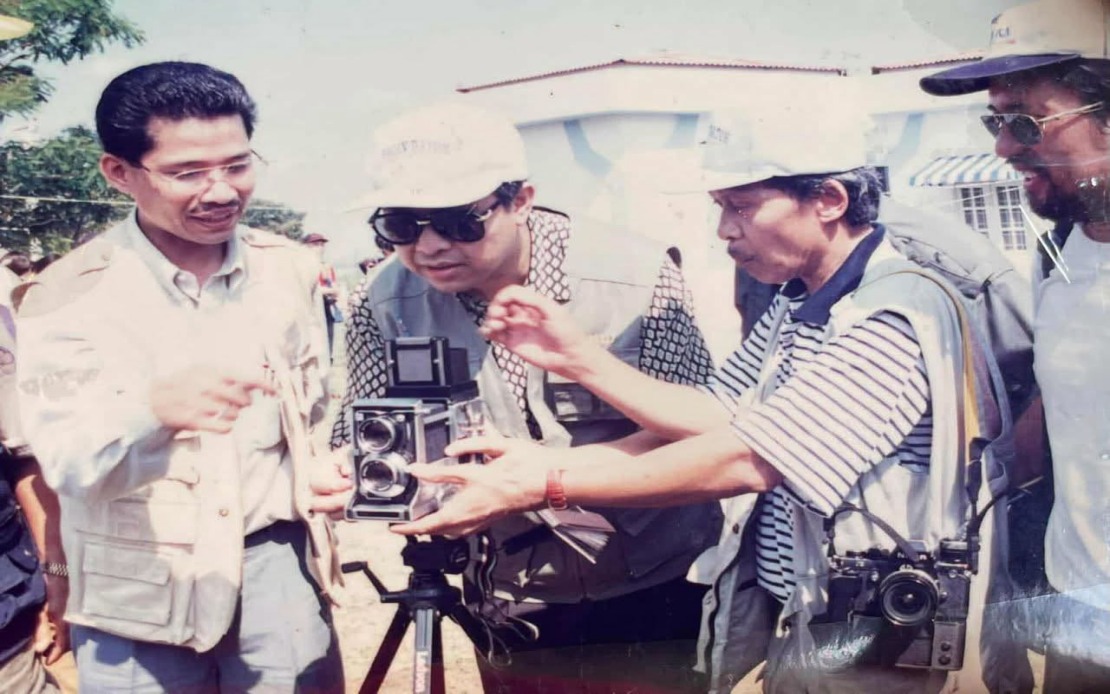
Deputy Prime Minister Datuk Seri Dr Ahmad Zahid Hamidi marked World Photography Day 2026 by delivering a tribute to the nation's photographers, recognising the profound impact they make in capturing and preserving moments that define individual and collective life experiences. In a social media message released on August 19, he extended appreciation across the entire spectrum of image-makers who employ photography as both profession and personal pursuit.
Ahmad Zahid's acknowledgment encompassed a broad constituency within the photography community, from seasoned professionals who command camera equipment in high-stakes commercial and editorial environments to everyday practitioners who document family milestones and social gatherings. This inclusive framing reflects the evolving nature of photography in the digital age, where technical democratisation has placed powerful image-capture capabilities in the hands of millions, yet the skill of recognising and seizing decisive moments remains as essential as ever.
The Deputy Prime Minister drew attention to the layered value that photographs hold across different contexts and timescales. Some images serve intimate personal functions, remaining in private collections as touchstones to cherished occasions and departed loved ones. Others are curated and displayed in domestic spaces, functioning as visual anchors for identity and family narrative. Beyond the domestic realm, photographs assume broader cultural and historical significance, becoming archived references and documentary evidence that informs public understanding of past events and contexts.
A central insight in Ahmad Zahid's message concerns the temporal dimension of photography. Each photograph, however quickly captured, represents a deliberate act of observation and selection by the photographer. The technical act of pressing the shutter may occupy mere fractions of a second, yet the consequences extend across decades. A single well-composed image can encapsulate emotion, detail, and meaning that might otherwise dissolve into the imprecision of human memory or remain invisible to those not present at the moment of its creation.
This observation carries particular resonance for Malaysia's media landscape and cultural institutions. As the nation navigates rapid technological change and shifts in how people consume visual information, the role of skilled photographers in establishing factual records and emotional authenticity becomes increasingly significant. Professional photojournalists, in particular, serve a critical function in documenting events, issues, and social change with visual precision that text alone cannot convey.
The recognition extended to media photographers and event photographers acknowledges sectors that often operate behind public visibility yet shape how significant moments are recorded and circulated. Media photographers working for newspapers, news agencies, and broadcasters determine which visual angles reach public consciousness, influencing how events are understood and discussed. Event photographers, meanwhile, preserve records for institutions, corporations, and communities, creating visual archives that support institutional memory and continuity.
Family photographers, positioned as 'official photographers' within their social circles, perform an anthropological function within their immediate communities. These individuals often develop refined visual sensibilities and technical competence through sustained practice, becoming the custodians of family visual culture. As Malaysia's demographics shift and younger generations increasingly relocate for economic opportunities, the photographs captured by family photographers often become the primary visual record connecting dispersed family members to shared heritage and collective identity.
The philosophical dimension of Ahmad Zahid's message—that today's photographs become tomorrow's memories—encapsulates a fundamental truth about how human societies preserve and transmit understanding across generations. In an era when digital images proliferate at unprecedented volumes, the photographer's role as a careful selector and editor of visual experience takes on heightened importance. The ability to identify which moments merit preservation, which angles convey truth most effectively, and how composition can enhance or distort meaning distinguishes thoughtful photography from mere image accumulation.
For the Malaysian context specifically, this tribute arrives amid broader conversations about digital literacy, the trustworthiness of visual media in an age of manipulation, and the preservation of national cultural heritage. Professional photographers and visual documentarians contribute essential evidence to public discourse, from political coverage to environmental reporting to cultural documentation. Their commitment to technical excellence and ethical practice supports public institutions' ability to function transparently and citizens' capacity to make informed decisions.
The World Photography Day recognition also highlights photography's role as a democratic cultural practice. Unlike many artistic and technical fields, photography permits entry at multiple skill levels, from curious amateurs to dedicated professionals, yet all practitioners operate within shared aesthetic and technical traditions. This democratisation has enriched visual culture while creating new demands for visual literacy and critical evaluation among audiences overwhelmed by image proliferation.
Ahmad Zahid's message, though ceremonial in nature, underscores how official recognition of photographers' contributions validates their social and cultural function. In media environments increasingly pressurised by economic constraints and technological disruption, such public acknowledgment of photographers' value helps sustain professional commitment and public appreciation for the careful work of visual documentation. The Deputy Prime Minister's emphasis on photographers as patient observers who wait for the right moment provides a counterweight to contemporary culture's impulse toward instantaneous capture and reflexive sharing.
As World Photography Day passes, the underlying message persists: every photograph represents a decision to preserve, to remember, and to communicate. Whether captured by a media professional documenting national events, a commercial photographer recording corporate milestones, or a family member ensuring that a child's smile is preserved for future viewing, photographers collectively sustain the visual infrastructure through which societies maintain continuity with their past and construct meaning in the present.

