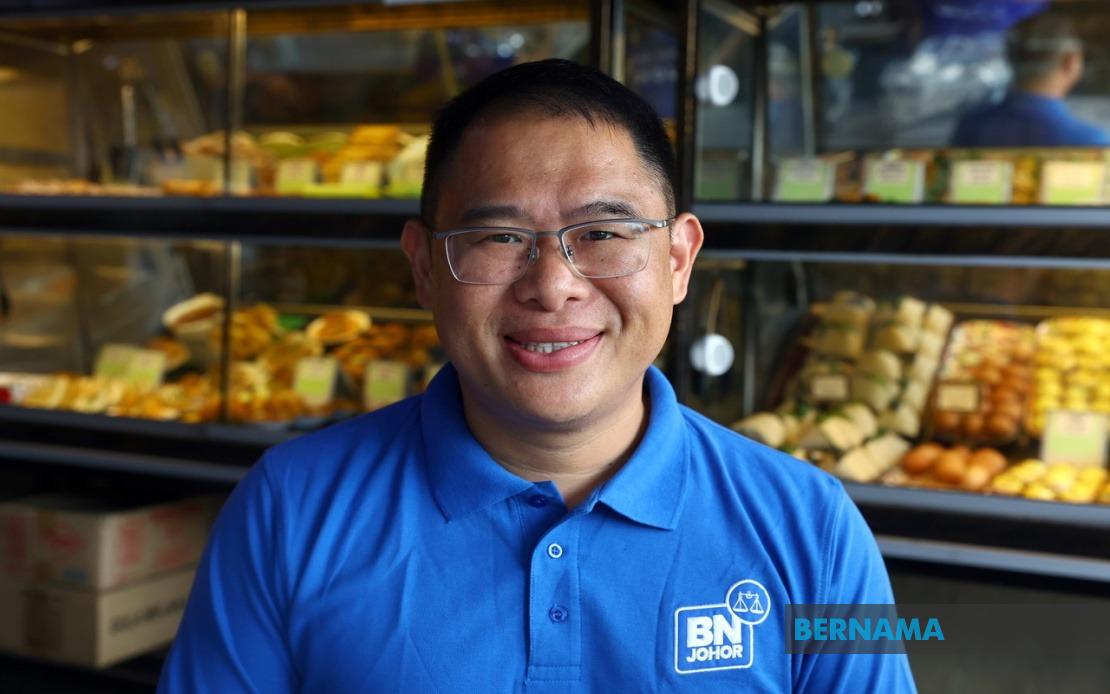
Ling Tian Soon, affectionately known as Ah Soon to Yong Peng constituents, is banking on a dramatic transformation of what locals once dismissively called 'Jalan Koyok'—a heavily patched thoroughfare—as centrepiece of his re-election strategy for the upcoming Johor state polls. The road rehabilitation, which has consumed RM23 million in development funds over three years and stretches from Ayer Hitam to the Segamat border, symbolises his broader development agenda and promises to voters that infrastructure investment drives economic momentum.
At 42 years old, the former state Health and Environment Committee chairman views the road project as more than cosmetic improvement. The initiative reflects his initial priority upon entering the state assembly in 2022: channelling resources into long-neglected basic infrastructure as a foundation for local economic revival. This philosophy aligns with a traditional Chinese business principle that resonates with Yong Peng's predominantly Chinese community—that well-maintained roads catalyse economic movement. For rural and semi-urban constituencies like Yong Peng, such tangible infrastructure often matters more in electoral calculus than abstract policy promises.
The ripple effects of this investment are already visible. Ling reports that major logistics and courier companies have begun establishing operational bases in Yong Peng, attracted by improved road conditions and the constituency's strategic geographic positioning. Located approximately 100 kilometres from Johor Bahru's city centre, Yong Peng sits roughly an hour's drive from the Port of Tanjung Pelepas, a critical maritime gateway increasingly central to Malaysia's vision of becoming a Southeast Asian logistics powerhouse. This accessibility, combined with newly upgraded transportation infrastructure, positions Yong Peng as an emerging alternative to congested zones closer to the state capital.
The industrial momentum is accelerating beyond traditional sectors. A major e-commerce platform has announced plans to develop its largest distribution hub in the constituency, a project likely to generate substantial youth employment and anchor Yong Peng's transformation into a genuine industrial town. For a constituency where youth out-migration has historically been a challenge, such anchor tenants represent not merely economic statistics but the possibility of meaningful local opportunity. The convergence of logistics companies, courier services, and e-commerce infrastructure suggests Yong Peng is transitioning from agricultural and smallholder-dependent economy to a modern supply-chain node.
Ling's upcoming manifesto, to be unveiled this Saturday, reflects this trajectory by establishing three strategic pillars: infrastructure consolidation, expanded social safety nets, and tourism-driven economic diversification. However, the manifesto's notable emphasis on facilities for senior citizens, young families, and newlyweds suggests recognition that industrial growth alone cannot secure electoral victory. Young people must perceive genuine reasons to establish roots in Yong Peng rather than migrate to larger urban centres. By investing in quality-of-life amenities alongside economic opportunity, Ling attempts to address both push and pull factors that determine whether industrial expansion translates into demographic stability.
The assemblyman's re-election confidence rests partially on his performance record but substantially on what he describes as a family-like rapport with constituents. Nicknamed 'YB Kedai Kopi'—a reference to his near-daily practice of visiting coffee shops, food stalls, and mamak restaurants throughout his constituency—Ling has cultivated a grassroots presence that transcends typical election-cycle politicking. This approach reflects an understanding that in Malaysian constituencies, particularly those outside urban centres, personal accessibility and genuine community engagement often outweigh party machinery or media prominence. His sixteen-year history in the area, initially managing parliamentary affairs for former Ayer Hitam MP and MCA president Datuk Seri Dr Wee Ka Siong, provides deep community roots uncommon among first-term state representatives.
Yet Ling faces a direct challenge from Pakatan Harapan candidate Yong Hui Yi, making the Yong Peng contest a straight two-candidate race. In such bipolar contests, incumbent performance becomes paramount; voters cannot fragment their opposition across multiple alternatives. This dynamic heightens the significance of Ling's development record and relationship-building efforts. The RM23 million road investment becomes not merely a project but tangible evidence of responsiveness to constituent needs—something a challenger cannot easily match within a single election cycle.
The broader implication for Malaysian electoral politics is evident in how Ling has positioned his campaign. Rather than emphasising party affiliation or national policy debates, he foregrounded constituency-specific development and personal accessibility. This ground-level focus resonates particularly in semi-rural constituencies where infrastructure gaps and service delivery deficiencies remain acute compared to urban centres. The successful transformation of 'Jalan Koyok' from local joke to development asset demonstrates how strategic resource allocation can reshape both physical landscapes and voter perceptions.
Yong Peng's emergence as an industrial and logistics hub also carries implications beyond local electoral dynamics. As Malaysia seeks to decentralise economic activity beyond congested Klang Valley and Johor Bahru zones, constituencies like Yong Peng offer realistic alternatives for manufacturing and supply-chain investment. The convergence of improved infrastructure, port proximity, and emerging investor interest suggests that Yong Peng's development trajectory—if sustained beyond this election cycle—could contribute meaningfully to Malaysia's regional industrial distribution strategy.
Ultimately, Ling's re-election campaign rests on a proposition that infrastructure investment, coupled with sustained grassroots engagement, constitutes the most compelling case for continued representation. By presenting voters with a performance record spanning road rehabilitation, emerging industrial development, and personal accessibility, he frames his candidacy as pragmatically rooted in constituency interests rather than higher-level political calculations. Whether this approach succeeds will offer insights into what development metrics and personal engagement styles effectively secure voter mandates in semi-urban Malaysian constituencies facing both industrial opportunity and demographic challenges.

