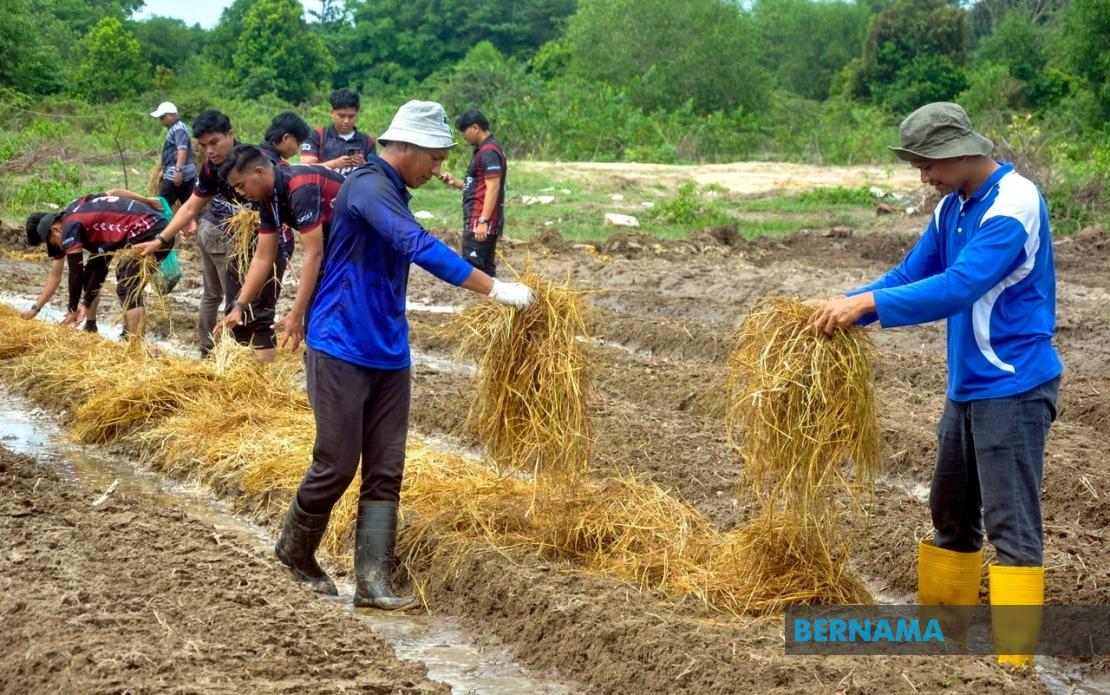
The employment trajectory for technical and vocational graduates specialising in agriculture has brightened considerably over the past six years, with the Ministry of Agriculture and Food Security reporting that 76 per cent of its TVET graduates secured work in 2024, up from 61 per cent in 2018. Despite this 15-percentage-point improvement, the agricultural training sector continues to underperform compared to the broader TVET landscape, where the national average employment rate stands at 95 per cent. This disparity signals both progress in agricultural skills development and persistent challenges in translating training into consistent career outcomes across the farming and allied sectors.
The findings emerged from the Graduate Outcomes of Agricultural TVET in Malaysia report, unveiled during a stakeholder engagement session in Putrajaya on July 23. The study, a collaborative initiative between the ministry and PNB Research Institute, represents a structured effort to evaluate how agricultural TVET programmes translate into tangible employment and income results. The research built upon a memorandum of understanding signed in September 2025, designed to fortify agricultural vocational training, amplify youth awareness, and foster participation in Malaysia's long-term food security strategy. By systematically analysing historical ministry data alongside income and entrepreneurship metrics, the project provides policymakers with evidence-based insights into sector performance.
Financial performance data within the report reveals an intriguing incentive structure. Graduates who chose agricultural careers earned approximately RM100 more monthly than their peers working outside farming, challenging the perception that agricultural employment offers inferior compensation. More strikingly, agro-entrepreneurs—those who established their own ventures within agriculture—demonstrated higher income levels than graduates operating non-agricultural businesses. This finding contradicts conventional wisdom about farm profitability and suggests that agricultural entrepreneurship, when pursued with proper training and market access, can be economically competitive with other sectors. For Malaysian youth considering career paths, these figures reframe agriculture from a traditional default into a genuinely viable wealth-creation avenue.
Yet structural headwinds persist. The agricultural workforce faces an acute ageing crisis: one in two farm workers is now aged 40 or above, a demographic reality that threatens productivity and knowledge transfer. Simultaneously, youth participation in farming has eroded steadily over the past decade, creating a widening generational gap. This trend reflects complex social factors including rural-to-urban migration, competing opportunities in urban service sectors, and shifting perceptions of farming as a low-status or financially unrewarding profession. Without deliberate intervention to reverse youth disengagement, the sector risks a talent pipeline collapse within two decades.
Geographic disparities within Malaysia's agricultural TVET landscape further complicate the picture. Sabah leads with 15 per cent of agricultural TVET graduate concentration, trailed by Kedah at 14 per cent and Sarawak at 13 per cent. However, this distribution does not align with national food production capacity. Traditional agricultural powerhouses such as Johor, Pahang, and Perak—regions with substantial farming operations and established supply chains—remain significantly underrepresented in the TVET graduate pool. This mismatch suggests either insufficient local awareness of vocational opportunities, training programme misalignment with state-specific agricultural priorities, or graduate outmigration to regions perceived as offering better prospects. Fully mobilising these agricultural strongholds could substantially amplify the sector's human capital base.
To address these multifaceted challenges, the ministry outlined six strategic policy directions emerging from the research. First, TVET programme expansion must be calibrated to individual state requirements rather than pursued uniformly, recognising that Johor's vegetable cultivation needs differ markedly from Sabah's palm oil operations or Sarawak's rice production. Second, programme success metrics should prioritise outcomes directly relevant to agricultural realities—not generic employment statistics—including sector-specific retention rates and income trajectories. Third, the sector must deliberately reduce financial and operational risks associated with agricultural entrepreneurship, possibly through subsidised loans, cooperative structures, or market-guaranteed purchase arrangements for graduates launching ventures. Fourth, all vocational curricula should embed commercial acumen and market-access skills, ensuring graduates understand value-chain dynamics beyond production techniques alone.
The fifth policy direction targets supply-chain awareness. Rather than training graduates narrowly in production skills, programmes should expose trainees to the entire agricultural value chain—from input supply through processing, logistics, and retail—enabling them to identify entrepreneurial opportunities across multiple stages. Finally, strengthening genuine partnership with agricultural industry bodies, agribusiness corporations, and farmer associations should precede and inform curriculum design, ensuring training relevates to actual market demands. These six orientations, collectively, represent a shift from TVET as generic skills transfer toward strategic human capital development aligned with sector transformation.
The government has signalled commitment to this agenda at the highest levels. The report findings were presented to the National Technical and Vocational Education and Training Council, chaired by Deputy Prime Minister Datuk Seri Dr Ahmad Zahid Hamidi, during a June 4 meeting. This high-level exposure reflects recognition that agricultural TVET is integral to achieving two foundational policy frameworks: the National Food Security Policy 2030 and the National Agro-Food Policy 2021-2030 (DAN 2.0). Both strategies identify human capital—particularly skilled, motivated younger workers—as fundamental to Malaysia's domestic food production capacity, import reduction, and agricultural competitiveness. Integrating TVET outcomes into these frameworks positions vocational education not as a peripheral skills initiative but as a central pillar of national food resilience.
For Malaysia's broader development trajectory, the implications merit attention. The nation cannot simultaneously achieve food security ambitions while youth participation in agriculture deteriorates. The 76 per cent employment rate, while improved, remains concerningly below the 95 per cent benchmark achieved across other technical sectors, suggesting that agricultural TVET faces sector-specific barriers to graduate placement beyond generic vocational training gaps. Whether these barriers stem from genuine labour shortages inadequately addressed by graduates, structural uncompetitiveness in farm incomes despite the RM100 monthly premium found in the study, or information asymmetries preventing graduates from recognising agricultural opportunity, requires deeper investigation. Similarly, the concentration of graduates in border and East Malaysian states warrants scrutiny: are these regions more receptive to agricultural careers, or do Western Peninsular agricultural regions suffer from inadequate TVET investment and awareness?
The pathway forward demands coordinated action across multiple stakeholders. The ministry must systematically implement the six policy directions, beginning with state-by-state TVET programme audits assessing alignment with regional agricultural priorities. Industry partnerships must transition from informal arrangements to formal, sustained collaborations featuring curriculum co-design, internship placements, and graduate employment guarantees. Educational institutions should establish dedicated agricultural entrepreneurship centres, offering mentorship and microcredit alongside skills training. Marketing and awareness campaigns must combat residual stigma associating farming with low aspirations, emphasising the income data and entrepreneurial potential revealed in the research. Finally, rural infrastructure investment—reliable electricity, broadband connectivity, market access roads—must accompany skills development, as training alone cannot overcome systemic disadvantages in remote agricultural areas.
The 76 per cent employment figure represents measurable progress, reflecting improvement in either graduate quality or sector receptivity since 2018. Yet the 19-percentage-point gap separating agricultural TVET from the national TVET average persists as an uncomfortable reminder that skills development alone does not guarantee economic integration. Malaysia's agricultural future depends on whether policymakers can sustain momentum, implement the outlined policy reforms rigorously, and address the structural issues underlying youth disengagement from farming. The research has provided a foundation; execution will determine whether agricultural TVET becomes a genuine pathway to dignified, prosperous livelihoods for Malaysia's coming generation of farmers and agro-entrepreneurs.

