The African Union's Peace and Security Council has drawn a firm line against external powers attempting to manipulate Sudan's deepening political crisis, signalling the continental body's determination to keep the conflict's resolution within African hands. During talks in Khartoum on Sunday, the council's delegation, headed by Algerian diplomat Mohamed Khaled in his capacity as rotating chair, delivered a forceful message to Sudan's leadership rejecting both foreign interference and the creation of parallel governmental structures that threaten the nation's territorial integrity and state authority.
Khaled, who led the delegation to the presidential palace, characterised the discussions with Sovereignty Council Chairman Abdel Fattah al-Burhan as productive and wide-ranging, touching on multiple dimensions of Sudan's security and stability challenges. The delegation's emphasis on national unity reflects growing international concern that fragmented power structures could permanently fracture what remains of Sudan's state apparatus, making any eventual political settlement exponentially more difficult to implement and enforce.
The AU's explicit condemnation of outside intervention carries particular weight given Sudan's strategic position in the Horn of Africa and the Red Sea region, where numerous powers have competing interests. By publicly declaring that external meddling "fuels the conflict," the council articulated a position increasingly shared among African states alarmed by the weaponisation of Sudan's instability by regional and global actors seeking to expand their influence. This messaging also reflects broader African Union efforts to establish the continent as the primary arbiter of its own crises, rather than ceding leadership to distant powers.
Particularly striking was Khaled's emphasis on preventing the creation of alternative governments or shadow administrations that could splinter Sudan's already fractured state structure. Such parallel entities, whether explicitly foreign-backed or merely enabled by external actors, represent an existential threat to Sudan's coherence. The council's stance suggests recognition that Sudan's survival as a unified state depends on maintaining a single, inclusive governmental framework rather than allowing the emergence of competing power centres that could calcify into permanent divisions.
The AU's prescription for resolving Sudan's catastrophe centres on dialogue-driven approaches rather than military solutions. Khaled explicitly advocated for national reconciliation and a comprehensive political settlement reflecting genuine Sudanese aspirations, signalling scepticism toward imposed solutions or agreements brokered by external powers. This emphasis aligns with the African Union's broader philosophy of African problems requiring African solutions, though the organisation's practical capacity to enforce such principles remains limited.
Sudan's Prime Minister Kamil Idris responded positively to the delegation's visit, announcing that direct Sudanese-to-Sudanese dialogue would commence shortly. This commitment, if honoured, could mark a tentative shift toward resolving the conflict through negotiation rather than military attrition. However, such assurances must be weighed against Sudan's track record of stalled peace processes and the enormous structural obstacles to meaningful dialogue when armed factions control significant territorial and military assets.
The AU delegation also welcomed the Sudanese government's move to restore governmental functions from the capital, Khartoum, characterising this administrative step as crucial for rebuilding state institutions and delivering services to exhausted citizens. This seemingly procedural matter carries symbolic and practical importance—a functioning capital represents the possibility of centralised authority and the infrastructure necessary for eventual peace implementation and post-conflict reconstruction.
Khaled's call for greater inclusivity in Sudan's transitional governance and the development of a constitutional framework through free elections articulates the African Union's long-term vision for Sudan's political future. These aspirations, however admirable, must be situated within the brutal realities of a nation devastated by eighteen months of continuous warfare. The leap from current fragmentation and humanitarian catastrophe to inclusive democratic governance remains enormous, requiring not merely political will but substantial resources and security improvements.
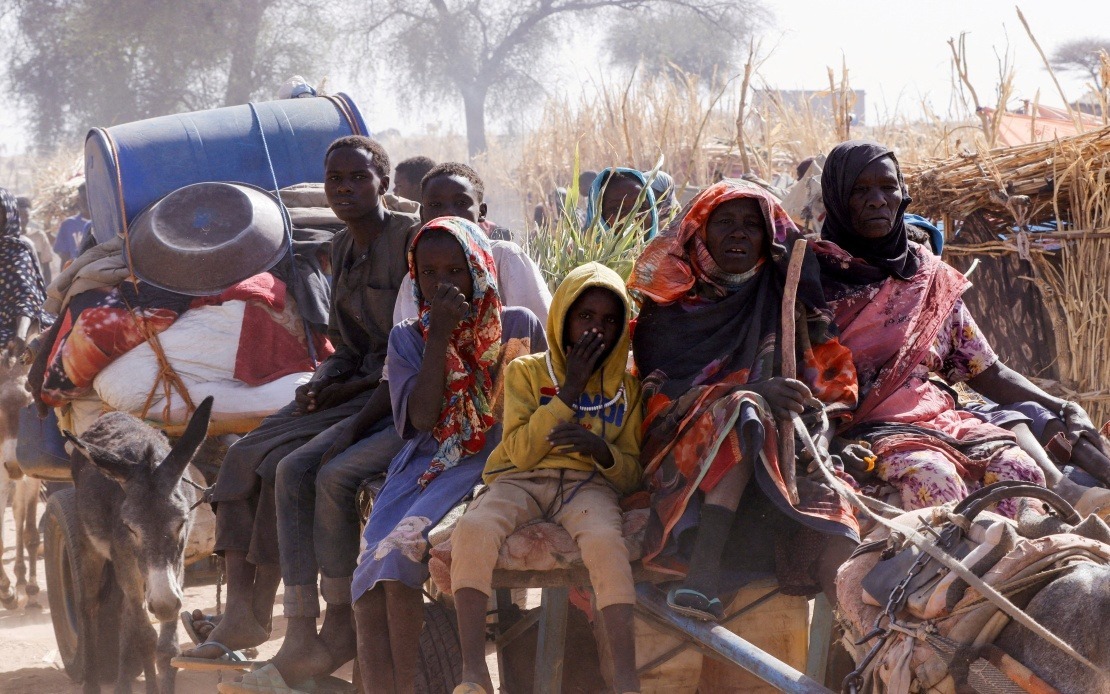
Sudan's conflict, ignited in April 2023 by disputes over integrating the paramilitary Rapid Support Forces into regular military structures, has metastasized into a state collapse of staggering proportions. The war has claimed tens of thousands of lives and displaced approximately 13 million people according to United Nations assessments, creating humanitarian suffering that rivals any contemporary crisis. This immense human toll underscores why preventing foreign manipulation and maintaining state coherence matter profoundly—a further fragmented Sudan would compound an already apocalyptic situation for its civilian population.
For Malaysia and broader Southeast Asia, Sudan's trajectory carries cautionary lessons about the dangers of allowing internal disputes to invite external exploitation. The African Union's insistence on continental ownership of Sudan's resolution reflects principles that resonate across regions seeking to manage their own conflicts without foreign manipulation. As ASEAN similarly grapples with preventing external powers from exploiting regional disputes, the AU's stance provides a useful counterpoint—though the organisation's actual enforcement capacity significantly lags its rhetorical commitments.
The effectiveness of the AU's position depends ultimately on whether Sudan's fractious parties respect these principles or whether international actors continue covert interventions despite continental condemnation. History suggests that rhetorical unity from regional organisations, while valuable for establishing norms and attracting diplomatic attention, rarely constrains determined external powers. Nevertheless, the AU's clear articulation of principles against parallel governance structures and foreign interference establishes benchmarks against which future interventions can be measured and potentially challenged.
Moving forward, the genuine test of the AU's influence will emerge in the coming weeks and months as promised Sudanese dialogue either materialises or stalls, and as external actors either respect or circumvent the council's stated opposition to interference. Sudan's path toward eventual stability depends on whether these continental commitments translate into sustained pressure on all parties and meaningful support for inclusive settlement processes.

