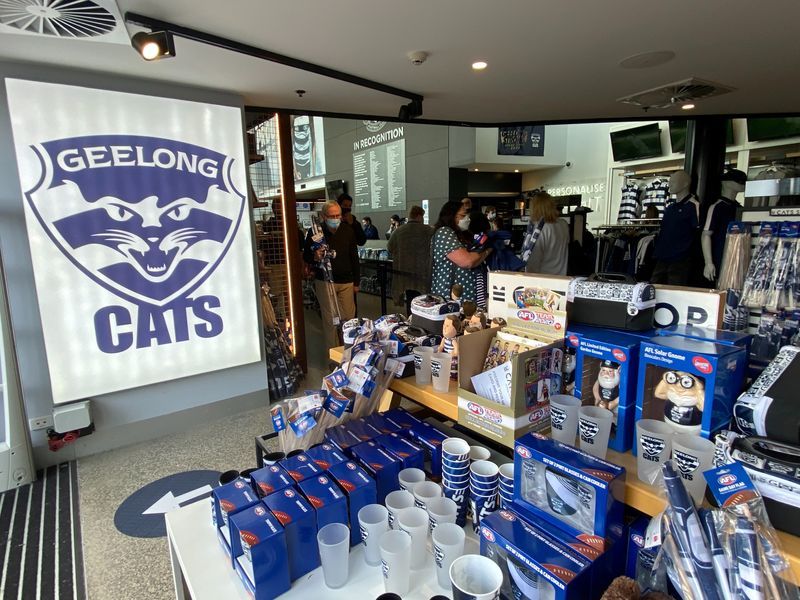
The Australian Football League has handed down a significant penalty against the Geelong Cats, imposing a fine of A$140,000 for failing to properly disclose a contractual variation that waived legal protections for a player experiencing repeated head injuries. The undisclosed agreement with championship-winning defender Jake Kolodjashnij contained an "informed consent letter" executed two years prior, which acknowledged the inherent risks associated with competing at the highest level of Australian Rules football. The arrangement remained secret until Melbourne's Herald Sun newspaper exposed details earlier this month, prompting immediate scrutiny from the sporting body and widespread public backlash over player safety protocols.
Kolodjashnij's history of multiple concussions during his career had raised legitimate concerns about his continued participation in the sport. Despite these documented head injuries, an independent medical panel cleared him to play, and the club subsequently extended his contract through to the conclusion of the 2026 season. The formal approval from league medical authorities might have suggested the arrangement was legitimate; however, the critical oversight was that Geelong never formally notified the AFL or the AFL Players' Association about the contractual variation, effectively operating in a gray zone that violated established compliance procedures designed to protect athlete welfare.
Following the public disclosure, the AFL launched an independent review to investigate the circumstances surrounding the undisclosed waiver. Investigators determined that Geelong had materially breached league rules by entering into an unauthorised contract variation without lodging documentation with either the AFL or the players' union. However, the review concluded there was no deliberate conspiracy to conceal the letter or intentionally deceive governing bodies, a distinction that likely influenced the severity of the penalty. AFL Commissioner Paul Bassat emphasised in his official statement that while no malicious intent was established, the breach was sufficiently serious to warrant substantial sanctions, reinforcing that all clubs must adhere to established safeguarding frameworks.
A notable complication emerged when it was revealed that AFL Commission chairman Craig Drummond had served as Geelong's president at the time the waiver was signed, creating an obvious conflict of interest in the disciplinary process. Drummond appropriately recused himself from reviewing the matter and publicly apologised for administrative lapses in managing the consent letter, a move that underscored the seriousness with which league leadership viewed the governance failure. This recusal demonstrated an understanding that sporting bodies must maintain independence and credibility when investigating their own governance structures, particularly on matters touching player protection.
Geelong's official response framed their intentions charitably, contending that their primary motivation was ensuring comprehensive care and support for Kolodjashnij while simultaneously respecting his agency and autonomy in making decisions about his own career trajectory. The club's argument—that the arrangement was designed to empower rather than exploit the player—represents one perspective on a complex situation where player autonomy and institutional protection mechanisms can create tension. Nevertheless, the club's failure to follow transparent disclosure procedures undermined this narrative and suggested that procedural compliance had been subordinated to other considerations.
Kolodjashnij himself has been largely absent from team selection since July, and when he issued a statement roughly three weeks before the AFL's ruling, he indicated he remained physically healthy and committed to resuming his playing role. However, he expressed disappointment and frustration that his private medical information had entered the public domain without his consent, highlighting how the scandal transformed an essentially private contractual matter into widespread public discussion of his personal health circumstances. The player's evident distress over the exposure of sensitive medical details underscores broader privacy concerns that extend beyond the specific concussion protocols at issue.
The AFL Players' Association, represented by boss James Gallagher, moved swiftly to express solidarity with Kolodjashnij and reinforced their commitment to his wellbeing throughout the controversy. Gallagher's statement that "Jake should never have been put in this position" represented both criticism of Geelong's handling and acknowledgment that the player had been placed in an uncomfortable and potentially compromising situation by institutional processes that lacked appropriate oversight. The union's protective stance reflected growing activism among player representatives to ensure their members are not pressured into arrangements that might undermine their long-term health interests.
The Geelong incident sits within a broader landscape of escalating litigation and regulatory concern regarding repetitive head trauma in professional contact sports. More than one hundred former AFL players have initiated a class action lawsuit against the league and its clubs, claiming compensation for injuries, losses, and damages sustained through concussions during their playing careers. This legal action, commenced in 2023, represents the most significant collective claim yet mounted against Australian football's governing institutions and signals that athlete advocates are increasingly willing to contest league handling of injury protocols through formal legal channels.
In response to these mounting pressures, AFL leadership has previously acknowledged that the organisation bears accountability if wrongdoing is demonstrated, while simultaneously asserting that it takes its duty of care towards players with considerable seriousness. The league committed to dedicating A$25 million towards research examining the long-term neurological consequences of concussion and repeated head impacts in Australian Rules football, a substantial investment aimed at strengthening the scientific foundation for future safety protocols. This research commitment reflects recognition that the sport must evolve its understanding of cumulative injury risks if it is to maintain public confidence and athlete participation.
For Malaysian and Southeast Asian observers, the Geelong case illuminates broader questions about governance, player protection, and institutional accountability in professional sports. As regional sports bodies develop their own regulatory frameworks around player welfare and injury management, the Australian precedent demonstrates how procedural transparency and formal disclosure requirements serve crucial protective functions that extend beyond mere administrative compliance. The scandal underscores that even well-intentioned efforts to support athletes can go awry when institutional processes lack appropriate checks and oversight mechanisms, a lesson applicable across diverse sporting contexts.

