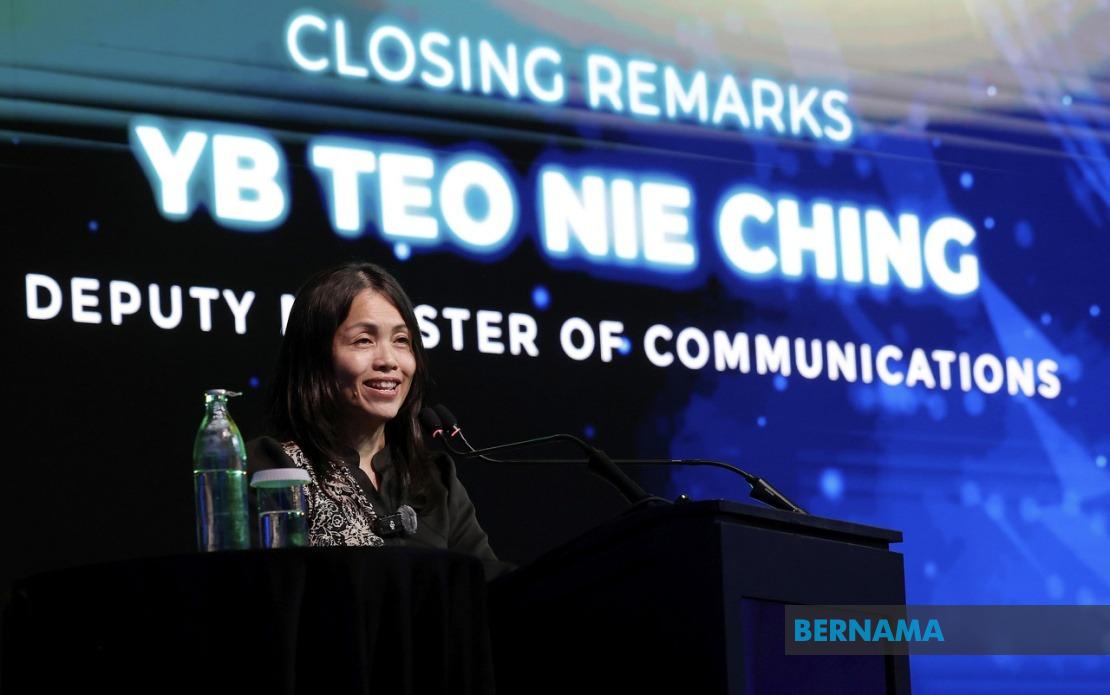
Malaysia's approach to building a trustworthy digital ecosystem must rest on two foundational pillars: institutional accountability and a commitment to serving public interests rather than purely technological advancement. This was the core message delivered by Deputy Communications Minister Teo Nie Ching during her closing address at the International Regulatory Conference 2026 in Kuala Lumpur, where she articulated a vision that challenges the prevailing assumption that digital progress is primarily a matter of engineering and innovation capacity.
Teo's perspective reflects a growing global recognition that technology's impact on society cannot be measured solely through metrics of speed, processing power, or feature richness. Instead, she argued that citizens assess digital systems by whether they provide genuine safety, operate fairly, and demonstrate trustworthiness in their interactions with personal data and online spaces. This citizen-centric lens offers important context for Malaysia as the nation continues navigating rapid digitalisation across government services, commerce, and education. The distinction between technological capability and technological responsibility has particular relevance in Southeast Asia, where rapid digital adoption often outpaces regulatory frameworks.
The minister emphasised that governance structures and innovation must advance in tandem rather than in isolation. She noted that the future digital landscape will be determined not merely by inventions and technical breakthroughs, but by deliberate choices about how those innovations are regulated, who benefits from them, and what safeguards protect vulnerable users. This governance-first perspective suggests Malaysia is positioning itself to learn from challenges faced by more mature digital markets, where regulatory responses have often lagged years behind technological disruption.
To illustrate the scale of online harms confronting regulators, Teo presented sobering data from Malaysia's Communications and Multimedia Commission. Between January 2022 and July 2026, the MCMC submitted 1.2 million content removal requests to social media platforms, with 1.138 million items successfully deleted. These figures underscore the persistent challenge of harmful content proliferation across major platforms operating in Malaysia's digital space. The content categories targeted in these removals typically include disinformation, hate speech, child exploitation material, and other illegal content that poses direct risks to public safety and social cohesion.
More striking than the cumulative figures are the recent acceleration trends. In just the first 7.5 months of 2026, the MCMC issued 377,502 removal requests—nearly 78 percent of the entire 2025 annual total. This acceleration averages approximately 1,900 requests daily, indicating both that harmful content is proliferating faster and that regulatory vigilance is intensifying. Platforms complied by removing 350,332 items during this same 2026 period, demonstrating reasonable cooperation rates yet also revealing that not every flagged item results in removal, pointing to ongoing negotiation between regulators and technology companies over moderation standards.
Crucially, Teo rejected the notion that regulatory agencies alone can shoulder responsibility for digital safety. She called instead for a multi-stakeholder approach involving social media platforms, government regulators, educational institutions, community organisations, and industry bodies. This distributed responsibility model reflects contemporary regulatory thinking but faces practical challenges in implementation, particularly around defining clear accountability measures for each party. The appeal to embed safety considerations into system design from the outset, rather than responding reactively after harm occurs, represents best practice in digital safety—a shift from traditional moderation toward what the technology industry terms "safety by design."
The conference itself, now in its third edition, carries significance as a regional convening space for digital governance thinking. Themed "Shaping the Next Digital Era: Regulation, Resilience and Trust," the gathering brings together regulatory officials, corporate technology leaders, and policy experts to deliberate on evolving challenges within the communications and multimedia sector. For Malaysia, hosting this dialogue positions the nation as a thought leader on digital governance within ASEAN, even as Southeast Asian countries grapple with divergent regulatory philosophies and varying levels of technological infrastructure.
Teo's framing of accountability as a pillar equal to innovation reflects Malaysia's stated commitment to inclusive digitalisation. The emphasis on whether technology "serves the public good" also implicitly acknowledges tensions between corporate interests and public welfare that characterise contemporary digital markets. Social media platforms, for instance, derive revenue from engagement metrics that may be optimised by algorithmic amplification of controversial content, creating misalignment between platform business models and public safety objectives. Regulatory frameworks must navigate these structural conflicts rather than assuming good-faith cooperation.
The people-centred approach articulated by the minister has particular resonance for Malaysia's diverse population, where digital services increasingly mediate access to government benefits, financial services, and civic participation. Marginalised groups—elderly citizens, low-income households, ethnic minorities—may face disproportionate harms if digital systems default toward the preferences of wealthy early adopters. Safety and fairness therefore cannot be abstract principles but must translate into concrete protections for vulnerable populations accessing digital platforms.
Looking forward, Malaysia's regulatory trajectory will likely involve refining the balance between enabling innovation and protecting citizens from demonstrable harms. The MCMC's aggressive content removal activity indicates regulatory capacity, yet the continuing volume of harmful material flagged suggests that moderation approaches, whether automated or human-led, remain inadequate at scale. Emerging technologies such as artificial intelligence, which increasingly mediates content moderation decisions, introduce new governance complexities that regulatory frameworks have only begun addressing.
The conference outcome reinforces that digital security is ultimately a governance challenge rather than a purely technical one. As Malaysia deepens its digital economy ambitions, the minister's emphasis on accountability and public-interest orientation will require translating into specific policy mechanisms, enforcement capabilities, and industry partnerships. The success of this approach will shape not only Malaysia's digital future but may offer models worth examining across Southeast Asia's diverse regulatory landscape.

