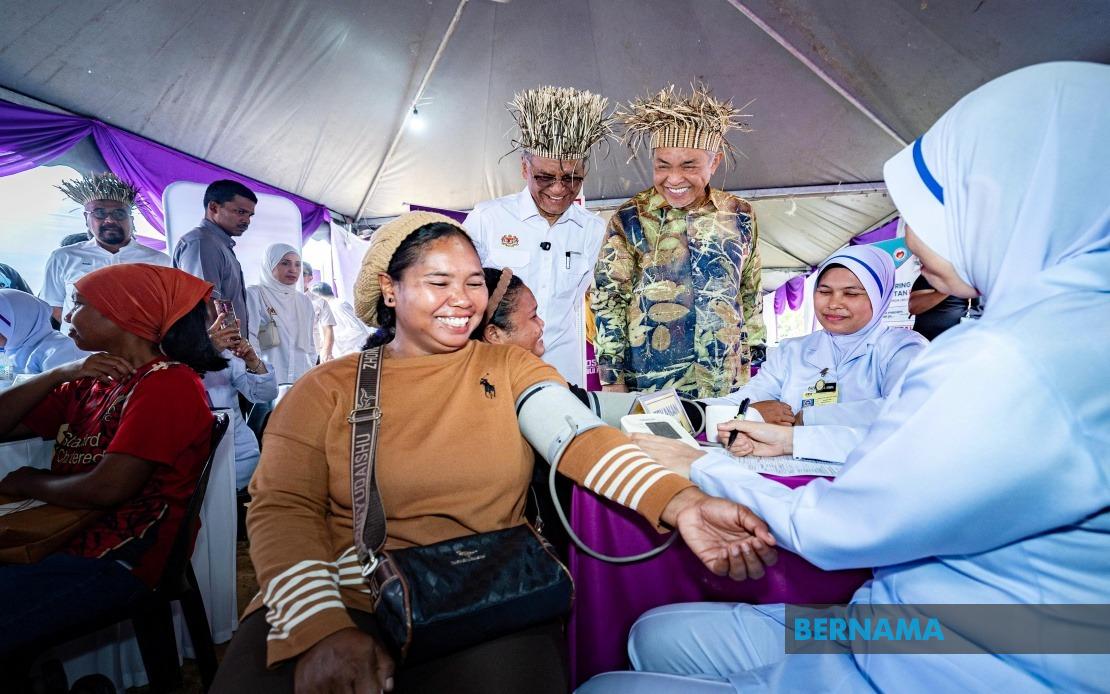
Melaka Chief Minister Datuk Seri Ab Rauf Yusoh has been empowered to independently negotiate coalition arrangements with any political grouping in advance of the forthcoming Melaka State Election, according to a statement from Barisan Nasional chairman Datuk Seri Dr Ahmad Zahid Hamidi. The senior UMNO leader and BN chief made the declaration while addressing media representatives following his inauguration of the 2026-2035 National Social Determinants of Health Strategic Plan for Orang Asli at Kampung Air Banun in Gerik, signalling BN's pragmatic approach to the competitive electoral landscape.
Ahmad Zahid emphasized that such negotiations, while historically fraught with complexity, need not devolve into deadlock. Seat allocation discussions have traditionally proven contentious across Malaysian coalition politics, but the BN leader's remarks suggest a framework for productive dialogue. He encouraged the negotiating teams to approach talks with professionalism and commitment to finding workable solutions, indicating that disputes over seat distribution are ultimately manageable with proper conduct and sincerity from all parties involved.
The decision to grant Ab Rauf expansive negotiating authority reflects BN's strategy of maintaining flexibility in a three-way competition involving Pakatan Harapan and Perikatan Nasional. By centralizing authority with the Melaka Chief Minister rather than attempting to coordinate through multiple party hierarchies, BN appears intent on streamlining decision-making and reducing bureaucratic friction that could delay crucial negotiations. This delegation also signals confidence in Ab Rauf's political judgment and his ability to represent BN's interests effectively.
According to Ahmad Zahid, any agreements reached during negotiations will be escalated through established party channels. The outcomes will first be submitted to UMNO's highest decision-making bodies before progressing to the BN Supreme Council, where final authorization will be granted. This layered approval process ensures that major agreements reflect consensus among BN's principal constituent parties and prevents individual components from unilaterally committing the coalition to potentially disadvantageous arrangements.
Pakatan Harapan has already signalled receptiveness to BN's openness on seat distribution matters. Datuk Seri Fahmi Fadzil, PH's communications director, welcomed the coalition's willingness to discuss seat allocations and potential exchanges, characterizing it as a meaningful opportunity worthy of serious examination. This response indicates that PH views the electoral landscape as sufficiently competitive to justify exploring arrangements beyond straightforward contest of all seats.
Perikatan Nasional has likewise positioned itself as ready for discussions with BN regarding the Melaka election. Datuk Seri Dr Ahmad Samsuri Mokhtar, PN's chairman, affirmed the coalition's openness and preparedness to engage in negotiations. The simultaneous interest from both opposition coalitions underscores Melaka's strategic importance and suggests that complex three-way negotiations may lie ahead, potentially involving multiple concurrent discussions on seat swaps and cooperation arrangements.
Ahmad Zahid had previously clarified that BN remains receptive to negotiations encompassing various cooperation models, including direct seat swaps, provided these discussions occur transparently and with genuine commitment from all participants. This statement, made on the preceding Saturday, established the broader framework within which Ab Rauf now operates. The emphasis on honesty and good faith suggests that BN intends to distinguish itself from adversarial negotiating stances by demonstrating willingness to engage seriously on substantive issues.
For Malaysian observers, the Melaka negotiation framework carries broader implications for federal coalition dynamics. Melaka remains a critical state where BN has maintained governance, making its retention or loss a significant political marker. The state's electoral composition and demographic profile often serve as a bellwether for national trends, meaning that whatever arrangements emerge here could influence approaches adopted for other state elections or the subsequent federal contest.
The readiness of all three major coalitions to engage in negotiations reflects a maturation of Malaysian electoral politics, where parties increasingly recognize that rigid competition across all constituencies may be less advantageous than strategic cooperation in specific areas. This pragmatism stands in contrast to earlier periods when such discussions often remained clandestine or proceeded under substantial political risk. The public acknowledgment of negotiation openness by BN, PH, and PN suggests evolving norms around electoral cooperation.
For voters and political observers in Melaka and across Southeast Asia, the unfolding negotiations will reveal which coalitions prioritize winning power over maintaining ideological coherence, and whether seat-sharing agreements can be conducted with the transparency and good faith that Ahmad Zahid emphasized. The outcomes will likely determine not only the composition of the next Melaka state government but also set precedents for how Malaysian political coalitions approach future contests in an increasingly fragmented and competitive electoral environment.

