Bollywood actor Aamir Khan has broken his silence on inflammatory allegations that emerged following his recent marriage, firmly dismissing claims that he represents a so-called "love jihad" movement. Speaking to media in a detailed interview, Khan articulated a principled defence of interfaith relationships, positioning his union with longtime companion Gauri Spratt within the context of his family's longstanding tradition of marrying across religious lines.
The timing of Khan's remarks reflects broader polarisation within Indian public discourse around interfaith relationships, a topic that has become increasingly politicised in recent years. By publicly addressing the accusations rather than remaining silent, the veteran actor has chosen to engage with critics on the substantive question of religious coexistence and personal freedom, rather than treating the controversy as merely tabloid fodder. His response provides insight into how prominent public figures navigate sensitive social issues in contemporary India.
Khan emphasised that his family has consistently upheld a philosophy of religious pluralism, with members freely choosing partners across faith boundaries without any expectation of conversion. He cited concrete examples from his immediate and extended family to substantiate this claim. Both of his sisters have married Hindu men, while his daughter is also in a relationship with a Hindu partner. Additionally, his cousin filmmaker Mansoor Khan married a Christian woman, further illustrating what Khan describes as a family pattern of interfaith acceptance spanning multiple generations.
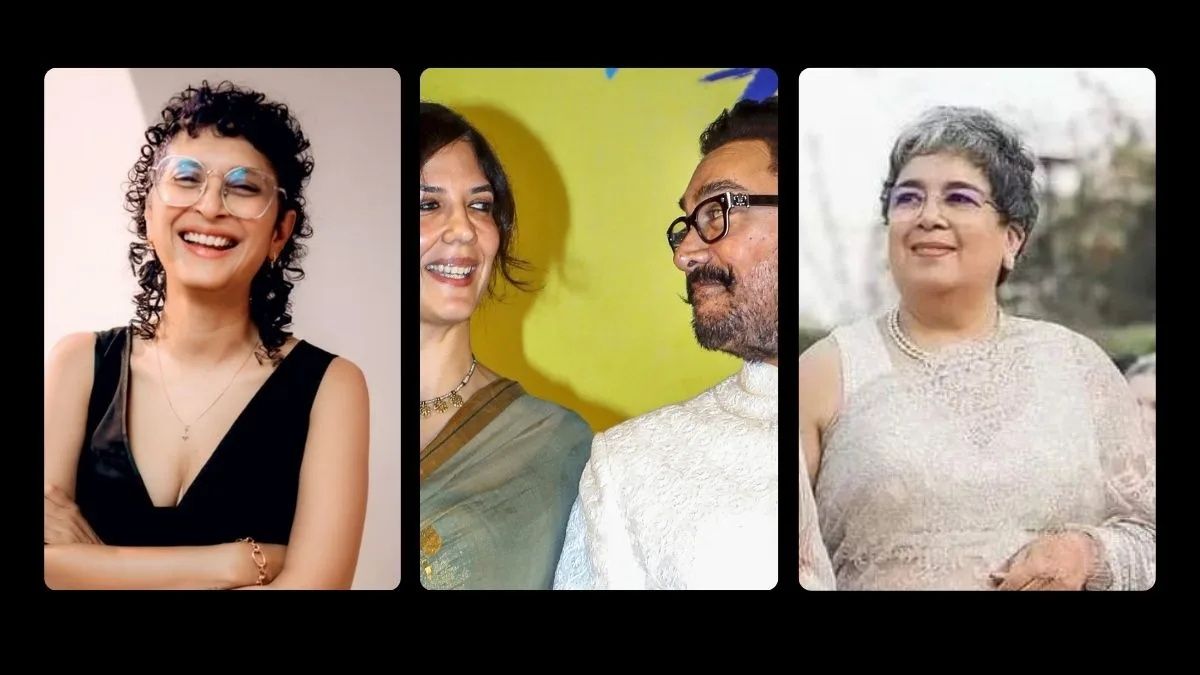
Regarding his own matrimonial history, Khan was explicit about the religious backgrounds of his three wives and the absence of conversion in any relationship. His first wife, Reena Dutta, to whom he was married from 1986 until their 2002 divorce, never converted her religion. Similarly, filmmaker Kiran Rao, whom he married in 2005, maintained her own faith throughout their union, which lasted until their announced separation in 2021. His current wife, Gauri Spratt, is Christian by background, though Khan noted she does not actively practise her religion. Critically, Khan underscored that all three marriages were solemnised as civil ceremonies, further removing any suggestion of religious conversion ceremonies or demands.
The actor's characterisation of the accusations as increasingly "comical" reveals a degree of exasperation with what he perceives as absurd public insinuation. This rhetorical choice suggests that Khan views the allegations as divorced from the actual lived reality of his personal choices and family values. By framing the controversy as farcical rather than serious, he simultaneously dismisses the critics while implicitly questioning the rationality of those advancing such claims.
Khan's relationship with Gauri Spratt has a substantial history predating their recent formalisation as a married couple. The two first knew each other nearly 25 years ago, but their current relationship trajectory began only approximately two years ago when they reconnected in Bengaluru through the introduction of Khan's cousin Nuzhat Khan. What began as renewed friendship gradually evolved into a romantic relationship, with the couple dating for more than two years before deciding to solemnise their partnership through marriage on July 5 at Khan's Mumbai residence.
The public announcement of their relationship came during celebrations marking Khan's 60th birthday in March of the previous year, when he formally introduced Gauri to assembled media representatives. This deliberate and measured introduction suggested that Khan was comfortable publicly presenting the relationship well before formalising it through marriage, a timeline that contradicts any suggestion of hasty or clandestine decision-making.
Khan's response to the "love jihad" allegations must be understood within the broader context of intensified scrutiny of interfaith relationships in India. The term itself emerged from political discourse aimed at characterising conversions resulting from romantic relationships as part of a coordinated campaign to alter India's religious demographics. By publicly defending his family's approach to interfaith relationships, Khan positions himself alongside those who view such unions as expressions of individual autonomy and romantic choice rather than as vehicles for religious proselytisation.
The actor's detailed engagement with these accusations carries implications beyond his personal circumstances. By methodically articulating his family's philosophy of religious acceptance without conversion, Khan provides a counternarrative to rhetoric that portrays interfaith marriages as inherently problematic. His approach demonstrates how public figures can address polarising social questions through factual testimony about their lived experience rather than abstract argument.
For Malaysian and Southeast Asian readers, Khan's situation resonates with ongoing regional discussions about religious identity, interfaith relationships, and the proper boundaries between personal choice and communal concern. While Malaysia's constitutional framework provides specific protections regarding Islam and interfaith matters, Khan's emphasis on non-coercive, consensual interfaith relationships reflects principles that apply across diverse social contexts.
The controversy also illuminates how rapid digital dissemination of information and social media commentary can generate accusations that actors and public figures feel compelled to address, regardless of their personal inclination toward privacy. Khan's decision to respond publicly suggests a calculation that silence might permit uncontested repetition of charges, while direct engagement allows him to frame the narrative on his own terms.
Ultimately, Khan's testimony regarding his family's interfaith marriages and the absence of religious conversion across three separate unions provides specific factual refutation of the claims against him. Whether such public statements effectively counter deeply held convictions among those making the original accusations remains an open question, but Khan's willingness to engage with the controversy head-on demonstrates one approach through which prominent figures navigate the intersection of personal life, public scrutiny, and politically charged social debates.

