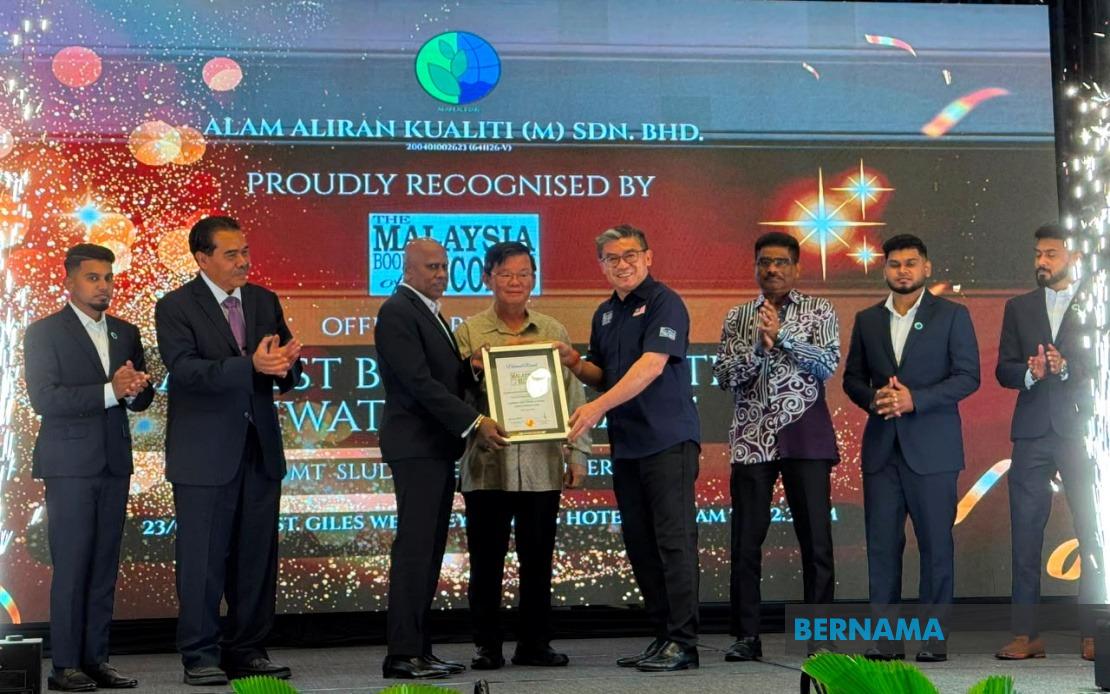
Alam Aliran Kualiti (M) Sdn Bhd (AAK) has secured recognition from the Malaysian Book of Records for developing the country's largest belt press system dewatering plant, marking a significant achievement in domestic environmental engineering capability. The Sungai Dua Dewatering Plant in Penang, constructed in partnership with the Perbadanan Bekalan Air Pulau Pinang (PBAPP), received the formal acknowledgment during a presentation ceremony in George Town on July 23, with the achievement witnessed by state leadership and water industry officials.
The facility represents substantial infrastructure investment in water treatment innovation, boasting a treatment capacity of 10 million litres per day and managing approximately 450 tonnes of water treatment sludge on a daily basis. These operational metrics establish the plant as a critical component of Penang's water management infrastructure, addressing the growing challenge of treatment residuals that have traditionally burdened landfill operations across the country. The scale of daily processing demonstrates Malaysia's capacity to construct and operate equipment matching international standards, countering perceptions that such advanced systems require offshore expertise or technology transfer.
AAK director Gokulaan Balan framed the recognition as validation of Malaysian engineering prowess rather than a final achievement, emphasizing that the record serves as a foundation for deeper commitments to innovation and sustainability. His remarks reflect a growing philosophy among Malaysian environmental engineering firms that international benchmarking and formal recognition drive continuous improvement and attract investment to the sector. The company views this milestone as motivation to strengthen its position in environmental solutions markets while demonstrating to international partners that Southeast Asian companies possess technical competency in specialized infrastructure development.
The circular economy dimension of the Sungai Dua facility adds significant value beyond conventional wastewater treatment, transforming what would otherwise constitute scheduled waste into commercially viable Eco Green Cement Bricks. This conversion process addresses multiple policy objectives simultaneously: it reduces landfill pressure, creates secondary manufacturing revenue streams, and contributes to Malaysia's broader circular economy development goals outlined in national sustainability frameworks. The recovered treated water channelled back into the treatment process further reduces operational water losses, a particularly relevant benefit for Penang given the state's historical vulnerability to water supply constraints.
Penang Chief Minister Chow Kon Yeow highlighted the project's alignment with state-level economic diversification and sustainability priorities, noting that waste-to-value conversion initiatives strengthen long-term water security while generating employment in green manufacturing sectors. His characterization of the facility as a model for transforming environmental challenges into economic opportunities reflects the political imperative across Malaysian states to demonstrate tangible progress on sustainability commitments. This framing also addresses growing public concern about landfill expansion and waste management costs, positioning technological innovation as preferable to conventional disposal approaches.
The facility's management of alum sludge—a byproduct of conventional water treatment processes—carries particular significance for Malaysia's drinking water supply chain. Alum coagulants used in municipal water treatment generate substantial sludge volumes that require proper handling and disposal; the Sungai Dua facility's conversion of 450 tonnes daily into construction materials represents a practical solution to a sector-wide operational challenge. Other water utilities across Malaysia facing similar sludge management pressures may view this model as replicable, potentially influencing future infrastructure planning and procurement decisions in the water industry.
AAK's corporate background as an environmental and scheduled waste management specialist established in 2004 positions the company within Malaysia's growing cluster of waste treatment and environmental services providers. The organization's integration of dewatering technology with brick manufacturing demonstrates the engineering diversification increasingly necessary for companies operating in the environmental sector, where standalone waste treatment services face margin pressures. This vertical integration strategy—combining treatment infrastructure with value-added product manufacturing—may become increasingly prevalent as Malaysian environmental firms seek competitive differentiation.
The MBOR recognition represents one of few formal acknowledgments of superlative environmental infrastructure achievements in Malaysia, a distinction that carries marketing and competitive significance in regional infrastructure markets. As Southeast Asian governments intensify water management and circular economy initiatives, technical credentials and certified performance records become competitive factors in tender processes and international partnership negotiations. For AAK, the documentation of world-class capability may facilitate expansion into neighboring countries experiencing similar water treatment and waste management challenges.
The involvement of multiple stakeholders—including the Pengurusan Aset Air Berhad (PAAB) chairman—underscores the interconnected governance structures within Malaysia's water sector, where national holding companies coordinate with state authorities and private operators. This multi-party recognition ceremony indicates institutional alignment around environmental innovation agendas, potentially signaling government inclination to support expanded deployment of similar technologies across other regions facing water treatment challenges. Penang's experience may inform future infrastructure planning in states including Selangor and Johor, where rapid urbanization generates escalating treatment sludge volumes.
The achievement also reflects broader Asian momentum in environmental engineering standardization and recognition, as countries across the region establish records and certifications to drive competitive improvement in infrastructure sectors. Malaysia's participation in this benchmarking culture through organizations like MBOR positions domestic companies within regional and potentially global competitive frameworks where certified performance carries transactional value. For Malaysian engineering firms seeking to expand internationally, such recognitions provide third-party validation of technical capability that multinational procurement processes increasingly demand.
Looking forward, the Sungai Dua facility's success model—combining treatment capacity with waste valorization—suggests a direction for Malaysia's environmental infrastructure development in coming years. As circular economy principles gain prominence in national economic strategies and state-level sustainability plans, facilities demonstrating multi-functional resource recovery will likely attract policy support and investment. The recognition ceremony itself served as tacit government endorsement of this approach, potentially influencing how future water treatment and waste management projects are designed and evaluated across the country.

