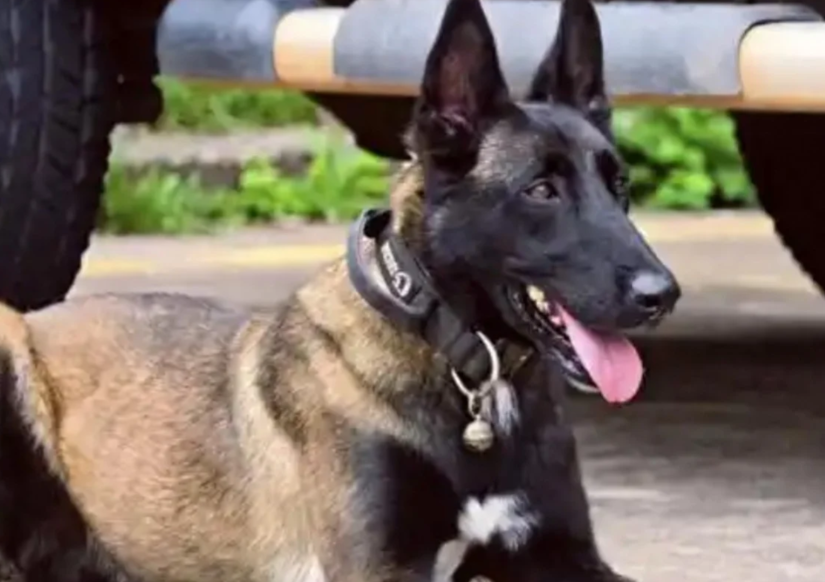
A four-year-old German shepherd named Bulu has become an unlikely symbol of loyalty and devotion after enduring a six-month separation from his handler, Officer Awei, during which the dog virtually stopped eating and spent his days searching for signs of his partner's return. The emotional reunion between man and dog, captured on video and shared across Chinese social media, has resonated deeply with millions of viewers and sparked broader conversations about the sacrifices made by working animals in law enforcement.
The bond between Awei and Bulu was forged through intensive training and operational work in Chuxiong, Yunnan province, where the dog had been specially prepared for narcotics detection in demanding and unpredictable environments. Their partnership, though specific details about its length remain undisclosed, exemplified the close working relationships that develop between handlers and their canine counterparts in China's police force. This connection would be tested severely in November of the previous year when a routine operation would change both their lives.
During a coordinated raid on an abandoned building targeting suspected drug traffickers, Bulu's acute senses detected movement, and the dog surged forward to pursue fleeing suspects. Awei followed closely behind, but in the darkness and cluttered conditions of the corridor, he lost his footing on the second storey and plummeted to the ground below. The fall proved devastating—doctors later diagnosed him with multiple fractures affecting his head and chest, injuries severe enough to plunge him into a five-day coma from which he would eventually, but gradually, emerge.
Critical moments after the accident reveal the depth of Bulu's instinctive response to his handler's peril. As Awei lay convulsing and vomiting blood on the debris-strewn floor, the dog remained by his side, anxiously circling and nuzzling him in what appeared to be a desperate attempt to rouse him from his altered state. Nearby officers, aware of the gravity of Awei's condition, could be heard urging him to hold on, anchoring their encouragement to the promise of future battles they would fight together. The operational unit pressed ahead despite this tragedy, and over the following months, Awei's colleagues successfully arrested eleven suspects and recovered 4.4 kilogrammes of narcotics along with more than 500,000 yuan in illicit cash.
While Awei began his long rehabilitation in hospital, Bulu's own struggle commenced at a training base where the dog awaited his handler's return. The separation extended far longer than either might have anticipated, stretching across approximately six months during which Bulu's behavior shifted noticeably. The dog grew restless, his appetite diminished dramatically, and he consumed far less food and water than a healthy working animal should require. Rather than settling into the routine of the training facility, Bulu became fixated on finding Awei, a behavioural response documented in surveillance footage that provides a window into the dog's emotional state.
The surveillance recordings reveal a pattern of searching behaviour that suggests Bulu maintained a mental map of places associated with his handler. The dog repeatedly returned to locations where Awei might reasonably appear—the dormitory where they had resided together, the gate through which personnel entered and exited the base, and the training routes along which they had worked. On several occasions, Bulu's vigilance was rewarded with false hope; when a police vehicle returned to the base, the dog rushed towards it with evident excitement, only to be disappointed when he learned that Awei was not among those arriving. These repeated cycles of anticipation and letdown paint a portrait of a sentient creature maintaining hope against mounting evidence that reunion remained distant.
The turning point came when Awei was cleared to return to active duty, having made sufficient recovery to resume his position within the police unit. The reunion, carefully orchestrated by handlers who understood what both dog and officer had endured, became the crescendo of an emotional narrative. As Bulu was brought forward and caught sight of Awei, the dog barked and sprinted towards him without hesitation. Awei's response mirrored the dog's unbridled joy—he dropped his luggage and knelt to embrace Bulu, a gesture of reciprocal love and relief that would be captured in footage later distributed across social media platforms. The video accumulated over ten million views and garnered more than 580,000 likes on mainland Chinese networks, triggering a wave of comments praising the bond between human and animal.
The viral moment has inadvertently drawn public attention to the broader ecosystem of police dogs operating within China's law enforcement apparatus. According to reporting from CCTV News, the country maintained a complement of more than 29,000 active police dogs as of 2024, each representing an investment in training and a commitment to operational capability. These animals typically serve an average of eight years in roles that demand physical and mental engagement at sustained high intensity. The toll of such demanding work manifests in common occupational injuries—joint and spinal damage that accumulates over their service lives, conditions not unlike those experienced by human officers exposed to chronic physical stress.
The question of what happens to police dogs after their working years concludes reflects evolving attitudes toward animal welfare within Chinese law enforcement institutions. Current policy allows most retired dogs to remain with their original units, cared for by their handlers in a kind of pension arrangement that honours their service. Some dogs subsequently become available for public adoption, offering a second chapter to animals whose first chapter has been devoted to duty. The story of Bulu and Awei, by capturing hearts online, has implicitly raised public consciousness about these animals' sacrifices and the human obligation to recognize their contributions meaningfully.
One particularly resonant online comment captured the essence of what Bulu's vigil represents: the dog was not simply waiting for its handler but for a comrade-in-arms, a partner with whom battles had been fought and would be fought again. This characterization elevates the relationship beyond mere utility or companionship, positioning it instead as a profound form of solidarity born from shared purpose and mutual dependence. For Malaysian and broader Southeast Asian audiences, the story carries particular weight given the region's significant investment in police and military working dogs, and the emotional truth embedded in the narrative speaks to universal experiences of loss, hope, and the remarkable capacity of animals to love beyond the boundaries of rational self-interest.

