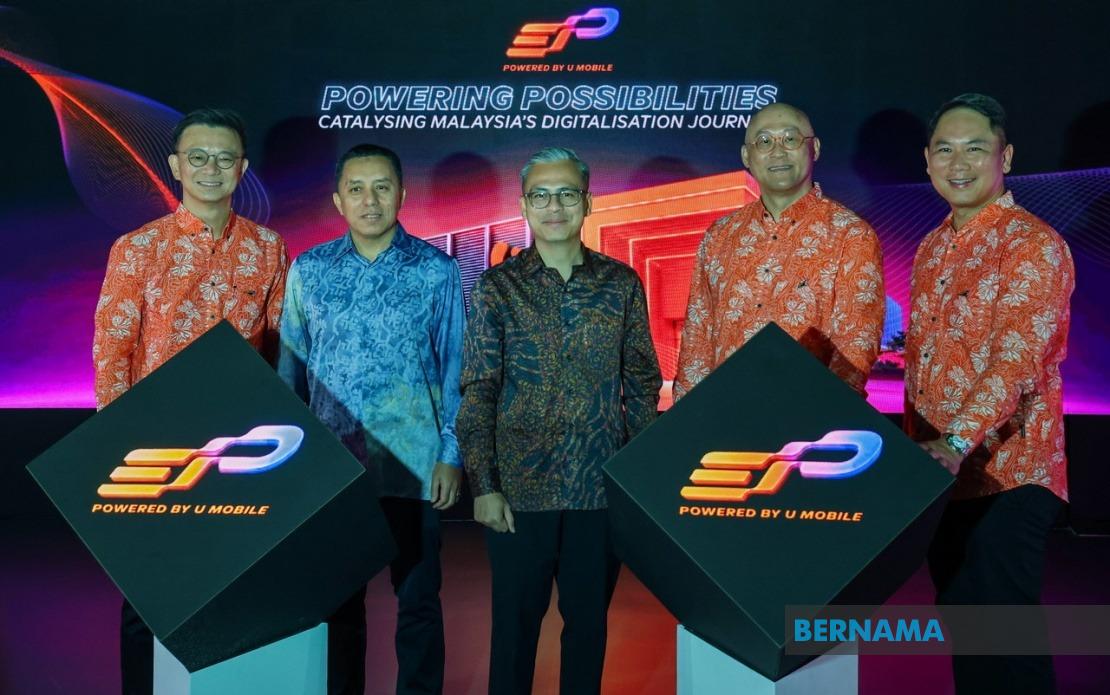
Malaysia stands to gain substantial competitive advantages by embracing 5G Advanced, or Ultra 5G, technology across its economy, Communications Minister Datuk Seri Fahmi Fadzil said on August 6 during the launch of the U Mobile Enterprise Innovation Platform Hub in Kuala Lumpur. The next-generation mobile infrastructure, built on fifth-generation networks, combines AI and robotics to unlock productivity improvements in sectors ranging from healthcare delivery to agricultural production and consumer retail.
The minister articulated a broad vision for how this advanced connectivity standard could reshape operational practices across Malaysia's critical industries. In healthcare contexts, 5G Advanced networks would enable hospitals to allocate nursing resources more strategically by automating routine tasks and monitoring functions, thereby reducing workload pressures on clinical staff while maintaining quality care delivery. The technology's real-time data transmission capabilities and minimal latency create opportunities for remote patient monitoring and telemedicine applications that could extend quality healthcare to underserved areas across the nation.
Malaysia's agricultural sector, particularly the oil palm industry which represents a significant portion of rural employment and export revenues, stands to benefit substantially from enhanced connectivity and autonomous systems. Ultra 5G-powered robotics and AI analytics can optimize planting schedules, monitor crop health through continuous surveillance, and automate labor-intensive harvesting processes, directly addressing workforce challenges and improving yield productivity. The technology enables farmers to collect and analyze field data with unprecedented precision, supporting data-driven decision-making across cultivation and processing stages.
Retail businesses operating across Malaysia's diverse marketplace would gain powerful tools for inventory management and consumer insight through Ultra 5G's advanced data analytics infrastructure. Real-time inventory tracking across store networks and supply chains reduces waste and stockouts simultaneously, while sophisticated analytics platforms identify shifting consumer preferences and seasonal demand patterns with greater accuracy than traditional point-of-sale systems. This capability becomes particularly valuable for Malaysian retailers competing in the region's increasingly integrated ecommerce environment.
Beyond commercial applications, Fahmi identified national security applications that warrant urgent exploration by Malaysian authorities. The minister noted that 5G-enabled drone surveillance systems are already operational in select locations nationwide, including border monitoring operations where consistent, reliable connectivity remains critical for national protection. These unmanned systems can cover vast geographic areas with minimal personnel deployment, representing a technological force multiplier for border security operations across Malaysia's extensive land and maritime boundaries.
The deployment of 5G-powered surveillance infrastructure demands careful coordination among multiple government agencies, the minister emphasized. The Malaysian Border Control and Protection Agency (AKPS) and the Royal Malaysia Police (PDRM) should evaluate the operational suitability of such systems within their respective mandates, considering factors including equipment compatibility, operational procedures, and integration with existing security frameworks. This assessment phase requires moving beyond proof-of-concept demonstrations toward structured implementation planning.
Fahmi committed the Malaysian Communications and Multimedia Commission (MCMC) to facilitating interagency cooperation necessary for expanding internet coverage into border regions where surveillance infrastructure would ultimately operate. Effective deployment requires coordinating with the Home Ministry and other relevant portfolios to ensure that telecommunications infrastructure development aligns with security objectives and capacity requirements. The MCMC's role as sector regulator positions it centrally within this coordination effort, bridging telecommunications capabilities with security priorities.
Ultra 5G represents a substantial technological leap forward compared with conventional fifth-generation networks already deployed across Malaysian cities. The technology operates on a 5G Standalone (SA) architecture, eliminating dependence on older fourth-generation infrastructure and delivering network performance characteristics specifically engineered for enterprise applications. Users and systems experience ultra-low latency, enabling near-instantaneous communication between devices and applications, while network slicing capabilities allow operators to partition physical infrastructure into specialized logical networks optimized for specific industry requirements.
Capacity advantages embedded within the Ultra 5G standard provide substantial room for growth as connected device populations expand across Malaysia's economy. The technology delivers approximately double the data transmission capacity of earlier 5G generations, accommodating the exponential growth in machine-to-machine communications, autonomous systems, and real-time analytics that increasingly characterize modern industrial operations. These capacity improvements reduce network congestion during peak usage periods, ensuring consistent performance quality for mission-critical applications across healthcare, security, and industrial sectors.
Security enhancements built into the Ultra 5G architecture reflect the heightened cybersecurity requirements of AI-integrated networks where automated systems make decisions affecting human safety and national interests. The technology incorporates AI-powered security mechanisms that continuously monitor network traffic, identify anomalous patterns suggesting intrusion attempts, and respond dynamically to emerging threats. These capabilities prove essential for protecting critical infrastructure and sensitive government applications from increasingly sophisticated cyberattacks originating across national borders.
Malaysia's receptiveness to Ultra 5G deployment positions the nation favorably within Southeast Asia's digital transformation agenda. Regional competitors including Singapore and Thailand have begun preliminary Ultra 5G trials, creating competitive pressure for Malaysian operators to offer comparable capabilities. Early adoption could enable Malaysian enterprises to capture technological advantages in regional markets before competitors establish entrenched positions, particularly in high-value sectors including advanced manufacturing, financial services, and healthcare innovation.
The minister's public endorsement of Ultra 5G deployment signals government commitment to supporting telecommunications operators' investments in expensive infrastructure upgrades required for service rollout. Mobile operators investing billions in network modernization require policy certainty and regulatory support to justify capital expenditures and project timelines. Fahmi's statements provide that framework, indicating that government will actively facilitate rather than obstruct the technological transition.
Successful Ultra 5G implementation requires sustained coordination among telecommunications providers, government agencies, and private sector employers who will ultimately deploy the technology within their operations. The U Mobile Enterprise Innovation Platform Hub launch represents initial steps toward building the ecosystem partnerships necessary for translating technical capabilities into practical sectoral applications. Subsequent phases must translate ambitious policy statements into concrete deployment schedules, funding mechanisms, and capability-building programs that enable Malaysian organizations across public and private sectors to effectively harness Ultra 5G's transformative potential.

