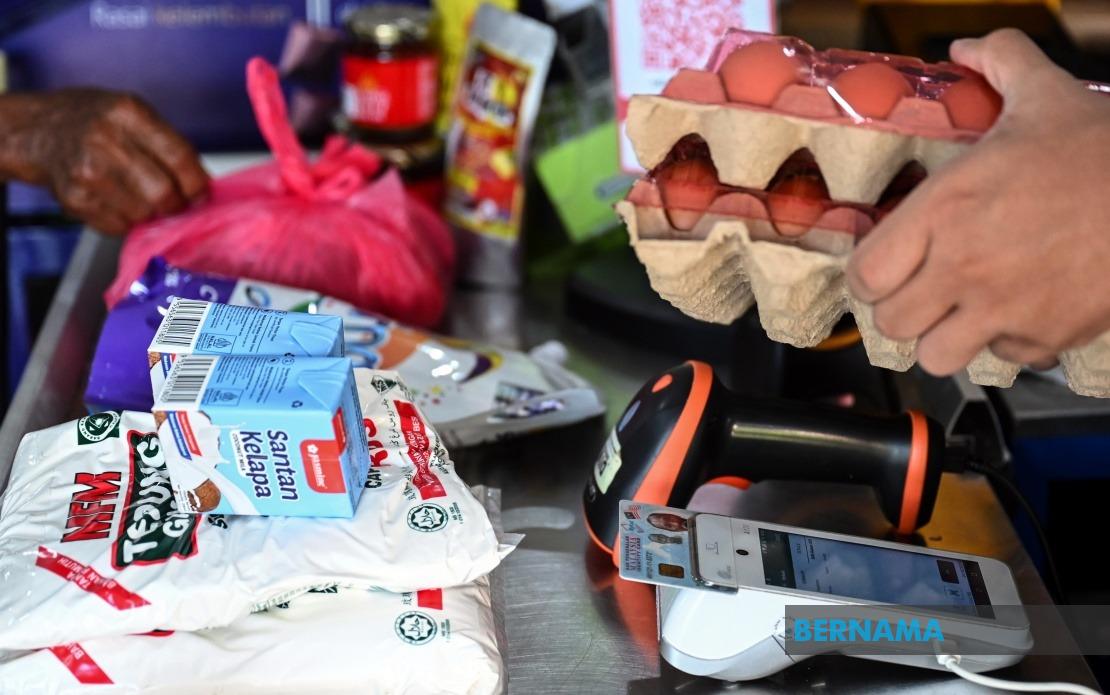
The Ministry of Finance has commenced Phase 3 payments of the Sumbangan Tunai Rahmah (STR) cash assistance programme, rolling out funds to 5.3 million households nationwide with a total outlay of RM1.2 billion. The disbursement marks a significant expansion of the government's cost-of-living support initiative, which has grown in scope and reach since the beginning of the year as economic pressures continue to weigh on Malaysian households across multiple income brackets.
The recipient base has expanded substantially, climbing from five million beneficiaries at the start of 2026 to the current 5.3 million, representing a growth of 300,000 additional households in less than a year. Within this cohort, 3.9 million are classified as low- and middle-income households, while the remaining 1.4 million are single senior citizens. This demographic split reflects the government's dual focus on addressing poverty among working-age families whilst extending targeted support to elderly Malaysians living alone, a vulnerable segment historically susceptible to hardship.
Phase 3 payment amounts vary considerably depending on recipient circumstances. Low- and middle-income households will receive between RM150 and RM600, with variations based on monthly income levels and the number of dependent children in the family unit. Single senior citizens, meanwhile, will universally receive RM150, acknowledging their typically fixed income status and reduced household expenditure. The tiered approach reflects an attempt to calibrate assistance according to genuine need rather than providing blanket payments across all eligible groups.
The cumulative impact of the three payment phases delivered thus far in 2026 has reached RM3.6 billion in total government expenditure on direct cash assistance. When combined with the monthly SARA basic aid scheme that runs concurrently, qualifying recipients can accumulate up to RM3,300 in total government transfers by August 2026 across the STR programme phases and SARA monthly allocations. This calculation excludes additional one-off SARA payments directed at all Malaysian citizens aged 18 and above, meaning the actual benefit package is substantially richer for many recipients than headline figures might suggest.
The STR and SARA programmes represent a fundamental restructuring of Malaysia's approach to social welfare delivery. Beginning in 2026, the government pivoted from annual or biennial ad-hoc payments towards a more regular cadence: STR payments are distributed quarterly whilst SARA provides monthly basic income support to qualifying citizens. This shift towards consistent, predictable payments enables households to plan household budgets more effectively rather than relying on irregular windfalls that create boom-and-bust spending patterns. The quarterly-plus-monthly framework also reduces administrative burden compared to managing multiple separate distribution cycles throughout the year.
Prime Minister Datuk Seri Anwar Ibrahim positioned the expanded payment scheme within a broader narrative of government economic reform and labour market strengthening. While acknowledging that cost-of-living challenges persist for significant segments of the population, he characterised the cash transfers as temporary support rather than permanent fixtures, emphasising that the government's long-term strategy revolves around raising wages, improving employment quality, and boosting overall economic growth. This messaging reflects recognition that transfer payments, whilst politically popular and immediately effective at alleviating household cash flow pressures, cannot sustainably address wage stagnation or erosion of purchasing power without complementary structural economic reforms.
The government has substantially increased the financial commitment to direct assistance programmes. Total 2026 allocations for STR and SARA combined amount to RM15 billion, representing the highest annual investment in direct cash assistance in federal government history. To contextualise this magnitude: the 2026 allocation nearly triples the BR1M payments made in 2016, which were RM5.6 billion in that particular year. This threefold increase within a single decade illustrates either growing fiscal capacity, shifting political prioritisation towards direct transfers, or both—though it also raises questions about fiscal sustainability and the opportunity cost of diverting such substantial sums from infrastructure, education, or other long-term investments.
Distribution mechanisms have been designed with pragmatism in mind, recognising Malaysia's varying levels of financial inclusion across different demographic segments. Recipients possessing bank accounts will have Phase 3 payments credited directly via electronic transfer commencing immediately. For the unbanked population—a category disproportionately represented among rural residents and elderly citizens—cash collection remains available at any Bank Simpanan Nasional branch across the country. This dual-track approach avoids penalising those without formal banking relationships whilst offering convenience to those with existing financial infrastructure.
The Ministry of Finance has maintained channels for fresh applications and appeals throughout the calendar year via the official STR portal at bantuantunai.hasil.gov.my, attempting to minimise eligibility leakage whereby individuals who qualify for support fail to receive it through paperwork errors, incomplete applications, or information gaps. The continuous application window contrasts with many traditional welfare schemes that operate fixed enrollment periods, thereby reducing administrative barriers and improving programme penetration among the target population. However, continuous processing also generates administrative complexity and requires sophisticated backend systems to prevent fraud and duplicate payments.
Cyber-security and scam prevention have emerged as mounting concerns as digital welfare distribution expands. The Ministry explicitly cautioned citizens against fraudulent links and phishing schemes purporting to facilitate STR applications or payments, directing people exclusively towards the verified official portal. Parallel resource pages including STR FAQs and SARA information are housed at sara.gov.my, providing centralised, authenticated information repositories. Given rising digital literacy disparities, particularly among elderly beneficiaries, the proliferation of phishing and impersonation schemes targeting vulnerable welfare recipients represents a persistent challenge for programme administrators attempting to safeguard public funds and protect beneficiaries from financial exploitation.
From a Southeast Asian perspective, Malaysia's approach to scaling direct cash transfers merits regional attention. The programme's expansion reflects growing recognition across the region that inflation, wage stagnation, and rising living costs require immediate government response beyond long-term structural reforms. Singapore, Thailand, and the Philippines have similarly experimented with targeted cash assistance during periods of economic stress, though few have matched Malaysia's per-capita commitment levels or frequency of payments. The STR programme's quarterly-plus-monthly structure represents an increasingly sophisticated welfare architecture relative to earlier iterations of regional assistance schemes, suggesting a maturation of government capacity to deliver targeted, sustained transfers at scale.
Implementation challenges remain substantial notwithstanding the programme's apparent administrative sophistication. Means-testing accuracy, preventing fraud and duplicate claims, managing public expectations when eligible applicants are denied assistance, and maintaining programme costs within fiscal constraints represent ongoing difficulties. The expansion from 3.7 million to 3.9 million low- and middle-income households receiving STR Phase 3 support raises questions about whether widening eligibility reflects genuine economic deterioration among these income cohorts or rather political pressure to increase beneficiary numbers before electoral cycles. Regardless of causation, the upward trajectory in both recipient numbers and aggregate spending suggests the government perceives cost-of-living pressures as sufficiently acute to justify escalating financial commitment despite broader fiscal constraints.

