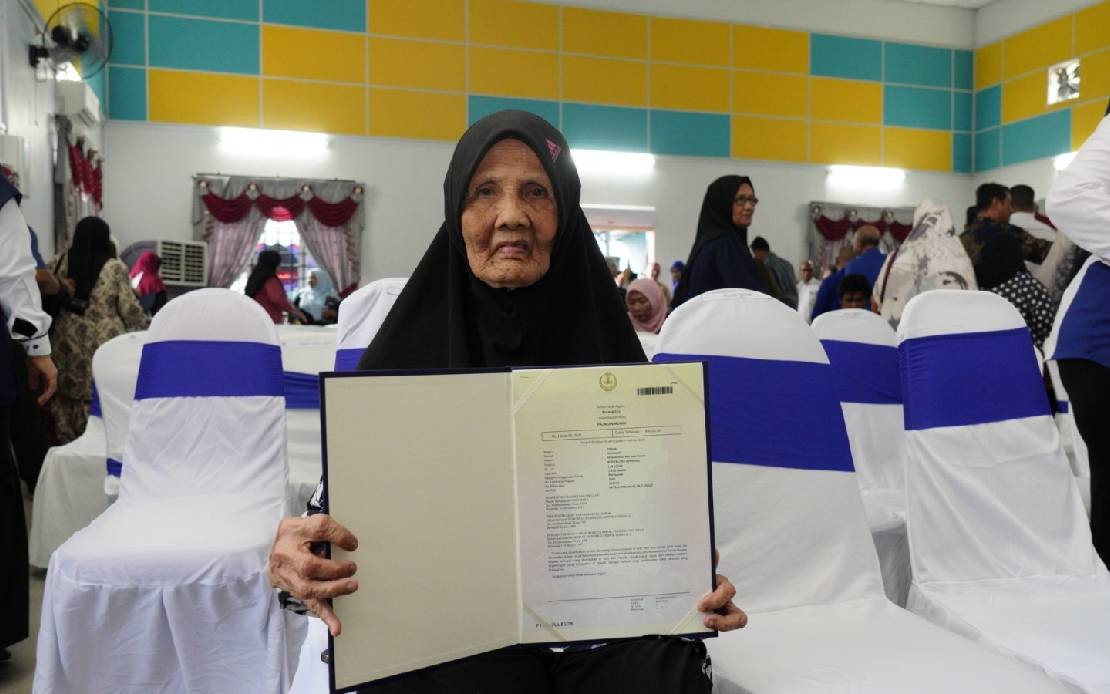
Forty-seven rural participants in Perak have received formal land ownership grants through the FELCRA Berhad Seri Gala Area Village Rearrangement Programme (PPSK), representing a milestone in the state's commitment to translating land-use consolidation into genuine asset ownership for farming communities. The handover ceremony, held in Ipoh on July 14, highlighted how Malaysia's Federal Land Consolidation and Rehabilitation (P&P) Programme continues to serve as a model for transforming underutilised agricultural areas into productive economic zones while simultaneously securing the tenure of participating smallholders.
Perak Menteri Besar Datuk Seri Saarani Mohamad positioned the FELCRA scheme as one of the nation's most credible rural development interventions, distinguishing it from purely infrastructure-focused initiatives. Rather than simply constructing facilities or expanding physical amenities in farming areas, the Consolidation and Rehabilitation Programme functions as an integrated approach that consolidates fragmented land parcels, modernises farming practices, and crucially, establishes formal ownership documentation. This multi-dimensional strategy has generated tangible employment opportunities within rural communities, stimulated localised business activity centred on agricultural value chains, and restored participant confidence in the viability of smallholder farming as a sustainable livelihood.
The significance of conveying land ownership titles extends beyond administrative formality. Saarani emphasised that formalising land rights dignifies rural populations by granting them legitimate, legally recognised assets that serve as collateral for future credit access, inheritance mechanisms, and long-term economic planning. For farming families historically operating on informal tenure arrangements, these grants represent a pathway to economic security—enabling them to invest in property improvements, access agricultural credit at favourable terms, and construct generational wealth through documented land assets. This dimension addresses a long-standing challenge in Malaysian rural development: the disconnect between farming productivity and actual wealth accumulation among smallholder participants.
Across Perak, FELCRA Berhad currently oversees nearly 32,000 hectares of consolidated agricultural land involving almost 20,000 participating farmers. This operational footprint positions Perak as the nation's second-largest FELCRA jurisdiction, trailing only Pahang. The scale of this engagement underscores how consolidation programmes have become integral to Perak's agricultural sector, particularly in regions where land fragmentation has historically constrained mechanisation, economies of scale, and market competitiveness. By aggregating dispersed plots into managed blocks, FELCRA enables farmers to collectively negotiate input prices, access shared machinery, and coordinate marketing—advantages unavailable to isolated smallholders.
The consolidation model also addresses a persistent inefficiency in Malaysian agriculture: the underutilisation of land suitable for farming. Saarani highlighted how the P&P Programme has successfully redirected previously marginal or abandoned agricultural plots into functioning productive units, reversing decades of land degradation or speculation. This reclamation generates multiplier effects—increased land productivity yields higher participant incomes, which circulate through rural economies via consumption, service demand, and local investment. Simultaneously, demonstrating viable returns from previously unproductive land strengthens community confidence in agriculture as an economic sector, potentially reversing long-term rural-to-urban migration patterns among younger generations.
The Deputy Prime Minister and Minister of Rural and Regional Development, Datuk Seri Dr Ahmad Zahid Hamidi, recently articulated an evolving vision of rural development that resonates with FELCRA's integrated approach. Speaking during World Rural Development Day 2026 celebrations in Jengka, Pahang, he repositioned rural development beyond physical infrastructure, arguing instead for comprehensive engagement encompassing human capital development, economic strengthening, entrepreneurship capacity, welfare improvements, and community agency. This reframing aligns rural development strategy with broader aspirations for inclusive growth—recognising that sustainable rural prosperity depends not merely on roads, electricity, or facilities, but on equipping rural populations with skills, business knowledge, market access, and genuine decision-making authority over their economic futures.
The PPSK initiative specifically embodies this expanded mandate. By securing land ownership, FELCRA simultaneously invests in participant capacity through training in modern agricultural techniques, cooperative management, and market engagement. Participants gain not only titles but also access to extension services, demonstration plots, and peer-learning networks—elements crucial for transitioning from subsistence or semi-commercial farming to competitive market-oriented production. This human-capital dimension addresses a critical gap in many rural development programmes: the tendency to provide material inputs without corresponding capability-building, leaving beneficiaries unable to fully exploit their new advantages.
For Southeast Asian observers, the FELCRA model offers instructive lessons regarding scalable approaches to land consolidation and smallholder formalisation. Many countries across the region grapple with similar challenges: fragmented landholdings, tenure insecurity among small farmers, agricultural underproductivity, and rural poverty persistence. Malaysia's experience demonstrates that consolidation programmes combining tenure formalisation, technical support, market linkages, and community organisation can simultaneously address multiple constraints. However, success requires sustained institutional commitment, adequate funding, and political priority—elements not uniformly present across the region.
The Perak achievement also reflects broader Malaysian policy emphasis on balancing development between urban and rural territories. As urbanisation accelerates and rural populations age, maintaining viable agricultural livelihoods becomes increasingly challenging. FELCRA's demonstrated capacity to enhance rural incomes and asset security contributes to this balancing imperative, potentially sustaining rural populations and agricultural production capacity. This domestic stability has implications for Malaysia's food security—as domestic farm productivity and participant resilience improve, dependence on food imports diminishes, enhancing supply-chain robustness amid global uncertainties.
Zainal Abidin Alias, FELCRA Berhad's director of participant affairs, grounded the Seri Gala handover within this broader institutional trajectory. The organisation's stewardship of 32,000 hectares across nearly 20,000 participants positions it as one of Malaysia's most consequential rural institutions, rivalling many government ministries in scale and impact. Yet FELCRA's effectiveness hinges on continuous adaptation—refining consolidation methodologies, enhancing training curricula, strengthening market linkages, and ensuring participant voice in programme governance. The Seri Gala ceremony, by publicly recognising 47 participants' newly secured status, simultaneously signals to remaining participants that formalisation remains achievable, sustaining programme legitimacy and community participation.
Looking forward, the consolidation model faces emerging pressures. Climate change threatens agricultural productivity across tropical regions, requiring adaptation investments that exceed individual farmer capacity. Market volatility in global commodity prices creates price-risk exposure for smallholders despite productivity improvements. Younger rural populations increasingly seek non-agricultural livelihoods, potentially constraining future labour availability. Addressing these challenges requires FELCRA to evolve beyond land-consolidation to encompass climate-adaptation support, price-stabilisation mechanisms, and livelihood diversification pathways—investments that demand sustained political commitment and public resourcing. The Seri Gala handover represents a significant achievement, yet signals simultaneously the ongoing work required to sustain rural prosperity across Malaysia's agricultural communities.

