Malaysia's Communications Ministry has expanded its outreach effort with 41 MADANI Kita programmes, positioning itself as a bridge between government and citizens through coordinated initiatives that bring multiple ministries and agencies into direct contact with the public. The strategy represents a shift towards making state services more tangible and accessible in neighbourhood settings rather than requiring Malaysians to navigate bureaucratic channels at central offices.
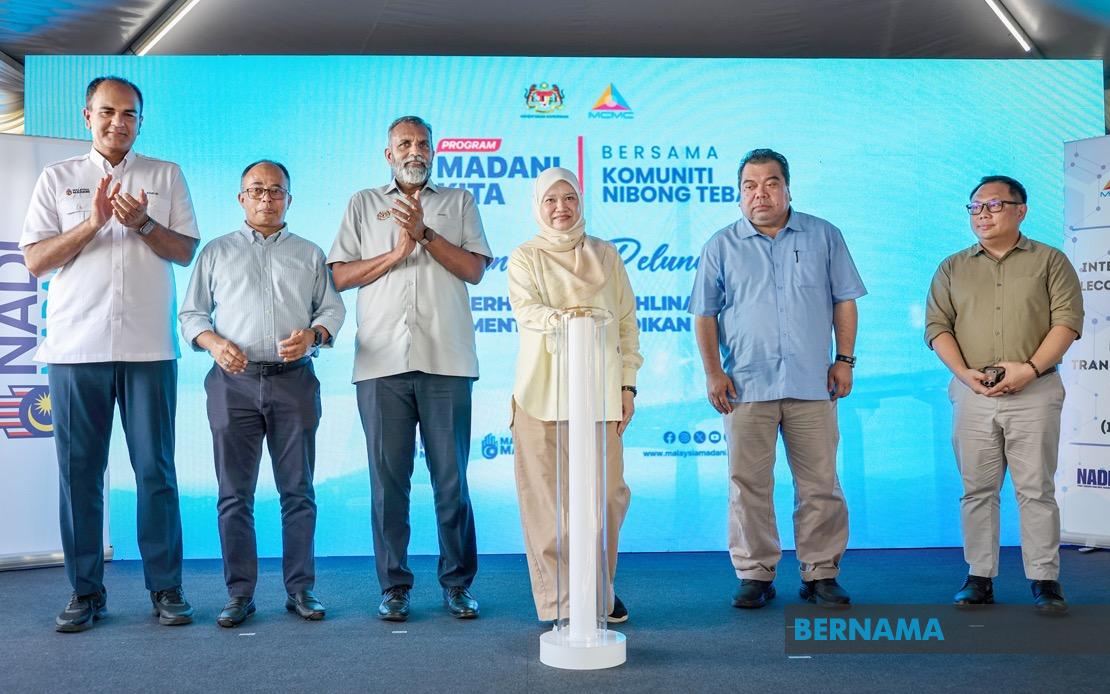
Mano Verabathran, deputy secretary-general at the Communications Ministry responsible for telecommunications infrastructure, outlined the collaborative framework underpinning these programmes during the launch of the Nibong Tebal edition in Penang. The Community Communications Department (J-KOM), Malaysian Information Department (JaPen), and Malaysian Communications and Multimedia Commission (MCMC) jointly implement the initiatives through the National Information Dissemination Centre (NADI), creating a consolidated platform for service delivery and citizen engagement.
The underlying philosophy behind MADANI Kita extends beyond conventional government communication strategies. Citizens increasingly expect not merely passive reception of policy announcements but active opportunities to comprehend how government decisions translate into tangible benefits in their daily lives. By facilitating face-to-face interaction between the public and ministerial representatives, these programmes address a persistent disconnect where policy announcements often fail to reach or resonate with grassroots communities. The format enables residents to seek immediate clarification on government initiatives, pose questions that might otherwise remain unanswered, and share feedback on issues affecting their localities.
Education Minister Fadhlina Sidek, who represents Nibong Tebal, officiated the Nibong Tebal programme, underscoring the political commitment to this decentralised approach. The involvement of cabinet-level ministers signals that MADANI Kita carries institutional weight beyond routine community outreach, positioning these events as legitimate forums for governance dialogue rather than peripheral activities.
The programmes deliberately incorporate diverse activities beyond traditional information dissemination. Technology education, skills development workshops, and community wellbeing initiatives form the core offering, particularly targeting young Malaysians who might otherwise disengage from government communication channels. By integrating e-sports and competitive activities alongside substantive educational components, organisers create environments where entertainment and civic engagement coexist, appealing to demographics typically resistant to formal government messaging.
The competitive elements serve a strategic purpose in fostering team cohesion and disciplined participation among youth participants. Rather than treating young Malaysians as passive recipients of government information, MADANI Kita positions them as active community members whose talents merit cultivation and whose enthusiasm merits channelling towards constructive purposes. This approach acknowledges that sustained engagement requires incentive structures beyond civic duty.
Preliminary attendance figures suggest considerable public receptiveness to the initiative. The MADANI Kita Permatang Pauh programme, held jointly with the Penang International Halal Expo 2026 from July 24 to 26, attracted more than 17,000 participants, indicating that when government services are embedded within broader community events, attendance barriers diminish significantly. Strategic timing and location alongside popular cultural or commercial events appears to amplify reach beyond what standalone government programmes might achieve.
For Malaysian policymakers, MADANI Kita represents an evolution in democratic governance practice. Rather than concentrating service delivery and policy information within capital cities or state administrative centres, dispersing these functions across multiple neighbourhood venues reduces access friction. Residents in Nibong Tebal, Permatang Pauh, and other designated areas encounter government representatives in familiar community spaces rather than intimidating bureaucratic buildings, fundamentally altering the power dynamics of citizen-state interaction.
The programme structure also provides valuable intelligence for government agencies regarding citizen priorities and concerns. Direct engagement generates real-time feedback on policy effectiveness, service satisfaction, and emerging community needs that conventional surveys or focus groups might miss. This information flow strengthens policy formulation by grounding decisions in grassroots reality rather than administrative assumptions.
Southeast Asian governments increasingly recognise that legitimacy depends not merely on announcing policies but demonstrating commitment to implementation and accessibility. MADANI Kita positions Malaysia within a regional trend towards more responsive, decentralised governance approaches. As other ASEAN nations grapple with citizen satisfaction and political polarisation, Malaysia's investment in structured community engagement offers a replicable model, though success depends on sustained implementation rather than one-off events.
The diversity of activities and services coordinated through NADI indicates institutional capacity to manage complex multi-agency operations at the community level. This coordination capability distinguishes MADANI Kita from simpler town hall models, suggesting that government has invested in infrastructure necessary for sustained, regular engagement rather than episodic announcements.
Sustainability remains the critical question as the programme expands beyond initial implementations. Maintaining meaningful engagement across 41 separate initiatives, ensuring consistent quality and substance rather than performative activity, and measuring genuine impact on citizen satisfaction and policy awareness will determine whether MADANI Kita becomes an enduring governance reform or a temporary initiative that gradually fades.

